The Buy-Side Advantage: An Interview with Jon Schulz, CMO @ Viant
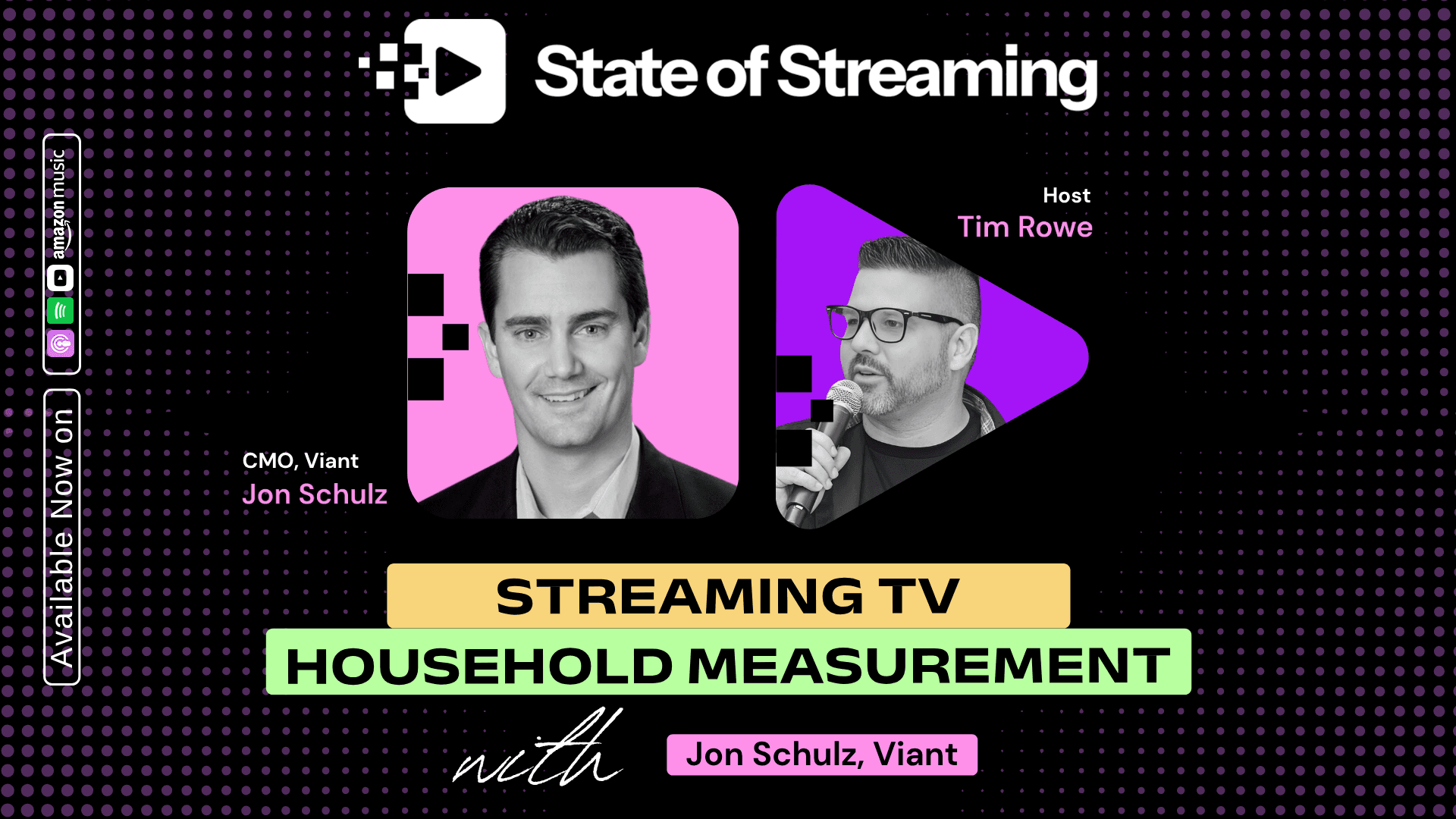
"We weren’t wrong, we were just early." — Jon Schulz
What happens when digital advertising tech pioneers turn their full attention to connected television, building identity solutions beyond the third-party cookie and completely reshaping how modern brands approach demand generation? In this conversation, Jon Schulz, Chief Marketing Officer at Viant, joins us as we dive deep into Viant's 26-year journey in ad tech, examine why operating strictly on the buy side eliminates inherent industry conflicts of interest, and explore how household-level targeting, live sports fragmentation, and AI-powered contextual scene analysis are driving measurable, real-world business outcomes for modern marketers.
“We Weren’t Wrong, We Were Just Early”
Tim Rowe: From Viant's early days to launching Xumo, what did you see along the way that made so much sense for you to take this pioneer step in streaming TV?
Jon Schulz: Viant has been operating in the ad tech space for 26 years now, making us one of the OGs in the industry. Back in 2012, we had a little internal skunkworks operation in Cardiff in the UK building out what is known today as a free ad-supported television channel, a FAST channel, and we called it Xumo. We brought in Panasonic in 2014 as a joint venture partner, and back then, you were on the Vizio remote control right next to Netflix and Amazon Prime. But in those days, you didn't have the big premium content owners embracing streaming yet.
To give you an idea of early days, our sports channel was literally a fixed camera on the 16th fairway of the Nike Tour: it wasn't Sunday afternoon at the Masters. But we learned a lot working directly with TV manufacturers, firmware, and content owners favorable to streaming. Eventually, we sold Xumo to Comcast, and today it serves as their FAST platform. The vision was recognized, and that early education helped us understand that streaming TV was going to be the future of advertising. As traditional linear television shifts, ESPN, Disney, Paramount, and Peacock are bypassing cable altogether. We weren't wrong; we were just early.
The Buy-Side Distinction
Tim Rowe: You mentioned that Viant operates strictly on the buy side. For folks who are newer to the programmatic conversation, why can having both a sell side and a buy side present a conflict of interest for platforms?
Jon Schulz: A lot of platforms out there operate on the supply side or sell side as well as the buy side, creating an inherent conflict when you own and operate inventory while pushing demand through your own platform. If you break down the earnings of big public companies like Yahoo or Google, 75 to 90 percent of their revenue comes from the sell side, whether that is search, ad networks, or YouTube.
They may have a Demand-Side Platform (DSP), but it really serves as a gateway to move their own inventory. Having spent the first half of my career on the client side in automotive and pharmaceutical marketing, I know that advertisers want to make sure there is no bias. If I am an automotive marketer looking for in-market auto intenders, I do not want to be biased by a platform's internal agenda to fill their own ad slots. I want to buy the right inventory that drives the best outcomes. That is why being strictly buy-side only is such a vital distinction for us.
Solving the Identity Problem
Tim Rowe: Connected TV never relied on third-party cookies the way the web did. How does thinking about targeting at the household level solve the identity and privacy puzzle for modern buyers?
Jon Schulz: During the rise of smartphones in the late 2000s, mobile usage exploded long before ad spend caught up, and we realized cookies were merely a temporary identifier. CTV never used cookies to begin with. We built our technology around a thesis anchored on physical household addresses, launching our Household ID technology with patents created around that time.
Today, our Household ID covers 95 percent of U.S. households through partnerships with companies like TransUnion. Physical address is not owned by Big Tech. Unless Google buys the U.S. Postal Service, physical addresses aren't going away. Furthermore, the television is the biggest shared device in the household, and most major consumer purchase decisions, whether it is your next vehicle, insurance policy, or family vacation, are household-level decisions. The household is the true anchor unit that drives commerce and transaction volume.
Demand Generation vs. Demand Capture
Tim Rowe: With search, social, and retail media commanding roughly 70 percent of total ad spend according to industry numbers, how should brand marketers balance performance tactics with connected TV advertising?
Jon Schulz: When you look at where the majority of ad dollars go today, specifically the walled gardens like Amazon, Meta, and Alphabet, you realize those tactics are primarily capturing demand that has already been created. You have to already know about a product to search for it on Google or Amazon; you don't pull it out of thin air. Real performance requires generating that demand in the first place, and that happens on connected TV, the biggest screen in the home.
An impactful CTV ad creates initial interest, and then site visits, branded search, and immediate purchases follow on second-screen devices like phones or laptops sitting in viewers' laps. CMOs often struggle for credibility with CEOs and CFOs because last-touch attribution models give all the credit to search channels while overall quarterly earnings fail to show top-line growth. Marketers need to balance demand generation with demand capture so they are filling the funnel and pulling customers through at an equal clip. That is why CTV and live sports are so crucial right now.
Driving Real Outcomes with Contextual Targeting
Tim Rowe: Live sports fragmentation is everywhere, and measurement is moving away from clicks toward actual business outcomes. How do managing reach and using scene-level contextual targeting help solve this for advertisers?
Jon Schulz: Live sports represent the biggest remaining mass-reach audiences, but because rights are split across Amazon, Netflix, Peacock, Paramount+, and traditional networks, buyers face massive fragmentation. Working with a dedicated buy-side DSP allows advertisers to manage reach and frequency across all major publishers seamlessly without duplicating ads or wasting dollars. Moreover, the industry vernacular has shifted from vanity metrics like clicks and impressions toward driving real outcomes like vehicle sales, gym memberships, or in-store visits.
To elevate this, Viant acquired Iris TV to bring scene-level contextual targeting to CTV. Rather than just buying generic age demographics, AI contextual technology analyzes the exact content right before an ad break, like placing a home insurance ad after a house fire scene or a beer ad after a party scene. In research with Upwave, using scene-level contextual targeting drove a 2x lift in brand awareness, a 3x lift in ad recall, and a 5x lift in brand favorability. Combined with supply path optimization that cuts out unnecessary intermediaries, advertisers can buy inventory directly from premium publishers, eliminate waste, and achieve clear, verifiable return on investment.
Want to watch or listen to the entire conversation?
Get the SOS. Brief
The sharpest streaming intelligence, delivered to your inbox.