The Catalog Is the Receipt - Attention Capital | A Column by Josh Stein
Editor's Note
Attention Capital is a syndicated column by Josh Stein decoding the economics of media, sports, and platform ecosystems — where attention becomes enterprise value and the contracts behind the cash flow get priced like the credit they actually are. Capital has spent 30 years pricing music catalogs as the receipt for past listening, completely ignoring the live audience relationship that generated it. Until the market builds a credit instrument to underwrite direct-to-fan behavior, artists will keep running massive media empires out of pocket while platforms hold all the data.
In 1983, a rock band opened a ticket office.
Its manager set it up to sell tickets by mail to fans who had followed the band for years. By the office’s own account, it moved about 24,000 tickets that first year. Fans sent index cards and money orders. The office couldn’t advertise. By 1994 it was moving more than 600,000 tickets a year the same way.
The band was the Grateful Dead.
Its first top-40 single arrived in 1987, 17 years after the band first appeared on the Hot 100, and it was the only top-10 hit the band ever had. In 1992, the same band was the top-grossing touring act in North America: $45.6 million across 81 shows in 29 cities, per Pollstar. From 1985 to 1995, it sat in Pollstar’s top 10 nine years out of 10.
Two ledgers, then. A catalog buyer working from the royalty statements sees a modest asset with one hit. A promoter working from the mail-order files sees the largest audience in the business.
Same band. Only one ledger ever got a price.
Welcome back to Attention Capital
In The Bowie Blueprint, I traced the 30-year build that turned song catalogs into an institutional asset class, from the first bond to the rated pools, and mapped where creator video sits on the same arc. This piece starts where that one stopped. The infrastructure got built. The capital showed up. It underwrote the half of the asset that had already happened.
For the Attention-Constrained
The through-line.
A song catalog is a record of listening that already occurred, priced on the assumption that it keeps occurring out of habit. Buyers pay more for it as it ages, because the older the listening, the less it depends on anyone doing anything. That is the receipt for the artist-listener relationship. It is a good asset, and the buyers were right to price it.
The structural parallel.
The relationship that produced the receipt is still running. It sells tickets, memberships, whiskey, theme-park admissions, wrestling subscriptions, and tea. Each is cash flow from the audience the catalog buyer paid for, and each runs as an operating business attached to a person, financed out of pocket or with a partner, and carried on nobody’s balance sheet as the audience.
The critical difference.
Capital built a rating framework, a servicer model, and a pooled market for the residue. It built nothing for the source. The reasons are three, and two of them are weak: the A&R confusion, which treats any bet on an audience as a bet on an audience forming; key-person risk, which the age premium on catalogs says buyers already discount, one year at a time; and the one that holds, which is that no instrument exists that tells a committee whether an audience shows up for the person or showed up for a moment.
The thesis.
The catalog is the receipt. The audience is the counterparty that keeps spending. Capital owns the first and has no paper on the second, and the second makes the first worth more.
Why it matters.
Catalog buyers already manage the relationship by hand, one artist at a time, because a fed audience raises the value of the receipt they own. That work stays artisanal until someone builds the layer that prices the audience directly. If nobody does, the relationship stays a services business, and the platforms keep the data. If someone does, the artist gets a balance sheet. This essay states what has to be true for the second.
What would prove this wrong.
If a rated instrument secured against an artist’s live audience outputs prints and the receivable turns out to be the tour contract and nothing else, the audience-as-asset frame was decoration on a promoter deal. If the age premium on catalogs disappears in published data, so that seasoned and fresh catalogs clear near the same multiples, the key-person section overstated what buyers price. If a published, portable person-versus-moment measure appears and audience-secured paper still doesn’t follow, the missing instrument was never the constraint.
I. What a Catalog Is
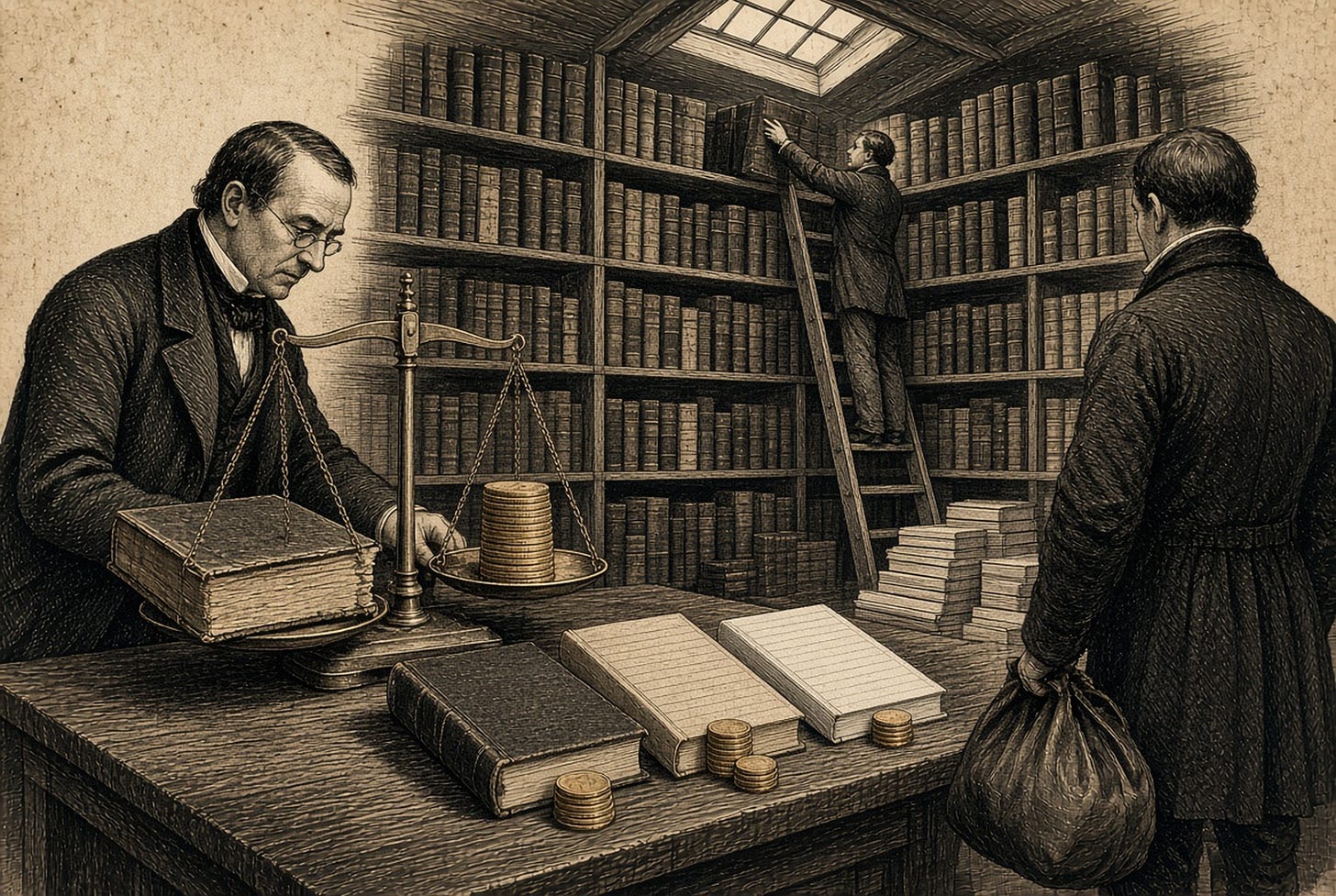
Start with what the buyers bought.
A catalog is a ledger of listening. Every stream, every sync, every radio play is an entry, and the entries go back decades. The buyer takes the ledger, projects it forward, and discounts it. That’s the trade.
What the buyers learned, and priced, is that the ledger gets more reliable as it ages. One royalty marketplace publishes the shape from its own transactions: catalogs earning for 10 years or more clear at roughly 8 times annual income and sometimes 20, while catalogs under three years old clear near 4. Among the catalogs closing at 10 times or better on that platform, the median age was 10 years.
That pricing says something about people. The older the song, the less its income depends on the artist doing anything this year. The listening has become ambient, which this publication has covered before: the songs people hear without choosing them are the ones a buyer trusts most. The premium goes to habit. Habit is what’s left after the relationship stops being an event.
So the multiple rises as the person recedes. That’s the receipt.
A receipt is a fine thing to buy. It documents a transaction that already happened; it can be audited, and in this case it keeps paying. The catalog behind the first music bond, the one The Bowie Blueprint traced, the artist’s estate sold to a major publisher in January 2022 for a reported $250 million. The man had been gone six years. The receipt cleared anyway.
Here’s what the receipt leaves out.
It records what an audience did, and nothing about what that audience would do if asked. Whether 24,000 people would mail index cards to a P.O. box for tickets. Whether they’d buy a whiskey. Whether they’d drive to a theme park in the Smokies with their kids. The receipt prices the residue of a relationship and the residue’s decay. The relationship itself is off the page.
The multiple rises as the person recedes. That’s the receipt.
II. The Relationship Is Still Running, and It’s a Lemonade Stand
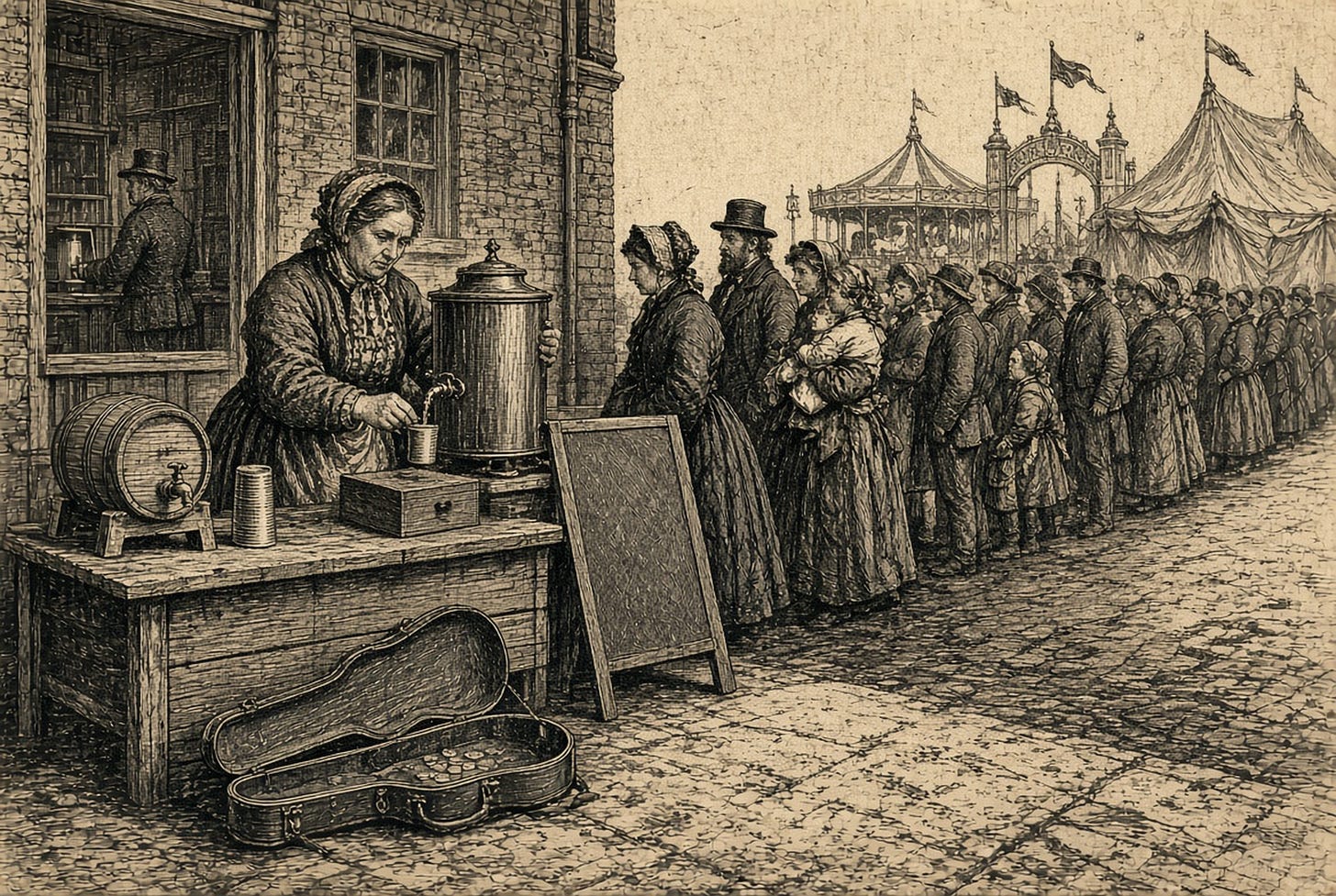
The audience that produced the receipt didn’t stop when the buyer wired the money. It’s still out there, still spending, and the artist is still the one collecting.
Billy Corgan opened a tea shop.
Madame Zuzu’s opened in Highland Park, Illinois, in 2012, closed in 2018 when it outgrew the room, and reopened in 2020 with his partner Chloe Mendel in a larger space built for live performances. In 2017, through his production company, Corgan bought the National Wrestling Alliance, a promotion founded in 1948. He put its weekly show on YouTube in October 2019, moved it to The CW’s app in late 2023, and signed a streaming deal with Roku in June 2025.
The frontman of the Smashing Pumpkins owns a tea house and a wrestling promotion. Both run on one fact: a specific audience will show up where he is.
Metallica did it with more capital and the same logic.
The band took ownership of all of its master recordings on November 30, 2012, when its Warner contract ran out, and launched its own label the same day. Lars Ulrich’s line at the time: “It’s always been about control for us as a band.”
In August 2018, the band launched Blackened American Whiskey with a master distiller and a finishing process that plays the band’s own music into the barrels at low frequency. In 2023, it bought a majority interest in Furnace Record Pressing, a vinyl plant in Alexandria, Virginia, that had pressed more than 5 million Metallica records since 2014. The band runs a paid fan club it calls Fifth Member, with its own presales and magazine.
So Metallica owns the receipt, the label that services it, a whiskey, a pressing plant, and a fan club. That is a vertically integrated audience business. Nothing on the public record has ever financed those five as the one thing they share.
Dolly Parton built the full version.
Dollywood opened on May 3, 1986, owned half by Dolly Parton Productions and half by Herschend, the family company that operates it. Its president told a Knoxville station in February that the park drew nearly 4 million visitors in 2025. In 2021, the company stood her at a podium and announced a $500 million, 10-year expansion. The Imagination Library, which she started in 1995 as a local program in East Tennessee, has mailed more than 300 million books to children under five, one a month, per NPR.
And she kept the receipt.
In the 1970s, Colonel Tom Parker told her Elvis would record “I Will Always Love You” if she surrendered half the publishing. She said no, cried through the night, and kept the copyright. Whitney Houston’s 1992 recording spent 14 weeks at No. 1. Parton has said she used the songwriting income to buy commercial property in Nashville, which she called “the house that Whitney built.”
Dolly Parton died on August 25 at 80. What she built runs without her: half of a theme park held through her company, a publishing catalog she refused to split, and a book program that mails a title a month to millions of children. Forty years of the receipt and the relationship, both owned, both run as businesses, with a theme-park operator as her only structural partner.
The fourth case is the band from the cold open, and it’s the extreme one. The receipt was thin.
In 1971, the band put a notice inside an album: “DEAD FREAKS UNITE: Who are you? Where are you? How are you?” with a P.O. box in San Rafael. That was a mailing list, built before the industry had a word for direct-to-fan. The 1983 ticket office served the people on it.
Then the band did something no catalog buyer would sign off on. It gave the recording away. It set up a taper section behind the soundboard, sold tickets for it, and let fans record and trade the shows. The receipt was free. The relationship was the business, and by 1992 it was the biggest one in touring.
Four artists. A tea house, a wrestling promotion, a whiskey, a pressing plant, a fan club, a theme park, a book program, a mail-order ticket office, and a taper section.
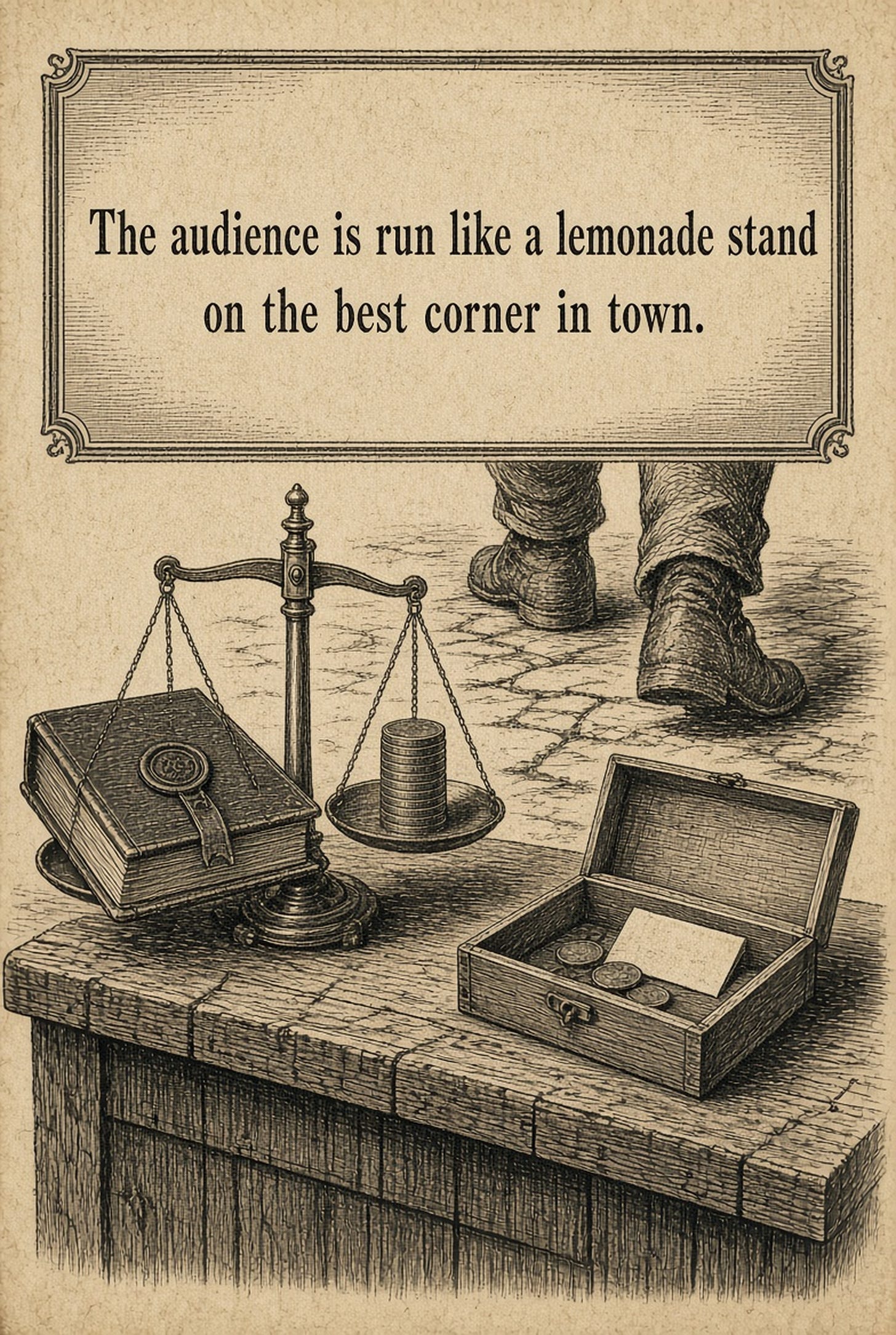
All of it financed the same way. Out of pocket. With an operating partner. With a distributor. With a majority stake bought from a founder. The audience that makes every one of these businesses work appears on no balance sheet as an asset, secures no facility, and carries no rating. The market prices in its past behavior with a multiple. The audience is run like a lemonade stand on the best corner in town.
III. Why Nobody Underwrites the Live Audience
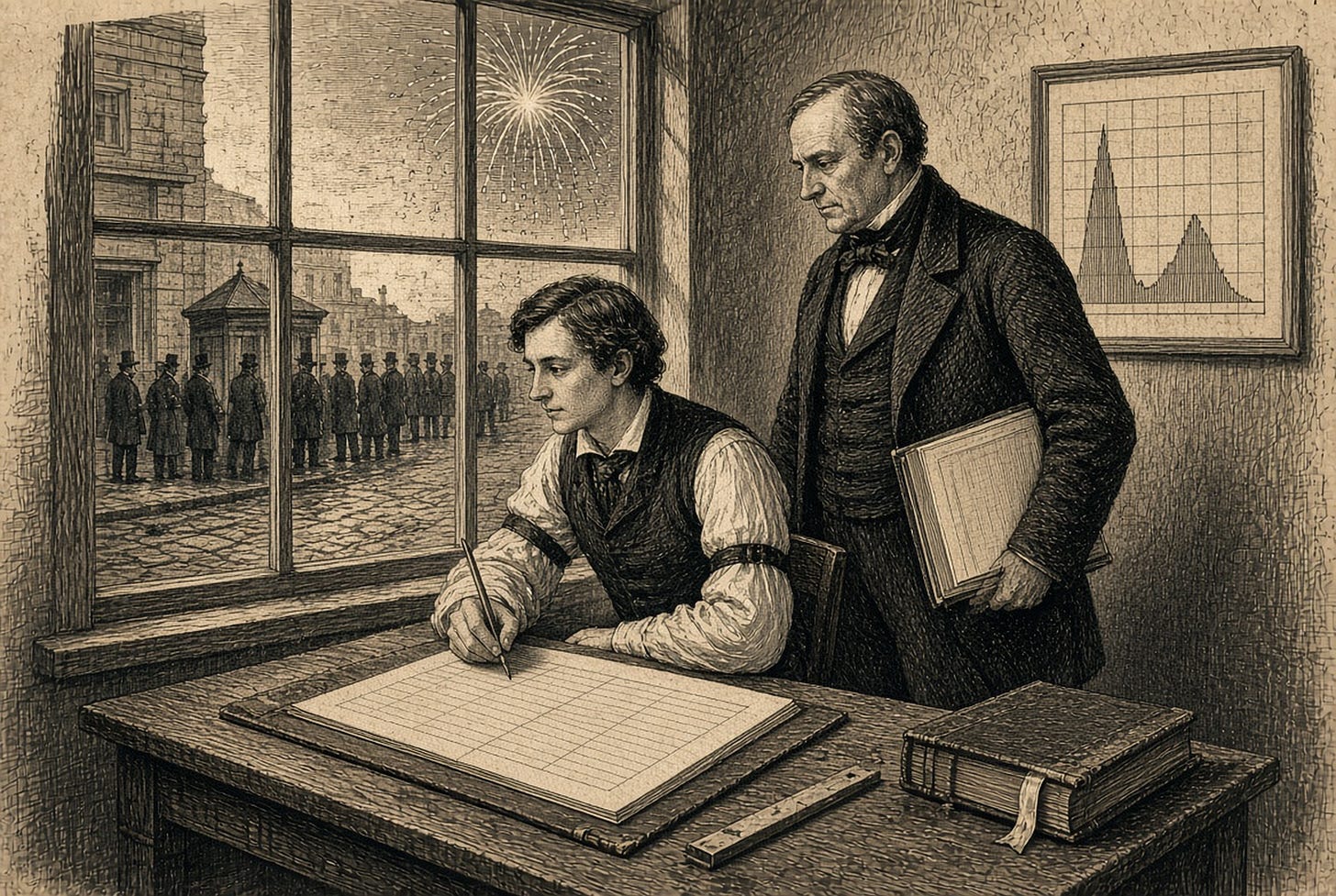
Three reasons, in order. The first two are what a committee says out loud. The third is the one that’s true.
The A&R confusion.
Frontline music is venture. A label signs an act and bets that an audience will form. Most don’t. The hit rate is a portfolio problem, returns are skewed, and the right capital is equity. Every credit officer knows this, and it’s why the word “artist” in a credit memo reads as a red flag before the second paragraph.
The confusion is applying that logic after the audience has formed.
Corgan’s audience formed in the early 1990s. Metallica’s in the 1980s. Dolly Parton’s in the 1970s. The Dead’s before the mailing list. By the time any of them opened a tea house, distillery, or ticket office, the venture bet had paid out. What remained was a documented population that had been showing up for 20, 30, 40 years. Underwriting that is closer to underwriting a subscription base than to signing a band.
Catalog buyers understood this from the start. They don’t buy frontline. They buy songs that have been earning for a decade, because a decade of earning is evidence the audience is real. The same evidence exists for the relationship, and it’s better. A ticket office that sold 600,000 tickets by mail in 1994 is a stronger signal of audience persistence than any royalty statement, because every ticket required a person to act.
The labels saw this once and reached for it in a percentage. They called it 360, which this publication took apart in Wrong Half of Star Wars. A 360 deal is a counterparty noticing the relationship is worth more than the recording and taking a cut of every slice. A revenue share is a participation on the label’s ledger. It carries no rating, and it puts nothing on the artist’s ledger as an asset.
Key-person risk.
This one is real, and it’s honest to say so.
An audience that shows up for a person is exposed to that person. Health, reputation, the decision to stop. A song keeps earning through all three. A tea house and a wrestling promotion don’t, or don’t obviously, and a credit committee is right to ask.
The catalog buyers already discount it, though. Look at the age premium in Section I. Older catalogs carry longer histories, more sync, more seasoning, and any of those could explain part of the curve. What the curve says plainly is this: buyers pay more for income that depends less on the artist’s next decision, and they pay for it year by year. That is a market putting a price on the person’s absence from the receipt. Directional, from one marketplace’s data. Enough to show the discount exists and gets paid.
At the far end of that curve sits the estate. A catalog buyer took half of the Whitney Houston estate in 2019 at a reported $14 million valuation. The Bowie estate sold its publishing in 2022 for a reported $250 million. Nobody has published a living-versus-estate spread. The deals clear, which is the only claim here.
So the committee is looking at a discount the receipt market already pays. Sizing a discount is underwriting. Refusing the asset because the discount exists is a choice.
Dollywood shows what the artist does when nobody offers the instrument. A 10-year, $500 million plan announced with her in 2021, an operator in the seat, and a president who said on the record that she “gave us the gift of time to prepare.” She managed the risk herself. The credit market offered nothing to manage it with.
The missing instrument.
Strip away the first two, and this is what’s left. A committee has no page that tells it whether an audience shows up for a person or for a moment.
Take a moment. In the summer of 2022, a 37-year-old Kate Bush song went to No. 4 on the Hot 100 after a television placement, 26 places above its original peak, and press estimates put her earnings from the run at about $2.3 million. Real money against a real receipt. Also a moment. The audience arrived because a show told it to, and the receipt captured every stream.
Now take a person. The Dead’s audience mailed index cards to a P.O. box for 12 years, showed up 81 times in 29 cities in 1992, and taped the shows for free. Nobody told it to.
An analyst with the royalty tape can tell those two apart. Decay shape reads persistence, and a placement spike and a 30-year habit decay differently. Grant all of that.
Here’s what the tape can’t read. A stream is passive. Somebody pressed play, or an algorithm did. A ticket bought by mail, a bottle, a membership renewed: those are acts, and each one answers the question a lender cares about: whether the audience moves when the person asks. Decay shape says whether people keep listening. It says nothing about whether they’d get in the car.
Most artists live somewhere between Kate Bush and the Dead. A couple of placements. A decent tour, a fan club, one unplanned viral year. On the royalty tape, it all shows up as listening, and the listening looks fine. Whether any of it converts on a direct ask, and converts the next time again, is recorded nowhere a committee can read.
The catalog world has rating templates, decay curves, and seasoning rules for the listening. The audience world has follower counts and a promoter’s gut for the asking. Until a committee can tell a person from a moment on paper, the relationship stays unrated, and everything built on it stays off the balance sheet.
Until a committee can tell a person from a moment on paper, the relationship stays unrated.
IV. What the Catalog Buyers Already Do by Hand
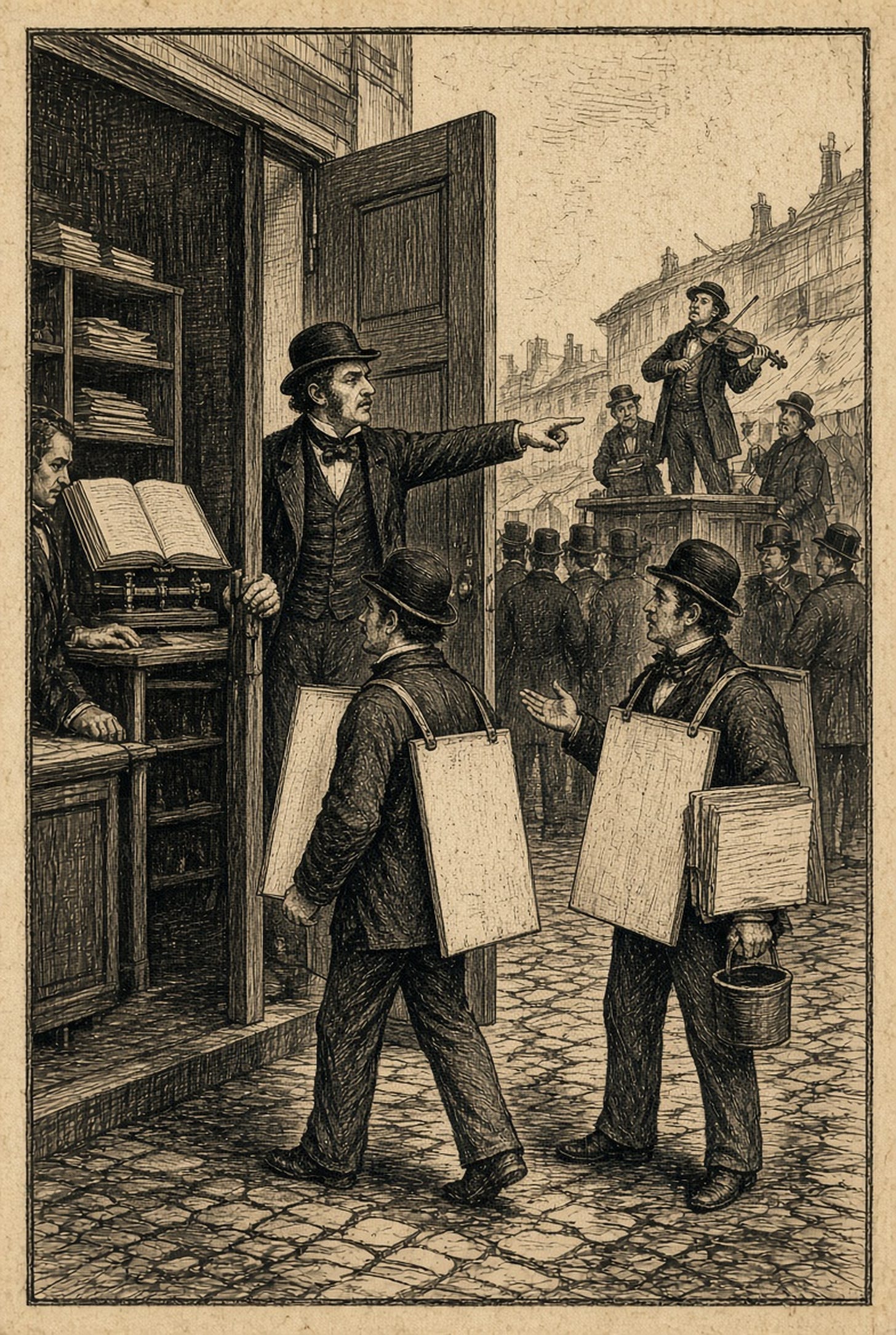
The catalog buyers know the relationship matters. It shows in how they work it.
When the buyer took half of the Whitney Houston estate in 2019, the announcement listed what it would do: marketing, digital, publicity, branding, expanded licensing and sync. The estate confirmed a hologram tour and an unreleased album were in development. A biopic followed. None of that is catalog administration. It’s feeding an audience so the receipt pays more.
When another buyer took a controlling interest in the Beach Boys’ recordings, brand, and memorabilia in 2021, it described its job as “actively managing” the artists’ assets and “preserving the important legacy.” Legacy is a relationship word. A documentary followed on a streaming service. The buyer paid for the right to keep an audience warm, because a warm audience streams.
The receipt decays. Feed the relationship and the decay slows. A placement, a tour, a brand line, an anniversary campaign, a documentary: each one asks the audience to act, and each time it acts, the catalog’s ledger gets a new entry at the top. That’s the point of the work. A better receipt on exit.
So the catalog buyers are already in the relationship business. They’re in it as a services function.
That’s the giveaway. The work runs through a marketing team, artist by artist, at a services margin, with nothing underneath it that a rating agency reads. In the rated music paper I can find on the public record, no covenant is keyed to audience activity. If a private deal carries one, it hasn’t set a standard anyone else can use. The work that raises the value of the receipt is artisanal, and it stays artisanal for as long as the audience has no price.
The estate cases make the point cleanly, because the person is gone and the relationship still needs feeding. With a living artist, the buyer has less control, and the artist has more. So the relationship work happens on the artist’s side of the table, in tea houses and distilleries, at the artist’s expense, and off the buyer’s ledger entirely.
Two parties, one audience. The buyer feeds it by hand to protect the receipt. The artist runs it by hand to earn a living. Neither has paper on it.
The work that raises the value of the receipt is artisanal, and it stays artisanal for as long as the audience has no price.
V. Two Universes, No Prediction
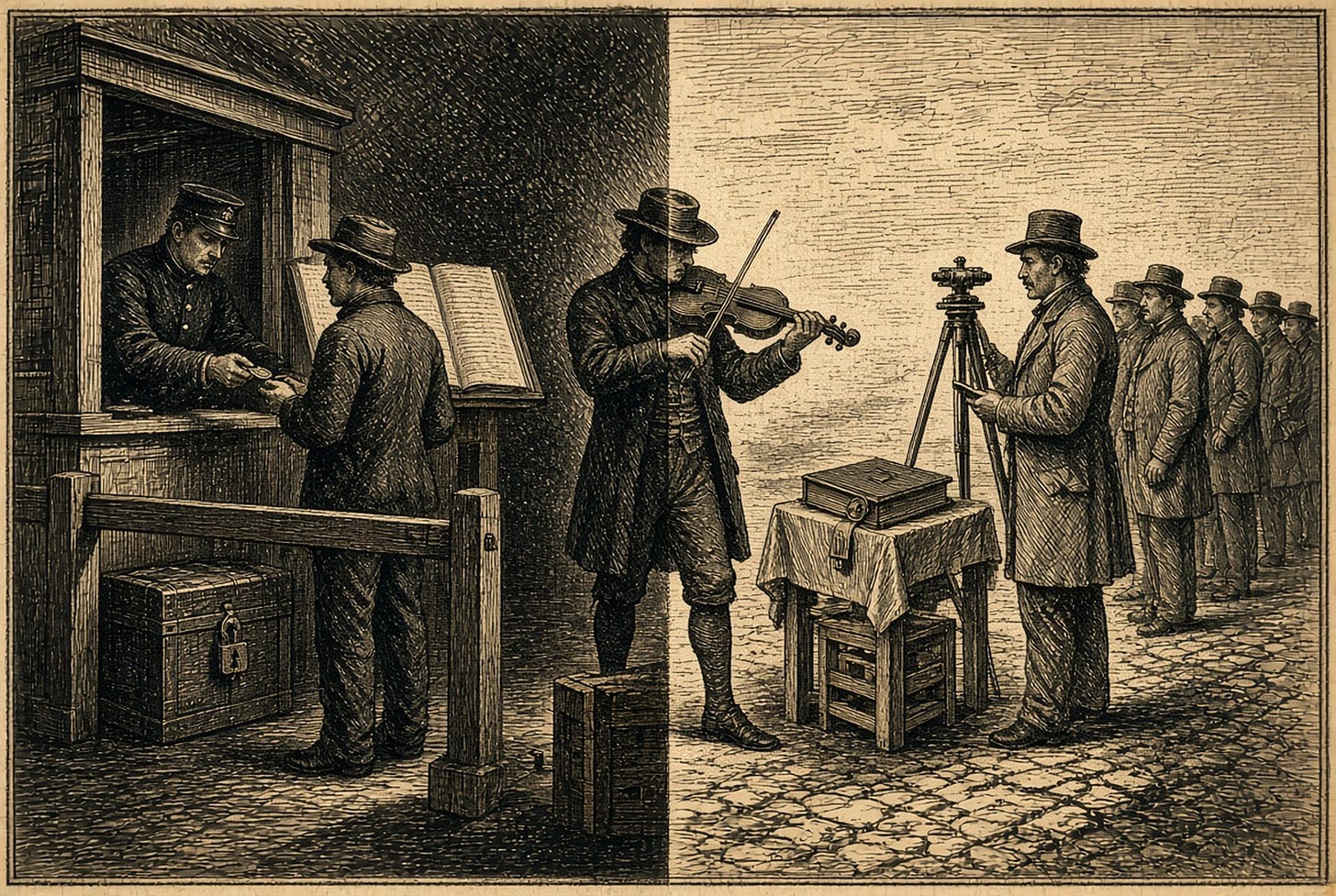
Universe one: it stays a services business, and the platforms keep the data.
Nothing structural changes. The catalog buyers keep buying receipts at rising multiples as the artists age. Their marketing teams keep feeding legacy audiences by hand. Living artists keep opening tea houses.
Audience data stays where it lives now, inside the platforms, and the artist pays to reach the audience through them. Spotify describes its Marquee product as a full-screen ad that lets an artist “make sure fans see your music when it drops.” Fans, in Spotify’s words. The artist buys a placement in front of the listeners it already has. Discovery Mode runs the other direction: an artist opts songs in for algorithmic recommendation to new listeners, and Spotify applies a 30% commission to the royalties on those streams. Reaching your own fans costs a fee. Finding new ones costs a royalty. Either way, the relationship generates the data and the platform holds it.
Ticketing works the same way one layer down, which The Sphere Is Collateral covered. The transaction layer holds the file on who bought the ticket, and the artist reads it secondhand.
In this universe, the artist’s audience is the most documented behavioral population in commercial life, and the artist is the one party who can’t underwrite against it, because the artist doesn’t hold the documentation. The receipt stays financeable. The relationship stays a rental.
Universe two: someone builds the layer that prices the audience, and the artist gets a balance sheet.
Five things have to become true, and none of them is standard practice today. No dates attached.
First, the audience data leaves the platform in a form a third party can audit. Cohort retention, return frequency, conversion on a direct ask, held by the artist’s entity or a neutral servicer and reported on a cadence, the way collection societies report on the receipt. Without this, nothing else on the list is possible.
Second, a published, portable measure records what happens when the artist asks, and whether it happens again, for the artists between Kate Bush and the Dead. It has to be a method someone else can apply, the way the catalog world’s seasoning rules travel from buyer to buyer, and it has to hold up under a rating analyst who has never heard the music.
Third, the artist holds an entity that owns the relationship’s outputs. Touring income, membership fees, direct commerce, brand licensing, under one roof, with the artist as principal. Metallica has that shape. Dolly Parton had it. Most artists have a personal services company and a merch vendor.
Fourth, document an instrument shape. Senior paper secured against the entity’s audience outputs, with covenants keyed to the measure in the second condition: an audience activity floor, a concentration limit across platforms, a cure mechanism for a key-person event. The catalog world already has the servicer role, the waterfall, and the reserve account. Those port. The covenant on audience behavior is the new thing.
Fifth, a first print. One artist entity, one rated or at least reported facility, secured against the relationship, with the receipt left out of the collateral. Small, expensive, bespoke, the way every first print is. It gives the second one a comp.
If all five hold, the relationship becomes an asset the artist can borrow against without selling, and the catalog buyers who feed audiences by hand get a market to feed them into. If any fails, universe one continues, and nothing about that is a catastrophe. The receipt keeps paying. The tea houses stay open.
The conditions are the argument. Whether anyone meets them is a decision the people who could meet them haven’t made.
VI. The Close
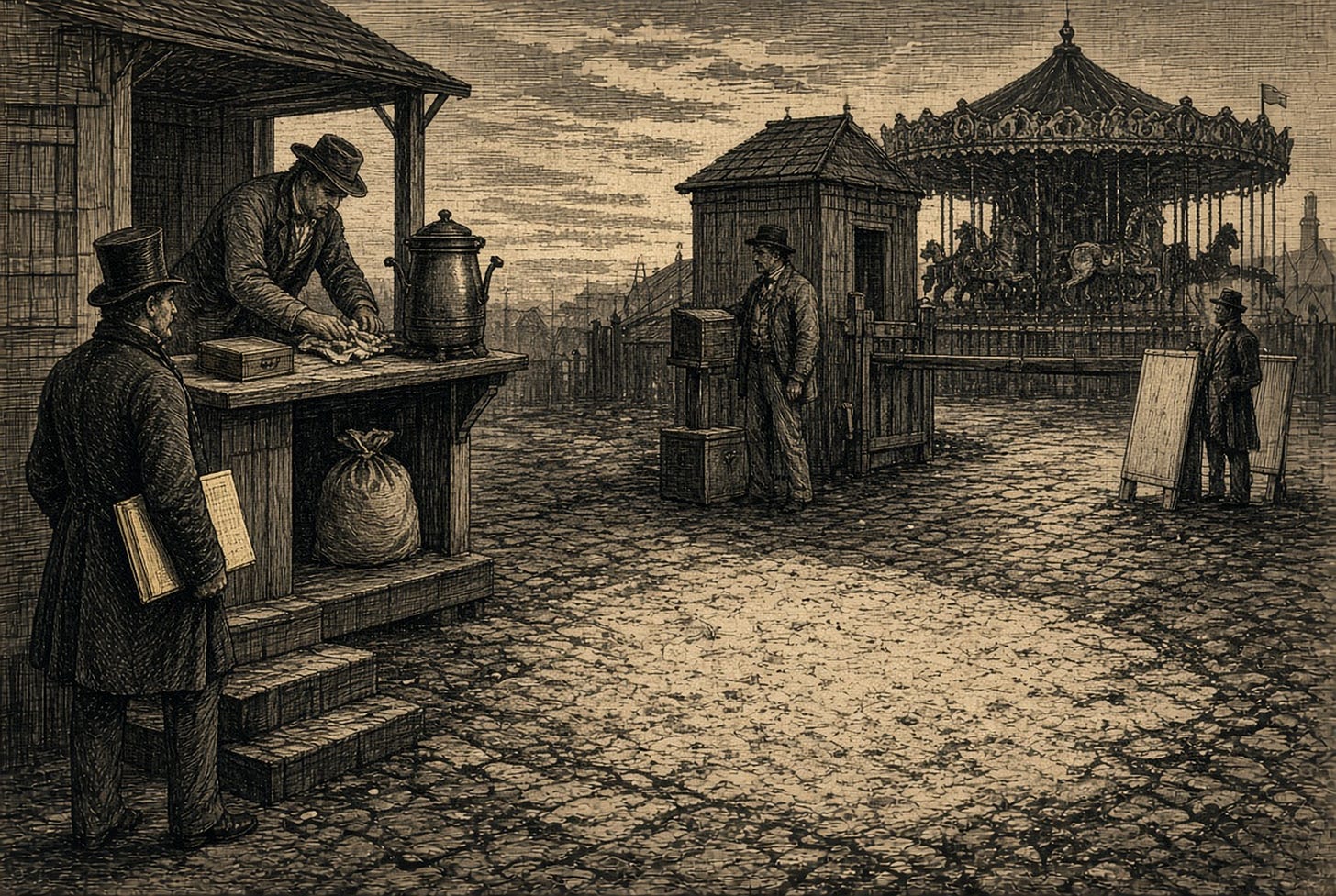
Underwritable or artisanal. That’s the question, and it’s open.
The catalog buyers built a rating framework, a servicer model, and a pooled market based on what listeners already did. It took a quarter century, and it worked. Any analyst with a template could model The Dead’s royalty statements from 1992 today.
The Dead’s mail-order files from 1992 could not. Neither could Dollywood’s gate, or Metallica’s fan club, or the audience that will decide whether a wrestling promotion on Roku is worth a subscription because a specific musician owns it. Those are the relationship. They produce the receipt, they outperform it, and they have never been priced.
Three parties hold the pieces. The catalog buyers, who feed the audience by hand and know what the asset they own is worth. The platforms, who hold the data and charge for access. And the artists, who run the most documented behavioral population in commercial life as a side business, because nobody has handed them a term sheet.
Each of them could build the layer. None of them has had to.
Underwritable or artisanal?
What Would Prove This Wrong
Three conditions, stated as conditions.
First. If an instrument secured against an artist’s live audience outputs prints, and the receivable a rating agency reads turns out to be the tour contract with a promoter and nothing else, then the audience-as-asset frame in Sections II and V was decoration on a promoter deal, and the correct essay was the one this publication already wrote about the venue and platform layer.
Second. If the age premium on catalogs disappears in published data, so that seasoned and fresh catalogs clear near the same multiples on the marketplaces and in the rated deals that report it, then the claim in Section III that the receipt market already pays a discount for key-person risk loses its evidence, and the key-person objection deserves more weight than this essay gives it.
Third. If a published, portable person-versus-moment measure appears, from any source, and audience-secured paper still doesn’t print within a reasonable window after it, then the missing instrument in Section III was never the binding constraint, and something else, most likely the data condition in Section V, was.
Why Subscribe
Because capital spent 30 years paying a premium for the receipt of past listening while completely failing to underwrite the live audience that produced it.
Every week, Attention Capital tracks how documented audience behavior becomes enterprise value: the contracts, the balance sheets built on them, and the layer underneath that finance has not learned to read. If you allocate capital, this is where you learn what a credit instrument secured against direct-to-fan audience behavior must look like before the first term sheet prints. If you operate in media, this is where the difference between a passive catalog and an active audience gets priced. If you build audiences, this is the market discovering what your direct relationship is actually worth when you stop renting it from the platforms.
Get the SOS. Brief
The sharpest streaming intelligence, delivered to your inbox.