The Graduation Problem - Attention Capital | A Column by Josh Stein
Editor's Note
Attention Capital is a syndicated column by Josh Stein decoding the economics of media, sports, and platform ecosystems — where attention becomes enterprise value and the contracts behind the cash flow get priced like the credit they actually are. VTuber agencies have achieved what Hollywood couldn't: moving parasocial attention off the talent's personal balance sheet and onto corporate-owned IP. With listed agencies like COVER and ANYCOLOR trading in Tokyo, the market is now pricing exactly how much of a character's audience survives when the human performer walks away.
On April 16, 2025, the most-subscribed VTuber on earth announced she was leaving. Gawr Gura, a 4.6 million-subscriber character operated under COVER Corp’s hololive banner, told her audience she was graduating, the industry’s term for a departure in which the performer walks and the company keeps the character. The announcement stream peaked at 229,249 concurrent viewers, a record for English-language VTubers. By the next session, COVER’s stock had fallen roughly 10%.
Ten weeks later, a new channel with no corporate affiliation held its first stream. COVER has never confirmed who performs Sameko Saba, and it does not matter, because the audience behaved as if no confirmation were needed. The channel passed 1 million YouTube subscribers within roughly three days of its debut, with more than 554,000 arriving before the first stream even started. The company kept the character. A measurable slice of the crowd followed the person.
Both halves of that trade printed in public, because COVER trades on the Tokyo Stock Exchange and so does its rival ANYCOLOR, the operator of Nijisanji. Which makes these two companies something no talent business has ever been before: a live, exchange-listed experiment on the question every attention-driven balance sheet eventually has to answer. When the human leaves, what stays?
Welcome back to Attention Capital
In the founding piece, Attention Is Now Enterprise Value, I used COVER and ANYCOLOR as one end of a barbell: proof that grassroots fandoms scale into billion-dollar public companies, set against the $52.5 billion EA buyout at the institutional end. Then I moved on. This essay goes back for what got left on the table. The VTuber story I told there was a scale story. The deeper one is an ownership story. These agencies ran the one experiment a hundred years of Hollywood never attempted: they moved attention off the talent’s personal balance sheet and onto the corporation’s. And because both companies trade publicly, the market has been grading the experiment in real time, drawdown by drawdown, graduation by graduation. As I argued in When Attention Becomes Financeable, credit arrives wherever behavior is documented, recurring, and auditable. The VTuber market documented something subtler: exactly how much of a company’s attention survives the departure of the person who generated it.
For the Attention-Constrained
The rental.
Talent representation has always been a rental business. CAA does not own Tom Cruise, and no lender accepts a client roster as collateral, because the asset can walk at contract end. Hollywood’s studio system was the last serious attempt at outright ownership, and the courts dismantled it: De Havilland v. Warner Bros. in 1944 capped personal service contracts at seven calendar years, and United States v. Paramount in 1948 broke the vertical machine that made ownership pay. The industry has treated the rental model as physics ever since.
The flip.
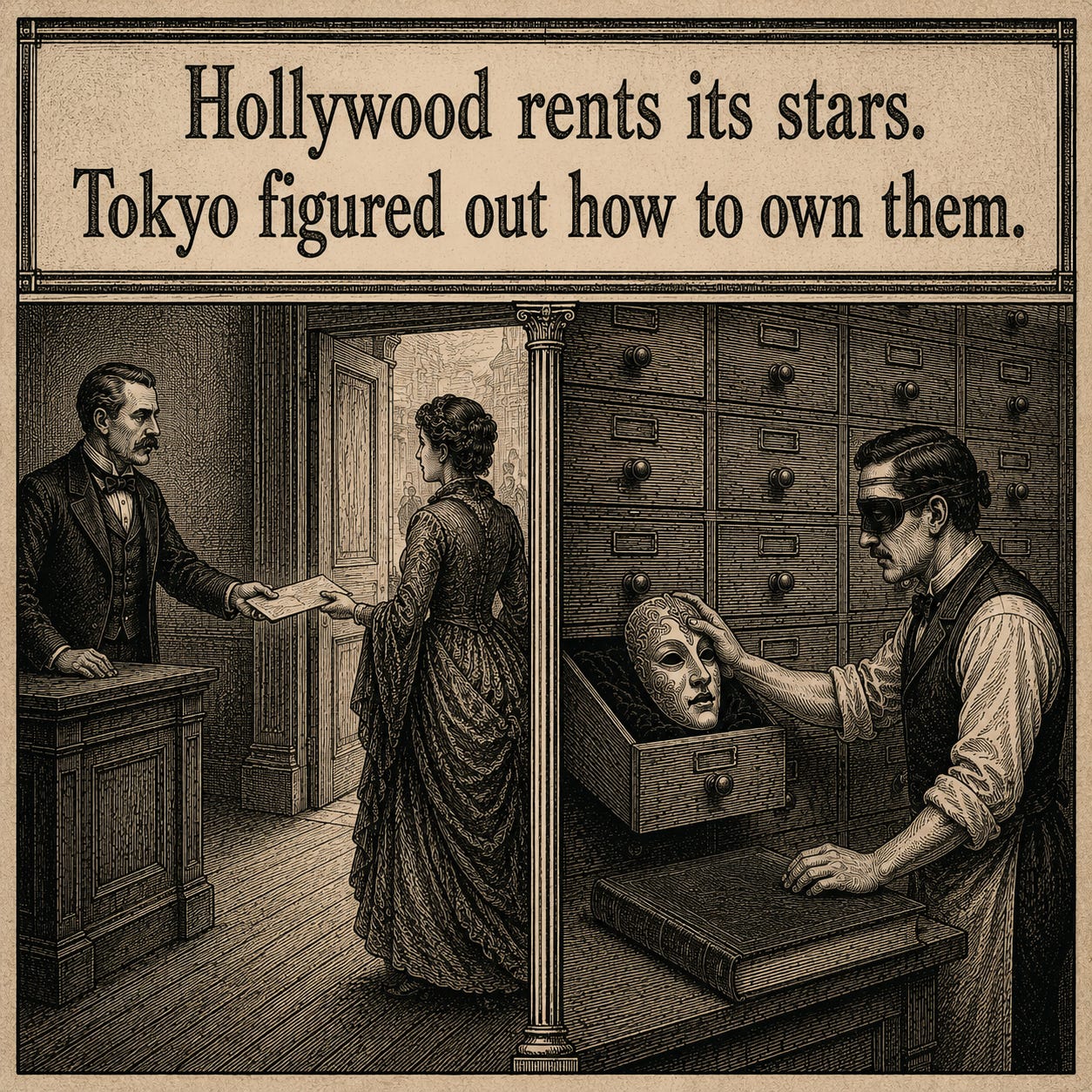
COVER and ANYCOLOR inverted the structure. The company designs the character, owns the design, the name, the channel, and the catalog, and contracts the performer to operate it. COVER owns Usada Pekora the way Disney owns Mickey Mouse. Hollywood rents its stars. Tokyo figured out how to own them.
The machine works.
ANYCOLOR closed its fiscal year in April 2026 at ¥55.7 billion in revenue, up 29.9%, with a 36.2% operating margin and ¥14.1 billion in net profit. COVER ran roughly 520,000 concert attendees in a year, grew licensing partners from about 280 to about 370, and shipped a trading card game that beat its own forecasts. More than 80% of COVER’s revenue is merchandise, live events, and licensing: categories with counterparties and paper.
The stress test.
The market also graded the failure modes, on specific days. ANYCOLOR erased roughly ¥44 billion of market value in hours in March 2024, a 22% single-day fall to a record low, in the aftermath of a talent termination. COVER gave up a tenth of its value in a day on the Gura announcement. And the biggest departures since 2024 keep printing the same publicly observable signature: a measurable slice of the audience follows the human, and the rest stays with the franchise.
The spectrum.
Attention attaches along a spectrum, from fully portable (leaves with the person) to fully institutional (survives any departure). Mickey Mouse sits at one end, a solo podcaster at the other, VTubers in the middle. Graduation events are the instrument that measures exactly where. For anyone underwriting attention-driven cash flow, that is the entire question: you lend against what survives the departure.
The implication.
The ownership structure determines the multiple before the revenue does. The comps to calibrate transition risk already trade in Tokyo, marked daily. And the whole sector’s market value, about $3.1 billion in 2026, is a rounding error against the attention it commands, which is what early asset classes always look like.
I. The Hundred-Year Rental
Start with what everyone in the talent business already knows and rarely says out loud.
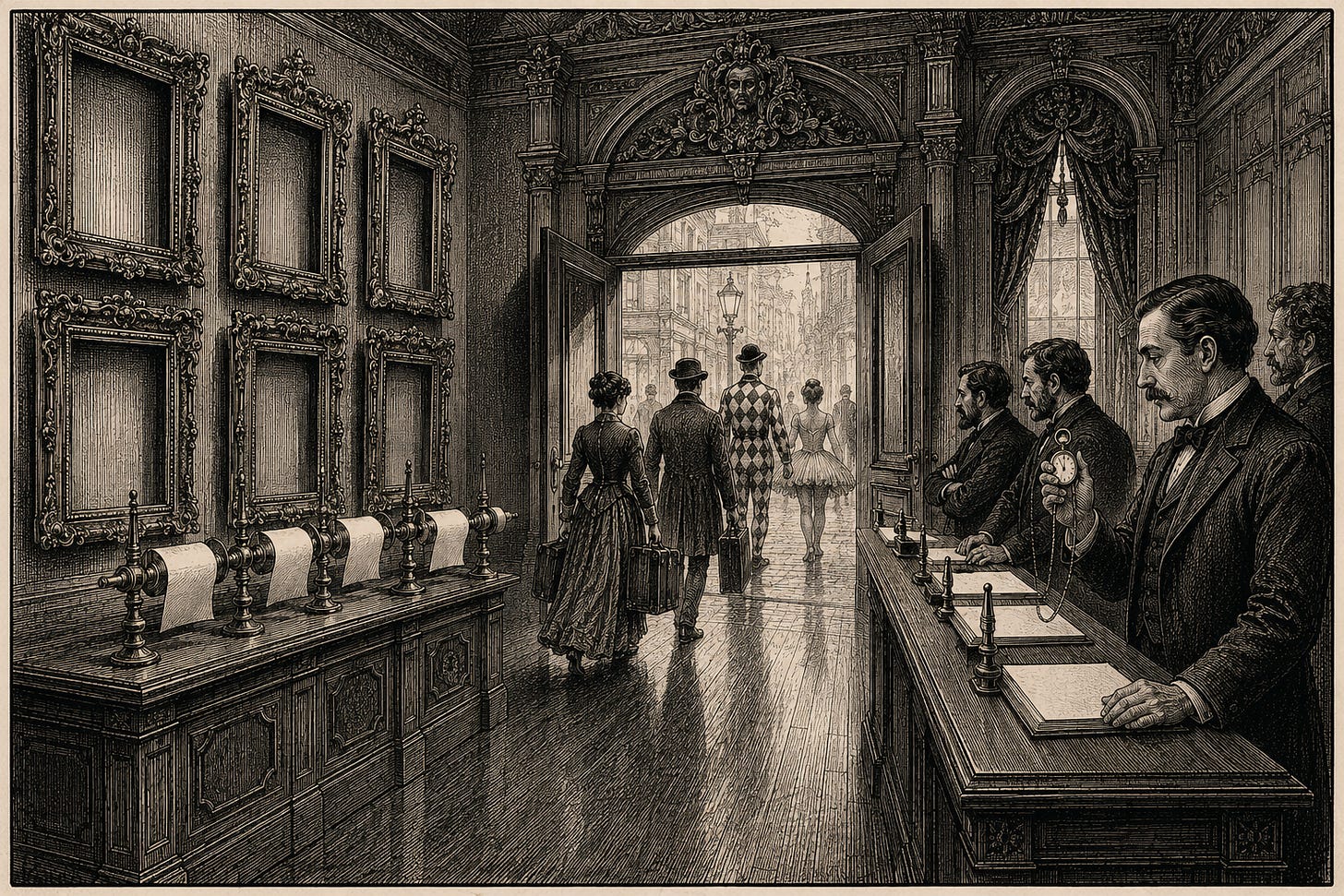
Talent representation is a rental business, at every scale and in every era. CAA does not own Tom Cruise. WME does not own its client list in any sense a lender would accept. The commission stream is real, the relationships are real, and none of it is collateral, because the asset gets up and walks out the door at contract end. This is why agencies trade like services firms, whatever their cultural power, and why nobody has ever securitized a client roster. Lenders have securitized song catalogs, film libraries, pharmaceutical royalties, and airline miles. Nobody has written paper against a stable of represented humans, because the humans have lawyers and the lawyers have calendars.
Hollywood knows this in its bones, because Hollywood tried the alternative. The studio system of the 1930s and 1940s was a serious, industrialized attempt to own talent outright: seven-year contracts, studio-controlled images, loan-outs between studios at a markup, suspensions for refusing roles, with the suspension time tacked back onto the contract’s end. The courts took the structure apart in two moves. In 1944, a California appellate court ruled for Olivia de Havilland against Warner Bros. and held that the state’s seven-year limit on personal service contracts means seven calendar years, with suspensions unable to extend the term. The clock ran on the studio, and no amount of contractual engineering could stop it. Four years later, the Supreme Court decided United States v. Paramount Pictures, outlawed block booking, and forced the studios out of exhibition. That case concerned theaters. The economics that had made warehousing talent worth defending went out with them.
After De Havilland and Paramount, the industry accepted the rental model as physics. Stars became free agents, agencies became the market makers, and the ceiling on every talent-driven enterprise value became structural: build all you want on top of the relationship, the relationship itself expires. The MCN cycle of the 2010s re-proved the theorem for the platform era. Disney wrote down Maker Studios. Awesomeness went from a $650 million implied valuation to a $25 million sale inside two years. The survivors learned to call themselves infrastructure.
So the question that should have been asked decades ago sat unasked, because American entertainment law had settled it and American entertainment culture had internalized it. What happens when someone builds a talent business where the company owns the character?
II. The Flip
Two companies in Tokyo built exactly that, and the mechanics deserve to be stated precisely, because the mechanics are the whole invention.
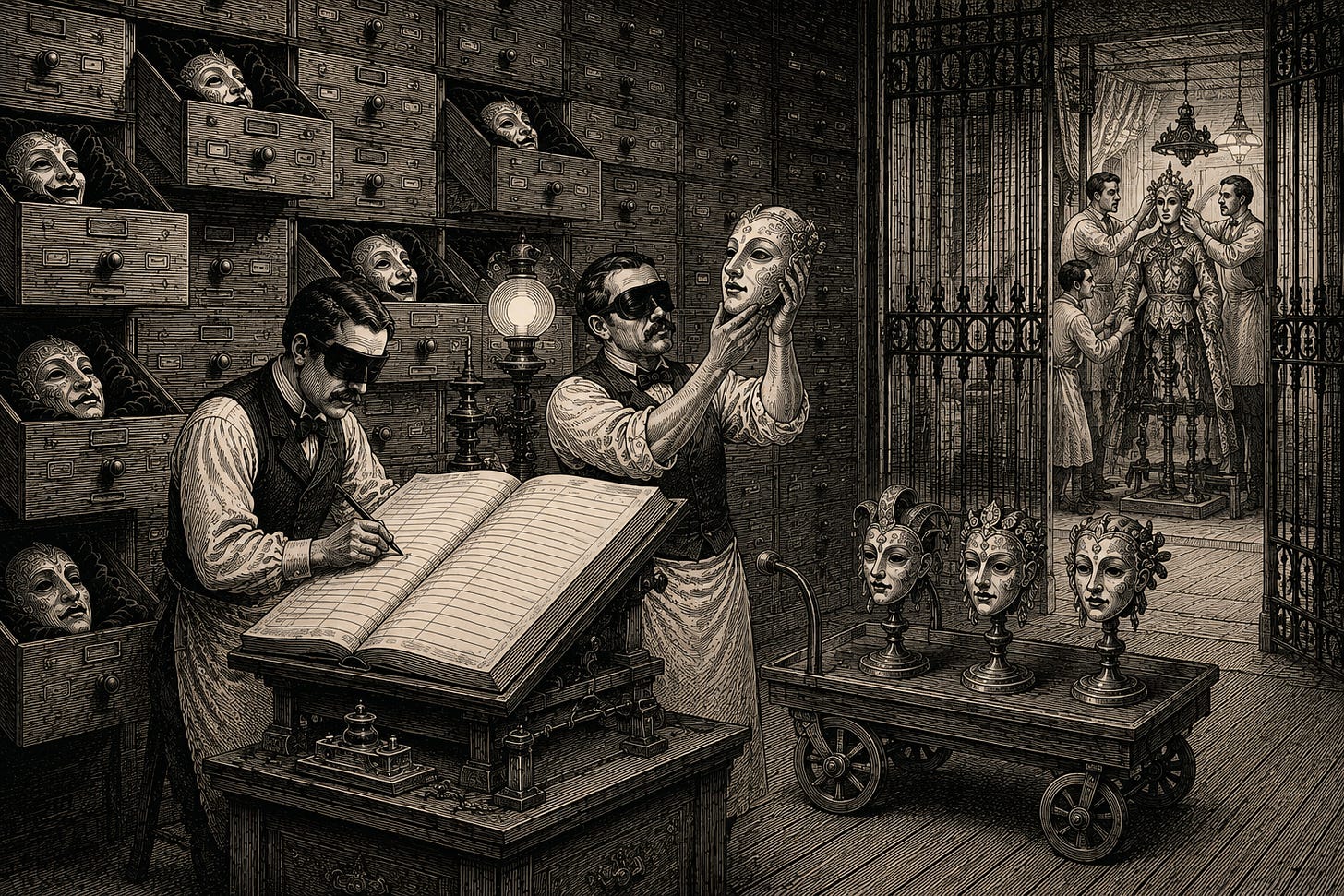
COVER Corp owns Usada Pekora the way Disney owns Mickey Mouse. The character design, the name, the YouTube channel, the back catalog, the merchandising rights: all of it sits inside the corporation. The human performer operates the character under contract. ANYCOLOR runs the same architecture at Nijisanji, and its own securities filings describe it plainly: the company designs the character and its settings, and lends the avatar, name, and account to the performer under a service agreement, with revenue shared. COVER’s talent-facing terms make the ownership side explicit in one sentence: “We do not relinquish our copyright or related rights. We maintain these rights.” When a performer departs, the company retires or archives the character it owns, and the industry’s vocabulary absorbs the event with a euphemism borrowed from school: graduation.
The Disney comparison earns a full paragraph, because Disney is the existence proof that this structure compounds when it holds. Mickey Mouse has changed voices four times since 1928. The cash flow never noticed. Nobody prices Disney against the negotiating leverage or the career ambitions of a voice actor, because the attention attaches to the character, and the character is corporate property. That is what character IP ownership buys: cash flow with a century of duration, severed from any individual human’s balance sheet. It is why a film library can anchor a bond and an actor’s career cannot.
What the VTuber agencies did was import Disney’s ownership structure and bolt it onto something Disney never had: live, parasocial, daily-cadence attention. Usada Pekora is a corporate-owned character who streams for hours at a time, answers her chat in real time, and holds a relationship with her audience that looks nothing like the relationship anyone has with Mickey Mouse. The experiment, stated plainly: can a corporation own the kind of attention that has only ever attached to living people? The market’s opening bid said yes. When both companies listed in Tokyo, in June 2022 for ANYCOLOR and March 2023 for COVER, investors priced them like young IP publishers, at multiples in the 20s and 30s that no staffing business ever sees. When I wrote the founding piece, COVER traded near 20 times earnings and ANYCOLOR near 24. The market was paying for the flip.
Scope the verb before it does any work. Own, here, means the character. The performer can quit tomorrow, and some have. What no performer can do is take Usada Pekora out the door with her.
Hollywood rents its stars. Tokyo figured out how to own them.
III. The Machine Works
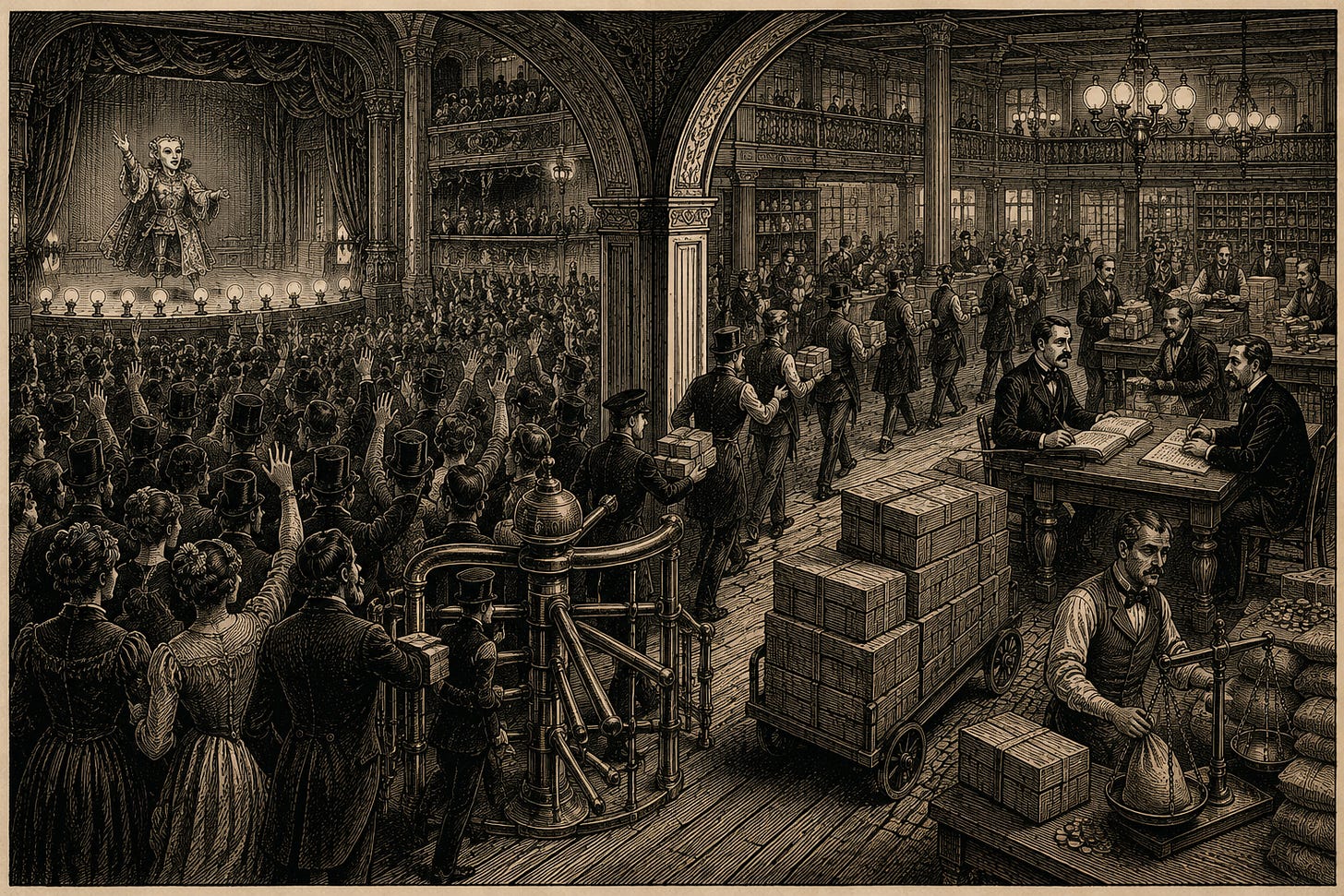
Before the stress test, weigh the evidence that the model produces real cash flow, because it has only gotten stronger since the founding piece.
ANYCOLOR closed its fiscal year ended April 2026 at ¥55.7 billion in revenue, up 29.9%, with ¥20.2 billion in operating profit, a 36.2% operating margin, and ¥14.1 billion in net profit. Hold that margin against anything in the talent business. Agencies run service-business economics; a company clearing 36% operating margins on ¥55 billion of revenue is running publisher economics, and the difference is the ownership structure. The company keeps the character-level cash flows a rental business hands back to the client.
COVER’s growth mix is the part an allocator should actually study. In its fiscal year ended March 2025, revenue grew 43.9% to ¥43.4 billion, and the composition tells the story: roughly 520,000 attendees at self-hosted concerts, up 180,000 in a year, corporate licensing partners up from about 280 to about 370, with names like McDonald’s, PlayStation, and the Los Angeles Dodgers on the list, and a trading card game launched in September 2024 that beat the company’s own forecasts, then grew into a ¥7.2 billion line with more than 20 million cumulative packs shipped the following year. Its characters sell out American venues: hololive English’s first US concert, at the YouTube Theater in Los Angeles, sold out in 2023, and the second filled Kings Theatre in Brooklyn a year later. By the fiscal year ended March 2026, merchandising, events, and licensing made up roughly 81% of COVER’s revenue; streaming, the category outsiders assume is the business, was under a fifth. The same year also carried an honest blemish: COVER wrote down about ¥3.2 billion on its metaverse software project and took inventory write-offs, cutting net profit 45.7%. A company investing badly in software while its core franchise compounds is a management question. The franchise economics are not in dispute.
The point to land: this revenue is the documentable kind. A licensing contract with McDonald’s has a counterparty and a term. A concert has a gate. A trading card game has distributors and reorder rates. Attention is converting into the categories credit knows how to read, which is the precondition for everything this publication exists to track. The precedent worth keeping in frame is the airline loyalty trade: in June 2020, United raised $6.8 billion against MileagePlus, a program its investor materials valued at roughly $21.9 billion, roughly twice the airline’s own market cap at the time, and Delta followed with $9 billion against SkyMiles. The collateral in both deals was documented repeat behavior, wrapped in a program the corporation owned. The aircraft stayed out of it. The VTuber agencies built the same shape one layer closer to the person: repeat behavior, documented on platform rails, wrapped in characters the corporation owns.
If the essay ended here, it would be a fan letter with a balance sheet. It doesn’t end here.
IV. The Stress Test
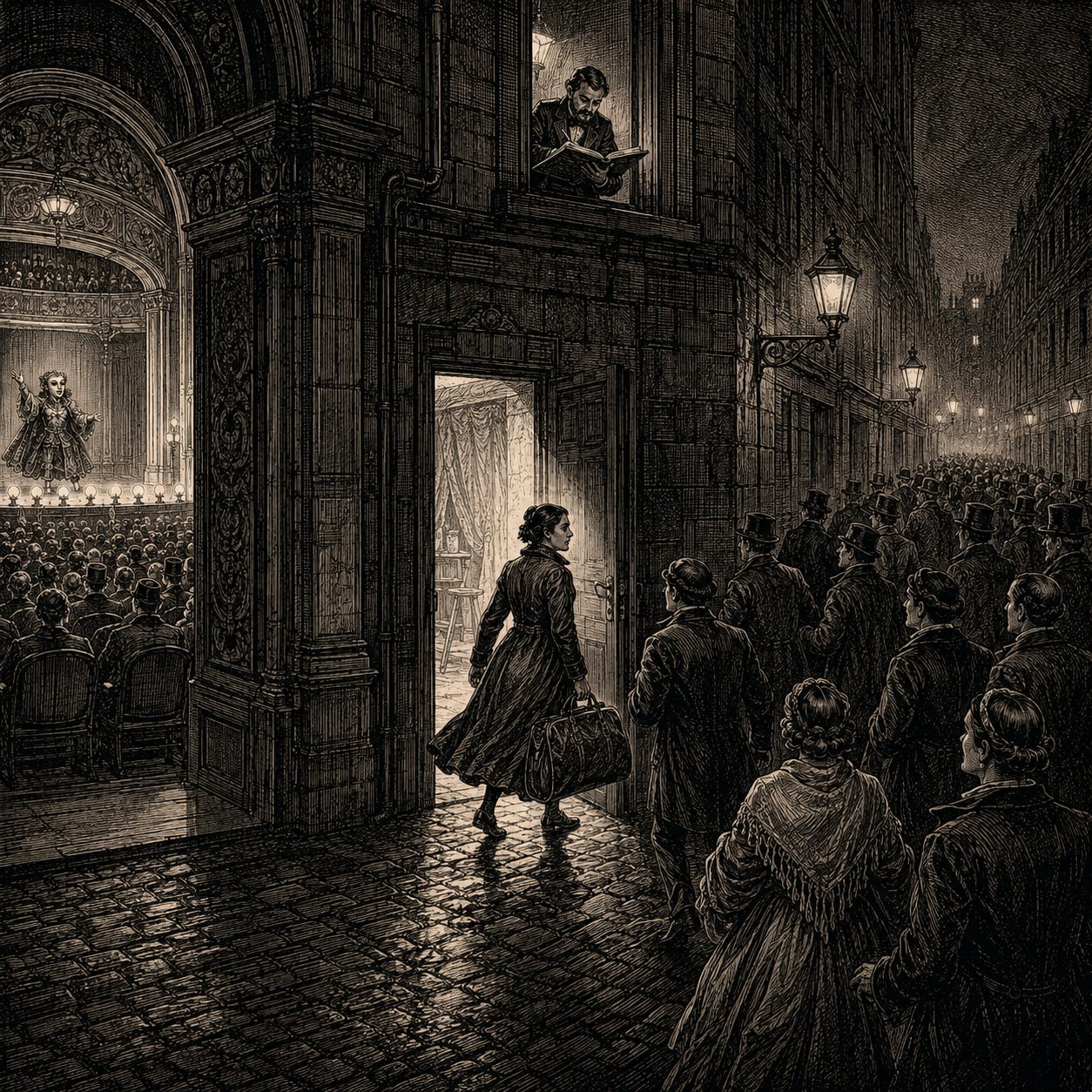
The reason this market matters to anyone underwriting attention is what happened when the structure got hit. Both companies took the hit in public, and the tape is the dataset.
Start with ANYCOLOR, because its stress test came first and printed hardest. On February 5, 2024, the company terminated the contract of Selen Tatsuki, one of Nijisanji English’s most popular characters. This was a termination, a different animal from a graduation, and it was contested: the company cited contract violations, the performer disputed its account of events, and the argument consumed the franchise’s English-speaking audience for months. The stock fell through February and into March. Then, on March 14, after results showed Nijisanji English revenue shrinking, the shares fell 22% in a single session to a record low, erasing roughly ¥44 billion, about $300 million, of market value in hours, with coverage tying the fall to the English branch’s shrinking numbers and the storm around the termination. Meanwhile, the performer’s side of the ledger printed too. She went back to Dokibird, the independent channel she had run before her agency years, announcing the return herself. That channel had been sitting dormant at about 9,000 subscribers. It added more than 250,000 within a day of the termination, then reached 670,000 subscribers and 1.5 million hours watched inside six weeks, her average audience rising from roughly 104 concurrent viewers to about 15,000. The company kept the character. The character has not streamed since. The audience relocated to the person at internet speed.
Honesty requires the full trajectory, because it complicates the story in a useful way. ANYCOLOR recovered: by November 2025 the stock had more than doubled off its lows to a record ¥6,790, and the collapse that followed in mid-2026, a fall of roughly two-thirds from that peak, followed flat guidance and a dividend cut, a growth repricing with no talent controversy in sight. The market does not price these companies on graduations alone. It priced graduation risk specifically, on specific days, in specific yen amounts, and that specificity is precisely what makes the tape usable.
COVER’s stress test ran from the other direction: performers leaving one at a time, on notice, with ceremony. Minato Aqua, one of hololive’s biggest Japanese characters, graduated in August 2024; her farewell stream drew 749,854 concurrent viewers and roughly $237,000 in fan payments on the way out. Ceres Fauna announced in late 2024. Nanashi Mumei followed in March 2025. Then Gura, the most-subscribed VTuber in the world, whose April 2025 announcement was the seventh major hololive departure inside a year and took a tenth off COVER’s market value in a day. And after each departure, the same publicly observable pattern from the cold open: within months, new independent channels appeared, never officially connected to anyone, and audiences migrated to them in the hundreds of thousands, most dramatically the million subscribers who found Sameko Saba within days of a debut the company has never commented on.
Now say what the tape actually shows, in both directions at once. The corporate structure says the company owns the attention. The graduation data says the ownership is partial: a measurable slice of the audience attaches to the human and leaves with her, and a measurable remainder attaches to the franchise and stays. Hololive’s concerts still sell out. The card game still ships. ANYCOLOR still clears a 36% margin selling characters whose original performers include people who no longer perform them. Neither company hid any of this; it is all in the filings, the subscriber counts, and the price history. That is what makes the VTuber market unique in the entire attention economy. Everywhere else, the question of where attention attaches is answered with anecdotes and lawsuits. Here, two listed companies ran the experiment under exchange disclosure rules, and the market graded it quarter by quarter.
The corporate structure says the company owns the attention. The graduation tape says ownership is partial.
V. What the Experiment Measured
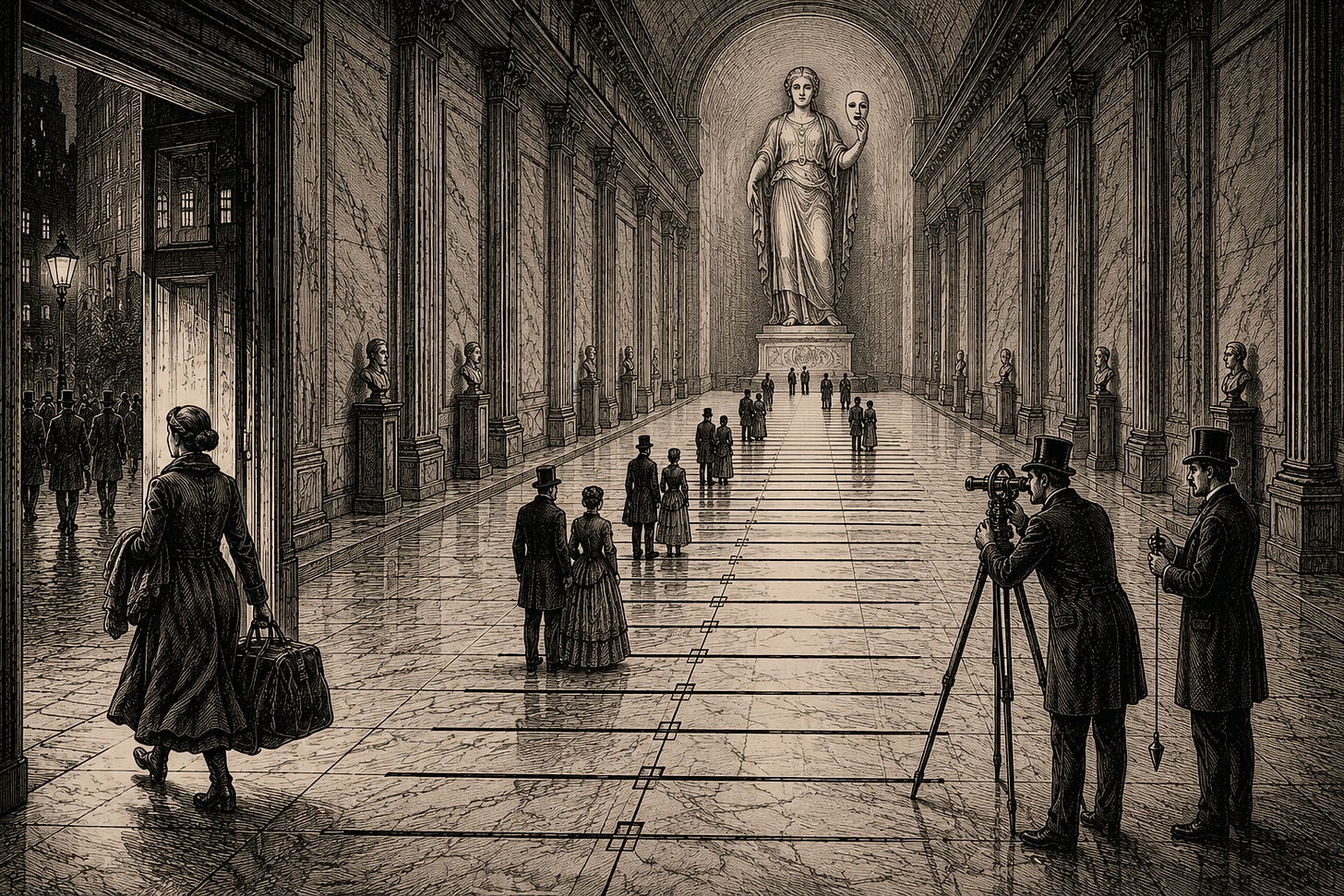
Pull the finding out of the case and state it as a general result, because it generalizes further than VTubers.
Attention attaches along a spectrum. At one end, fully institutional: the attention binds to the IP and survives any human’s departure. Mickey Mouse has burned through four generations of voice actors without a single impairment. At the other end, fully portable: the attention binds to the human and travels with her, and the entity holding the contract holds nothing else. A solo podcaster’s audience is the limit case; so is every agency client roster since 1948. Most attention-driven businesses sit somewhere between the poles and have no idea where, because nothing ever forces the measurement.
VTubers sit in the middle of the spectrum, and the graduation events are the instrument that measures exactly where. Each departure runs the same natural experiment. The franchise keeps the character, the catalog, the brand. The human keeps her voice, the improvisational fingerprint, the two-way thing she built with the chat over thousands of hours. And the audience, watching all of it, votes with its subscriptions. The votes are public. A million followed one performer in three days. Hundreds of thousands followed another within six weeks. And the franchises retained enough to keep filling theaters and clearing publisher margins. The split is a coefficient, and the VTuber market is the only place on earth where it prints with tickers attached.
For anyone underwriting attention-driven cash flow, this coefficient is the entire question, because you lend against what survives the departure. Two character franchises can show identical revenue lines and be entirely different credits: one has demonstrated performer-transition history, documented audience retention through a departure, and a diversified roster where no single human is load-bearing; the other has never been tested. The untested franchise may be the better business. A lender has no way to know, and on a credit committee, unpriced reads as worse. The market has already started expressing this arithmetic in the comps: as of late July 2026, ANYCOLOR, whose stress test was the harshest, trades near 12 times forward earnings, below Amuse, a traditional Japanese talent agency, while COVER trades in the high teens. The same market that once priced both like young IP publishers now prices them across the spread between owning the character and renting the person, and that spread moves on exactly the events this essay has been describing.
This is, at tier level, the problem the AQS framework exists to separate: durability, whether the behavior persists through shocks, and cohesion, whether the audience’s attachment sits with the institution or with individuals the institution can lose. The VTuber market is the best public dataset anyone has for either question, because it is the only market where the attachment gets severed on camera, dated, and priced by an exchange before the quarter closes.
You lend against what survives the departure.
VI. What This Means for Capital
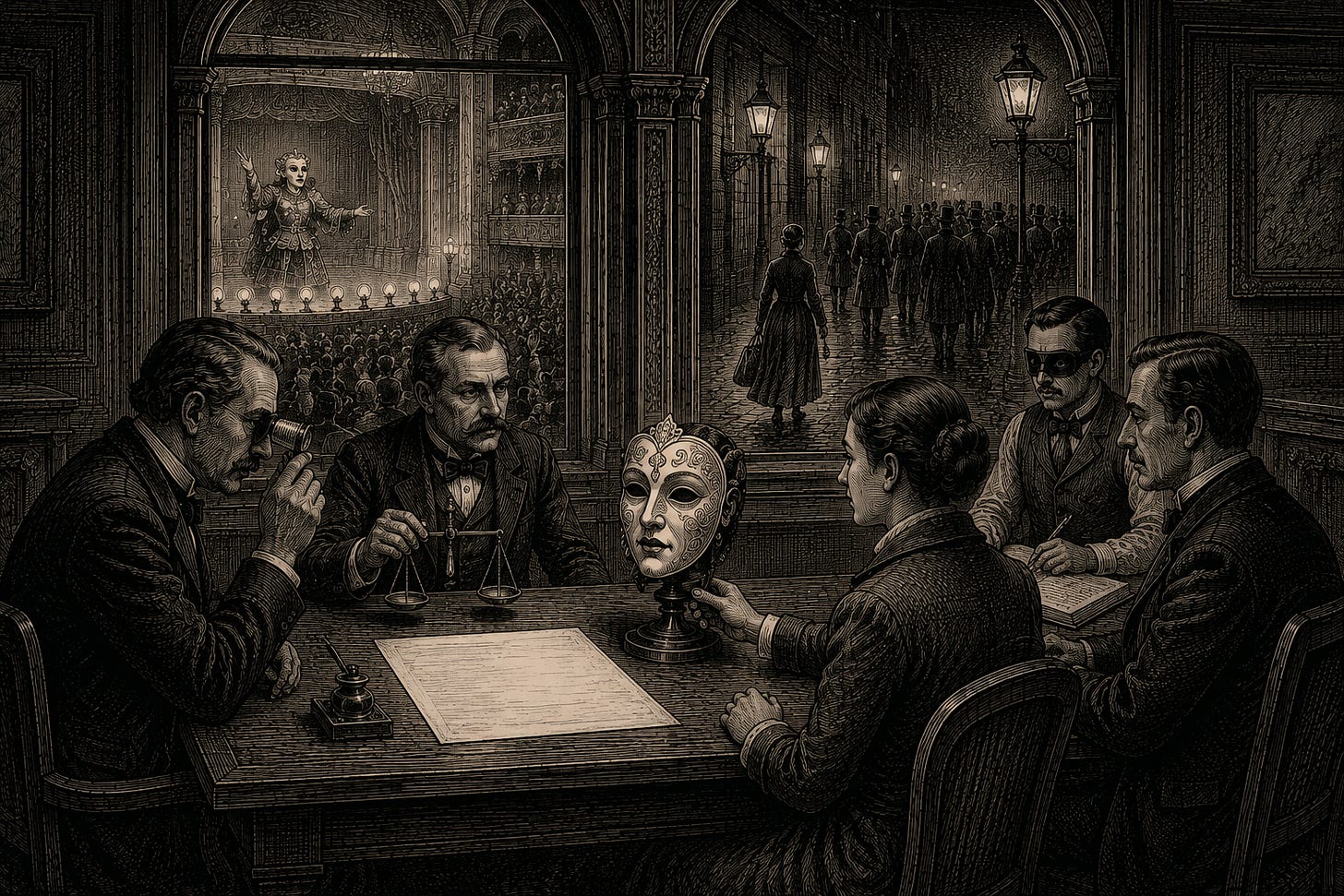
Three audiences, one implication each.
For operators building talent businesses, the finding is structural: your ownership architecture determines your multiple before your revenue does. ANYCOLOR clears margins no agency has ever printed, and it does so because the corporation owns the characters, the channels, and the catalog. The same revenue booked through a rental structure would price like a services firm. If you are building anything talent-driven and you have not decided where the IP sits, the market in Tokyo has already told you what each answer is worth, and it has also told you, through the graduation tape, what the ownership answer costs in fragility if the humans inside the characters conclude the structure works against them.
Legacy media should sit with this one a while longer. The studio system died trying to own the performer. Warner Bros. held Olivia de Havilland with suspensions until a court counted the calendar and let her go. The Tokyo structure never has to hold anyone. The ownership sits in the character IP, the exit sits in the contract, and when a performer walks, the company keeps what it registered and loses what it never held. Whether the individual contracts are fair is a separate question, contested in this market the way talent contracts are contested everywhere, and outside this essay’s file. The architecture is the point. It moved the ownership fight off the person and onto the property, and that is the one move the studios never made in 80 years of trying.
The allocator translation is the one this publication keeps arriving at from different directions: the first lenders into a category underwrite the risk everyone else calls unquantifiable, and they get paid for the decades that follow. If creator and character credit prints, it prices transition risk first, the probability-weighted answer to what stays when the human leaves. Most of the attention economy offers no data on that question at all. This corner offers listed comps, dated severance events, public audience-migration numbers, and rating-agency-grade disclosure, marked daily in Tokyo. And note the asymmetry: the entire global VTuber sector runs at about $3.1 billion in 2026 by industry estimates, and the two listed leaders together carry a market value near $1.5 billion, for a category whose single departure announcement out-drew most cable news programs. Real cash flow, documented behavior, thin market caps, and no credit market anywhere in sight. Early asset classes look exactly like this.
The Lingering Questions
No bow on this one. Three questions instead, because the experiment is still running.
If a company can own the character while the performer owns the connection, whose collateral is the audience? The filings say one thing, the migration numbers say another, and the honest answer is that the collateral divides along a line nobody has drawn precisely enough to lend against. Yet.
When the next graduation hits, and it will, does the market price it as a talent departure or an impairment? The answer decides whether these are staffing companies with IP or IP companies with staffing, and both Tokyo listings currently trade on the fence between those two readings.
And the question that points at everything this publication exists to build: if Tokyo already proved attention can sit on a corporate balance sheet, and the market has already priced how much of it stays there under stress, who builds the credit market that lends against the part that holds?
Why Subscribe
Because the first talent businesses in history to put attention on a corporate balance sheet trade in Tokyo, the market just spent two years measuring how much of it actually stays there, and almost nobody in Western capital markets is reading the tape.
Every week, Attention Capital tracks how documented audience behavior becomes enterprise value: the contracts, the balance sheets built on them, and the layer underneath that finance has not learned to read. If you allocate capital, this is where attention-backed credit shows its shape before the first deal prints. If you operate in media or talent, this is where the ownership structures that set your multiple get taken apart in public. If you build audiences, this is the market learning what the relationship you hold is actually worth.
Get the SOS. Brief
The sharpest streaming intelligence, delivered to your inbox.