Two Networks, One Latino Audience, Completely Different Bets
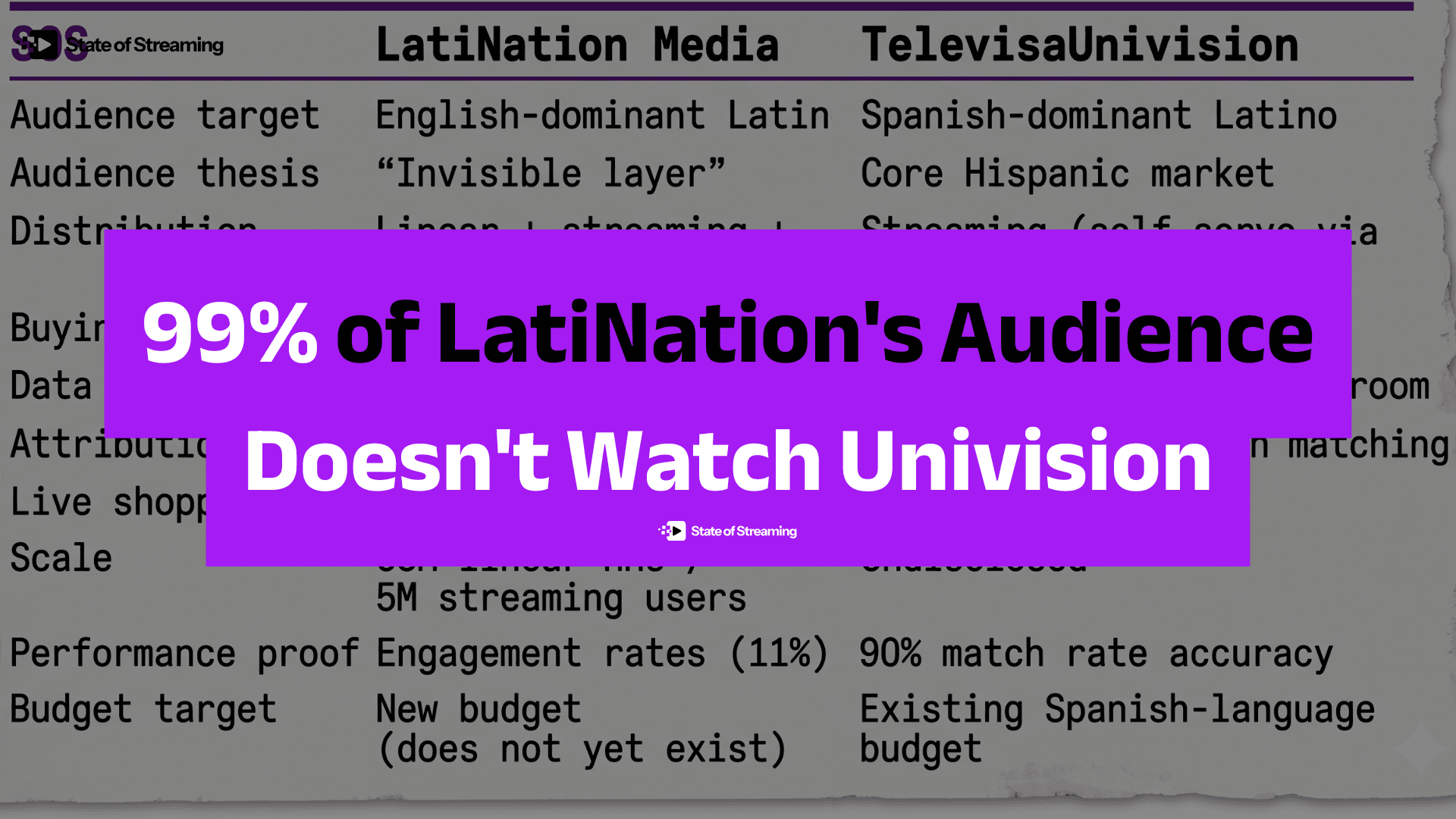
Two media companies are competing for the same opportunity in U.S. Latino advertising. They see the market differently, a good thing, but does the market see them as serving different audiences?
LatiNation Media, the independent bilingual network that grew out of LATV, presented its full ecosystem at the IAB NewFronts in March. TelevisaUnivision, the dominant Spanish-language broadcaster, announced this week that its streaming inventory is now available through fullthrottle.ai's self-serve ad platform. Both moves target U.S. Hispanic audiences. The gap between them is the argument.
The Audience Disagreement
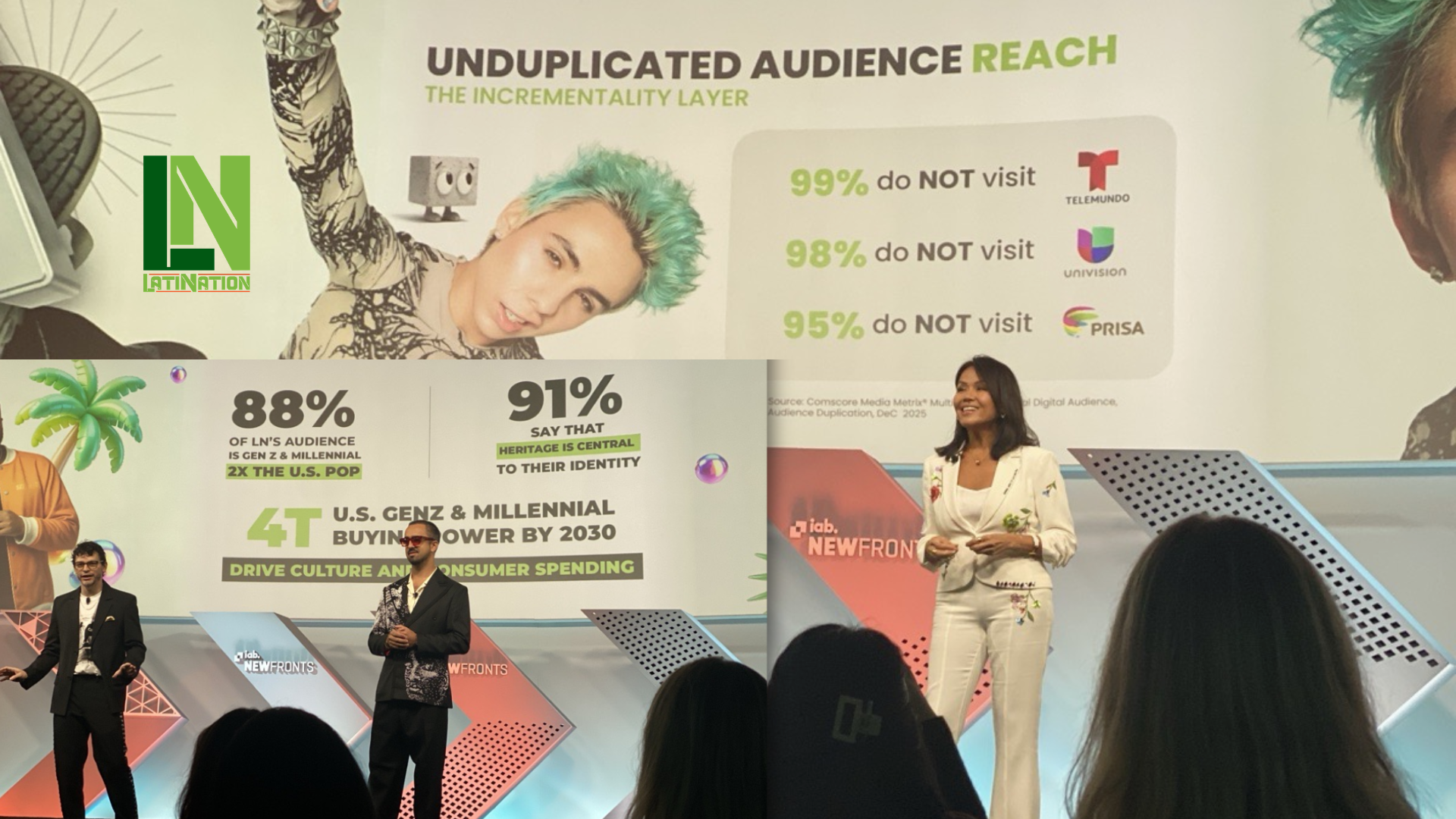
LatiNation's pitch begins with a structural claim about who the Latino audience actually is. Seventy percent of Gen Z and millennial Latinos primarily speak English, according to the company's own research conducted with ThinkNow. That segment represents nearly $4 trillion in spending power by 2030. LatiNation CEO Andres Palencia and COO Bruno Ulloa call them the "invisible layer" — English-dominant, culturally identified Latino consumers who do not appear in Spanish-language media plans. The company says 99% of its audience does not visit Telemundo and 98% does not visit Univision.
TelevisaUnivision's approach treats the Spanish-language audience as the core Hispanic opportunity and is building better plumbing around it. The fullthrottle.ai partnership uses data clean room technology to match advertiser first-party data with TelevisaUnivision's household graph, targeting campaigns to households at the ZIP code level. The goal, per Brian Lin, TelevisaUnivision's SVP of Product Management and Advertising, is to make Hispanic streaming inventory easier to buy and measurably more effective.
The Infrastructure Question
LatiNation's scale is modest by comparison. LATV reaches 63 million U.S. households through linear distribution. The LatiNation streaming app runs five channels with 5 million unique users and posted year-over-year gains of 47% in views and 79% in minutes viewed. Social engagement rates are running at 11%, well above industry benchmarks and a live shopping channel is in development.
TelevisaUnivision's self-serve move follows a broader industry trend. Roku and others have launched similar platforms as streaming media buyers push for performance proof on par with search and social. Fullthrottle.ai claims 90% match rate accuracy using first-party data and has an attribution product that connects streaming campaigns to purchase data.
What Happens Next
The two companies are not really competing for the same ad dollars — yet. TelevisaUnivision owns the existing Spanish-language media budget. LatiNation is arguing that a separate, larger budget for English-dominant Latino audiences does not yet exist and that it should.
The forward-looking tension is whether buyers construct one Hispanic media strategy or two. If LatiNation's "invisible layer" thesis holds, a single Spanish-language buy continues to leave the fastest-growing segment of the demographic unaddressed. If TelevisaUnivision's self-serve infrastructure proves out at scale, performance data may drive budget consolidation regardless of audience nuance.
Get the SOS. Brief
The sharpest streaming intelligence, delivered to your inbox.