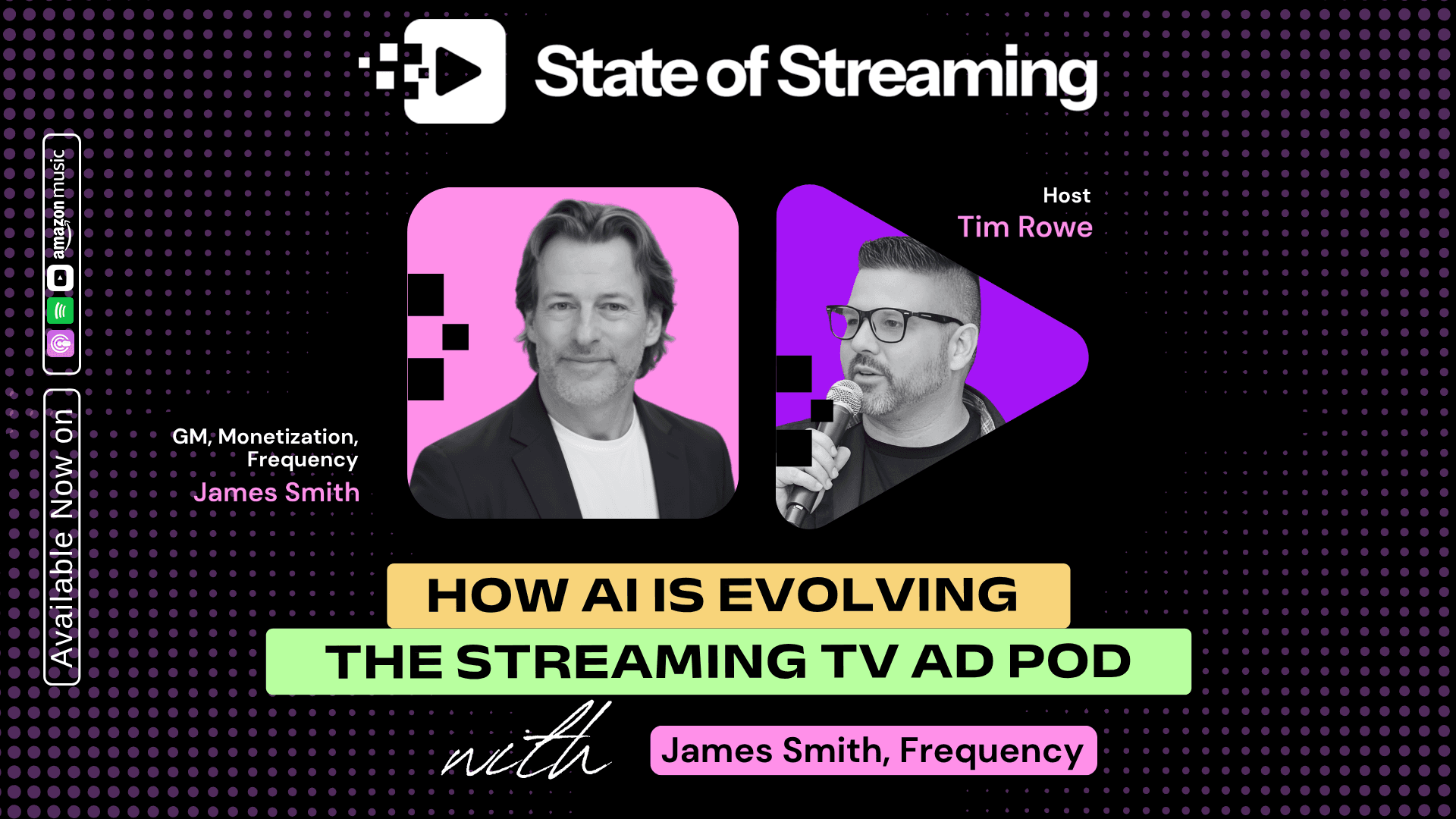
NEW PODCAST: Are 'More Ads' Actually Making You 'More Money'? Frequency's James Smith Says 'Probably Not'
Every monetization strategy starts with the same assumption: more ad load equals more revenue. Stack the pod, hit your fill rate, cash the check. Right?
Meet James Smith. James leads monetization at Frequency and he has the data to show you how that's probably backwards. And today he breaks down four key insights that should change how you think about ad load, supply path, and what streaming ad dollars are actually competing for:
1. FAST channel overload created a fill-rate crisis.
In 2019, fast channels were a novelty. In 2026, platforms carry hundreds of them, and most are never even discovered let alone watched. Undiscovered channels don't generate advertising revenue because that is the inventory supply that ad demand seeks. That leads to low advertising fill rates and what ultimately shows up for the viewer as black screens and "too many commercials" — not because it's good business, but because it's the only lever that has existed.
2. Fewer ads = Higher conversion rate = Premium CPMs
James points directly to Jounce Media's research: the fewer ads in an environment, the higher the conversion. Frequency's in-scene ad product is built around that finding — using AI video introspection to identify ad moments during the content itself, contextually matched to the scene, so the pod can shrink without the revenue shrinking with it.
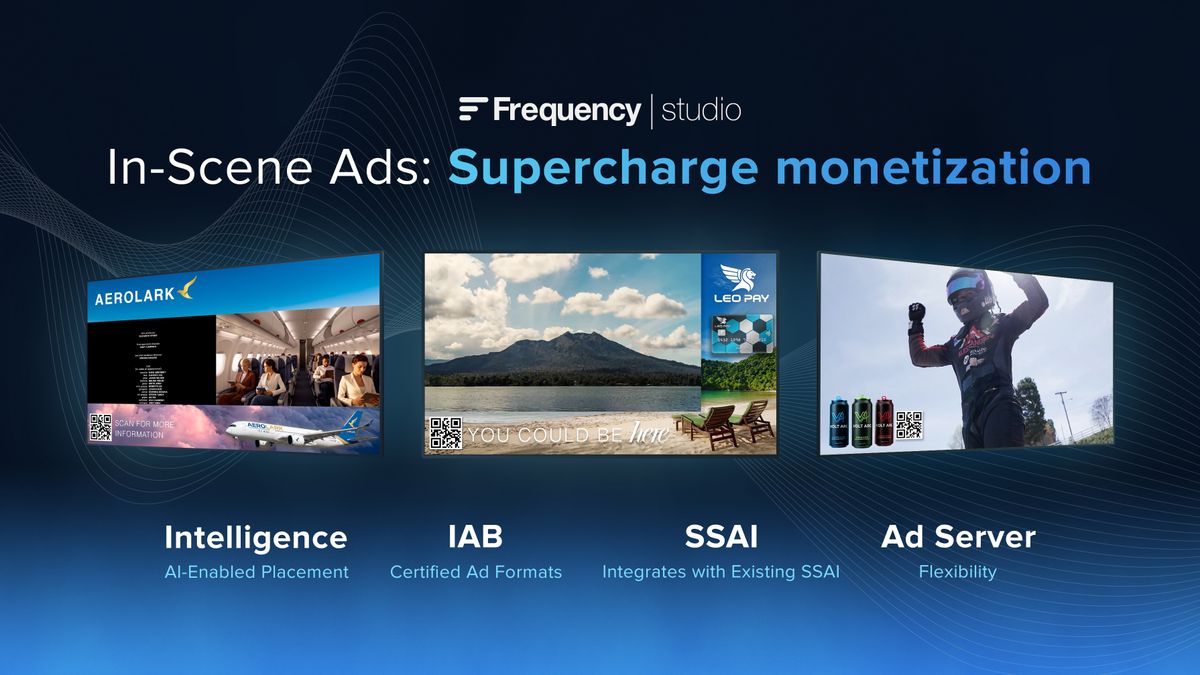
(Image courtesy of Frequency In-Scene Advertising announcement)
3. Proximity to the stream is the new supply path optimization.
Every hop between an ad running and publisher getting paid adds fraud risk and kills transparency — the exact problem SPO was supposed to solve and mostly hasn't. James submits that Frequency's position upstream, at channel origination and server-side ad insertion, puts it structurally closer to clean supply than SSPs several resellers deep.
4. The next ad isn't a better ad. It's a better guide.
James's bet: personalize the streaming TV guide first, and targeted, contextually relevant advertising follows on its own — the same way Instagram's feed conditions purchase behavior before a single ad loads. He points to World Cup hydration-break ads as proof that endemic, contextually-earned advertising doesn't irritate — it performs.
Bonus: Where dynamic creative is headed
James previews an ad balancer that pairs pod reduction with in-scene units — plus dynamic creative that swaps by geography in real time. Same ad concept, different local retailer, different call to action, same 44-minute show.
If any of these four points changes how you think about your ad strategy, the full conversation goes deeper on the mechanics behind each one — including where the demand side is already moving.
📺 Watch or 🎧 Listen to the full episode here: https://podcast.stateofstreaming.com/james-smith-frequency-s4-e3
Get the SOS. Brief
The sharpest streaming intelligence, delivered to your inbox.