The 120-Minute Problem | A Column by Russell Fink
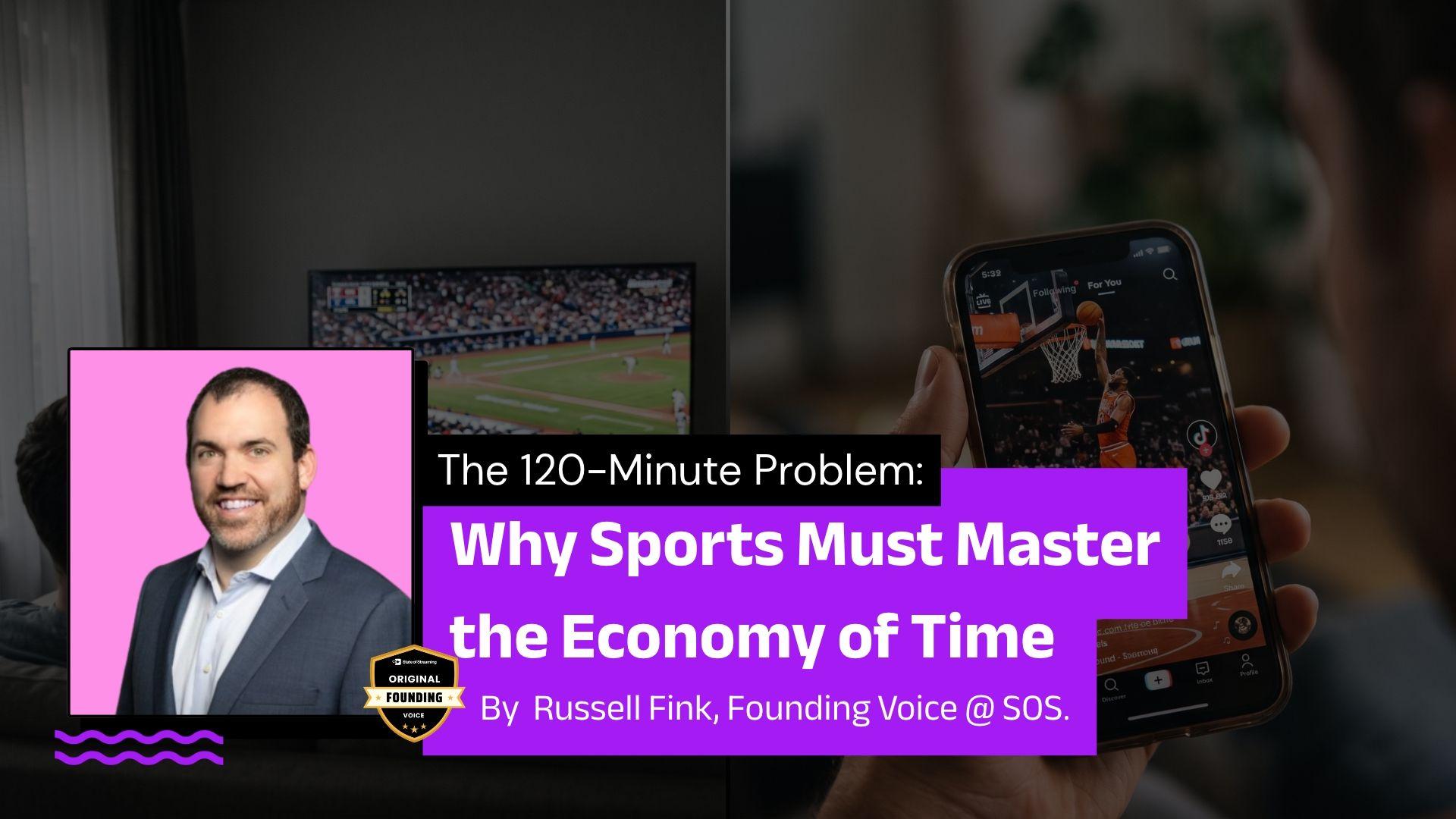
When it came to his films, Alfred Hitchcock is widely thought to have quipped, "The length of a film should be directly related to the endurance of the human bladder." Okay, maybe Psycho or Rear Window don’t have anything to do with sports, but Hitchcock was on to something. If two-hour movies tested the audience’s patience over 60 years ago, then how, in this day of swiping and declining attention spans, do we ask people to watch sporting events lasting over three hours? Are sports out of touch with modern consumption habits?
The Anatomy of Dead Time
In an NFL game, there are 60 minutes on the clock, but the average runtime is more than 3 hours. Studies show there is only 11 minutes of real live action. For an MLB game, there are only approximately 18 minutes of actual live action for a 3-hour scheduled game. In the NBA, the excitement often happens in that final minute of the game, but that minute is a misnomer, considering those 60 seconds can actually last almost 7 minutes. It’s ironic that when my son sees a minute left in a close Knicks game, he knows he has time to go to the restroom, get a snack, check some stats on his phone, all before the final drama hits.
The sports industry has become extraordinarily adept at monetizing each moment of a game, but has it become equally good at making those minutes valuable to the audience? There is a lot of discussion about the economies of attention but what about the economies of time?
Manufactured Inventory vs. Viewer Experience
More game time equals more advertising inventory, sponsorship opportunities, and more time for branding, marketing, and audience retention. The strategy is to keep your fans longer on your platform to maximize the revenue opportunities. Leagues want bigger deals to extend the value of their media rights. Distribution platforms want to justify those investments. There is nothing wrong with that. But there could be a point where this creates a conflict with the viewer experience.
Look at this past summer’s FIFA World Cup and the insertion of the ‘hydration breaks’. These three-minute breaks were created for the safety of the players from the immense heat of the summer. Yet they aired regardless of the weather or venue (some venues were indoors and climate controlled). These mandatory breaks brought in approximately $250 million in new ad revenue for FOX. But this exemplifies the growing tension between monetizing time and maintaining audience engagement. Are leagues maximizing short-term advertising opportunities at the expense of long-term audience habits?
The Economy of Time: Attention Spans vs. Perceived Value
Whether it is the fragmentation of distribution or social media, sports are anywhere and everywhere, fighting for attention. Many younger fans experience sports through highlights, creators, social media, and second screens rather than exclusively watching full games. Yet this hasn't diminished fans' willingness to sit through a three-hour NFL broadcast (and a post-game show), watch overtime for any NBA game, or extra innings for an MLB game. The drama of sports is paramount, so the objection is not necessarily to long events but to time viewers don’t believe is worthwhile. The difference isn't simply age. It's perceived value. Younger viewers aren't necessarily rejecting long-form sports. They may be making different decisions about which events deserve their time.
Modernizing the Clock: From Pitch Clocks to 10-Minute Quarters
We are seeing some changes in sports to alleviate these issues. In 2023, MLB introduced the pitch clock, enforcing strict limits between pitches and inning breaks. This brought the average game times down by 24 minutes. MLB didn't shorten the game by removing innings. It made the existing innings more efficient.
The NBA is also looking at their format. Last year, NBA commissioner Adam Silver openly discussed the idea of moving from 12-minute to 10-minute quarters, citing changing viewer preferences and specifically trying to create a two-hour broadcast. But these might be small band-aids on a larger question:
Do sports have a length problem or a value of time problem?
Sports is more than just live action. It sells community, anticipation, drama, and shared experiences. But in this current attention economy, even those powerful advantages have limits. The question isn’t whether younger fans love sports. It’s whether they love sports enough to spend three hours watching the way previous generations did. Not every minute has to feature actual game action. Anticipation and suspense are part of the entertainment. The issue is whether those minutes contribute something meaningful to the overall experience.
Measuring Engagement Over Raw Runtime
Stop measuring the experiences only through traditional consumption methods. Broadcasters need to look more closely at engagement and retention patterns, not just broad audience totals. Focus on the quality of engagement and retention. Audiences are there in all ages and demographics. But generating additional impressions doesn’t automatically create a better story or better audience relationship.
The real challenge is not simply game length, but the value of the time audiences are asked to give. It is simple. It is not about shortening events but reducing the over-monetization of added time. Don’t cut the action, shrink the wasted time and don’t sacrifice revenue, monetize more strategically and meaningfully.
I'm not suggesting every sporting event needs to be under 120 minutes. But as Hitchcock might remind us, when you gotta go, you gotta go.
See More From Russell Fink Here:
The Last Truly Shared Experience: Live Sports Own the Attention Economy | A Column by Russell Fink
The Middle Class of Sports Is Struggling — Does It Have a Path Forward? | A Column by Russell Fink
Too Much of a Good Thing? Sports’ Measurement Problem | A Column by Russell Fink
Get the SOS. Brief
The sharpest streaming intelligence, delivered to your inbox.