Surviving Wing Bowl and the Indie Streaming Wars: An interview with Pat Taggart, Director, No One Died: The Wing Bowl Story
For 364 days, most of the participants were completely anonymous. For one day a year, these people got their shine and had 30,000 people on their feet screaming for them. - Pat Taggart
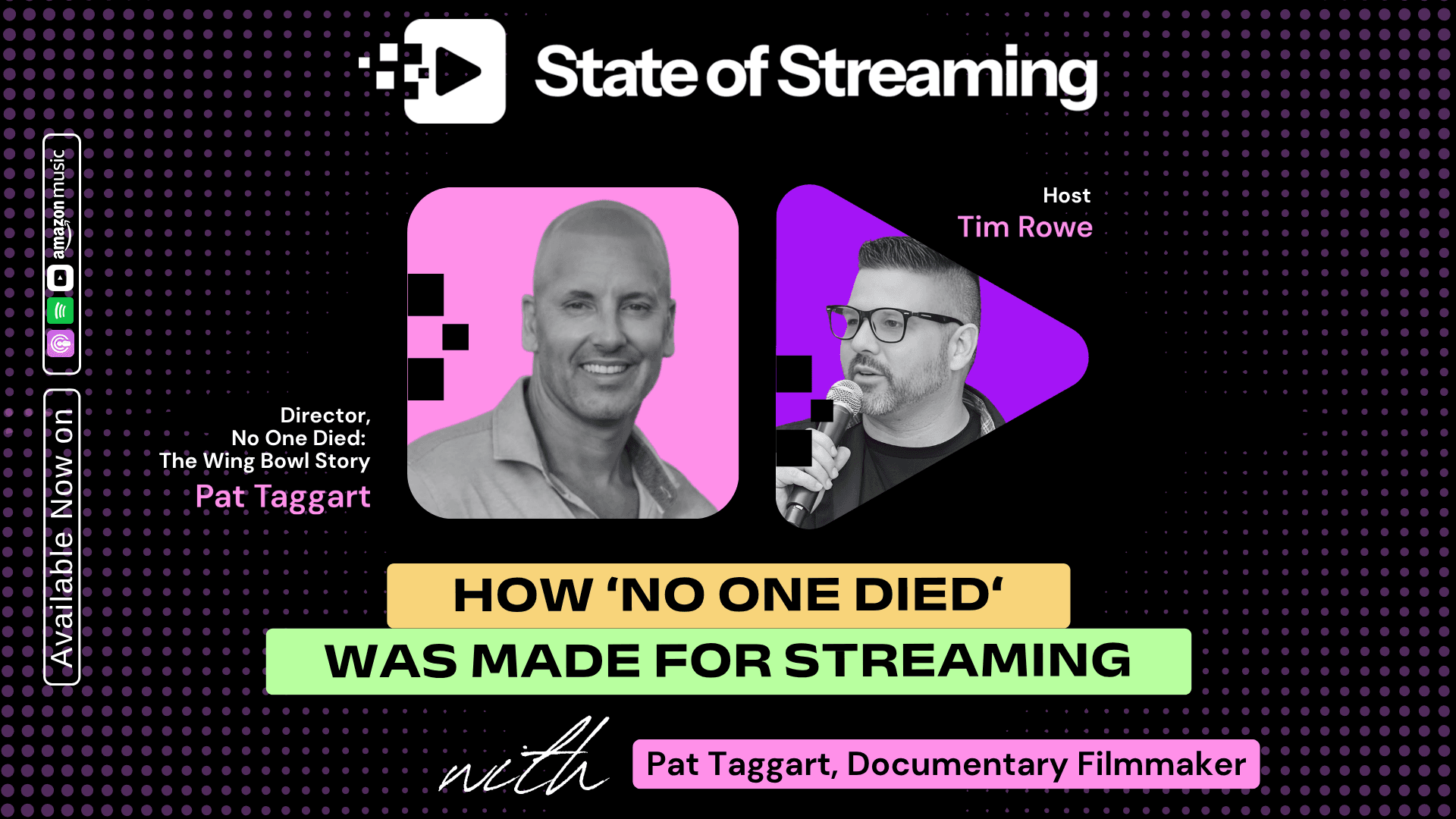
In this conversation, we sat down with Pat Taggart, filmmaker and director of No One Died: The Wing Bowl Story. Pat takes us behind the scenes of how a morning radio joke in 1993 exploded into a 30,000-person arena spectacle, celebrating Philadelphia’s most chaotic winter tradition. We discuss the human story and wild pageantry behind the 26-year phenomenon, how to edit hundreds of hours of raw footage into a cohesive narrative, and why independent creators are turning down major studio deals to navigate the ugly realities of today's streaming distribution market.
Meet Pat Taggart and Wing Bowl
Tim Rowe: Every great story has great characters. Who is Angelo Cataldi?
Pat Taggart: In my world, Angelo Cataldi was the only must-have in telling this story. He was the only yes we needed to move forward. Angelo Cataldi is the most iconic voice in Philadelphia sports talk radio. He's the guy that breathed life into Wing Bowl, brought excitement, and drugged three months of programming out of a four-hour annual event.
The 1993 Origin Story
Tim Rowe: So Angelo is on air. We're back in 1993. Take us back in time. Where does this idea come from? How does this become a thing?
Pat Taggart: It would have never happened if the Eagles didn't suck as bad as they did. And they sucked. Angelo Cataldi's on air partner is a guy named Al Morganti. So they're on the air lamenting about another Super Bowl approaching and the Eagles nowhere near Super Bowl contention. And Al, as a passing comment, says, "You know, we should do something on Super Bowl weekend. Make it our own. Have our own party."
So they did a Friday remote broadcast at the Wyndham Franklin Plaza, which at the time was one of Philadelphia's most upscale hotels—think Ritz-Carlton type of hotel. Now picture a folding table with two fat guys eating chicken wings as business people are checking in and out of this hotel. To the surprise of the radio station, 200 drunk hooligans show up to watch this chicken wing eating contest, some of them drinking beer out of brown bags in the lobby. The hotel was aghast and said as soon as it concluded, "Don't ever come back and do this again." Year two, 700 people showed up in an ice storm to watch a chicken wing eating contest in the dead of winter.
Community, Characters, and Pageantry
Tim Rowe: A reviewer from the Florida Film Festival described it as strangely heartfelt. Behind the beer, the grease, and the chaos, what is the human story? Why was this so captivating?
Pat Taggart: The coolest thing about Wing Bowl was for 364 days, most of the participants were completely anonymous. You have landscapers, security guards, plumbers, mailmen. For one day a year, these people got their shine. They know what it's like to walk out and have 30,000 people on their feet screaming for them and knowing their name. These people got an incredible moment in the sun, and they formed like this brotherhood and sisterhood.
Tim Rowe: You had Jason Kelce, Ric Flair, Dennis Rodman, Snooki—this was a star-studded event.
Pat Taggart: When you carry on as long as this did, 26 years, you have to keep introducing new things. And at some point, somebody said, "Let's start bringing in celebrities." So that's where you get Rodman and Flair and McFoley and several adult entertainers. Remember, this is a radio station putting on an event for 30,000 people. They didn't hire an event company, they just kind of figured it out and hope no one died and hope they got through to the end of the broadcast.
Editing Strategy for a Documentary
Tim Rowe: Pat, from an editing standpoint, what was your organizational strategy? You're looking at almost three decades of footage here telling this story of crescendo. How do you approach that as a storyteller?
Pat Taggart: Probably the first 80% of editing is not fun. My process is this after every interview, I cut down each individual interview to anything that's usable—we did 40 for this movie—cutting out things that were too parochial.
From there, I create what's called buckets. I'm identifying all the common topics that people talk about, and then I'm finding all the clips from those cut downs and putting them in those buckets. At that point, I treat a movie as several short films. Once I have all of those, then I can figure out where do all these short films logically fit to tell a cohesive story.
Incredible Stories Left Out
Tim Rowe: What is some footage that didn't make the final film that maybe you wish had or could see the light of day?
Pat Taggart: A guy proposed he was going to eat a bunch of grilled cheese sandwiches in a short amount of time. His time comes and he doesn't show up for his live on-air stunt. At the next commercial break, the door bust open. Here's a guy standing in a doorway bleeding. He had a backpack full of grilled cheeses and got attacked by stray dogs on his way to the studio because they smelled the grilled cheese in his backpack. One guy's eating stunt was he was going to eat three actual wax candles. It just attracted the craziest, wackiest people, and that was the goal.
Indie Distribution Gets Ugly
Tim Rowe: You had so many distribution offers in this process. What are the obstacles filmmakers are facing right now on the distribution side?
Pat Taggart: Distribution is a really, really murky world right now. During COVID, the major streamers, your Netflix, your Hulu, they were buying product at a massive multiple because they had captive audience. Because of that, the pendulum has totally switched to the other side where now you have documentaries that were made for $200,000, $300,000 being purchased for $30,000 because people have no recourse.
Pat Taggart: We had two of the largest production companies on the planet approach us about a partnership where they wanted to take our film, put a couple needle drops, add a little bit more archival footage, and take all control of the film. They could not have paid us in certain outs in the contract, and they could have taken me off as director and Frank Petka off as producer.
Ultimately, what we did is we said, let's not go through a distributor, let's go through what's called an aggregator, self-distribute, get our film up on the platforms. Yeah, it's gonna cost us a lot more money up front, but we wanted to make sure that the film that's out is the film that we intended to make, that we were doing right by the people that were in the film.
Want to watch or listen to the entire conversation?
Get the SOS. Brief
The sharpest streaming intelligence, delivered to your inbox.