The State of FAST TV: From Free Content to a New Advertising Powerhouse | A Column by David Dembowski
Editor's Note
This executive analysis by David E. Dembowski — media executive and contributor tracking the evolving economics of video distribution, CTV adtech, and audience monetization — examines the rapid expansion of Free Ad-Supported Streaming Television (FAST), the transition from channel proliferation to content discovery, and the imperative to optimize ad yield across modern connected TV.
Free Ad-Supported Streaming Television (FAST) has evolved from a secondary distribution channel for library content into an increasingly important component of the global media ecosystem. What began as a convenient, no-cost alternative to subscription streaming is becoming a meaningful source of audience reach, advertising revenue, and competitive differentiation.
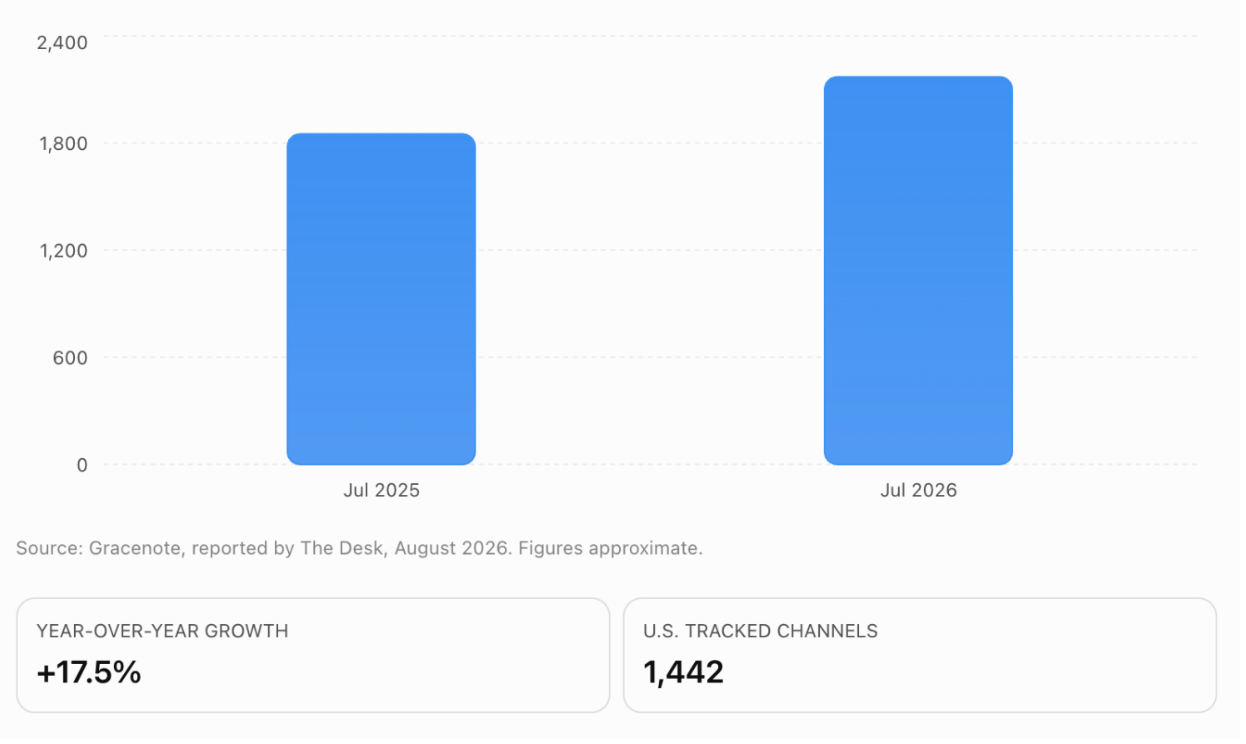
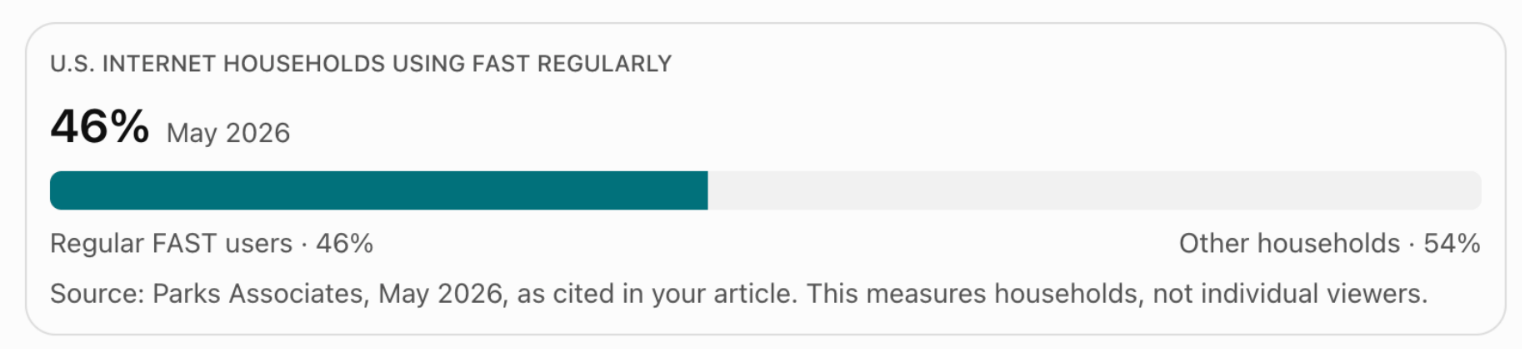
According to Parks Associates (May 2026), 46% of U.S. internet households regularly use FAST services to watch long-form content. Meanwhile, Gracenote reported in August 2026 that the global FAST ecosystem had expanded to more than 2,170 channels, representing 17.5% year-over-year growth. This is no longer an experimental distribution model. FAST has become an established part of the television landscape.
The Economics of Free Are Becoming More Attractive
FAST's growth reflects an important shift in consumer behavior. As subscription costs increase and consumers become more selective about paid services, free streaming offers a compelling value proposition: accessible content without another monthly bill. Unlike subscription platforms, FAST services eliminate the traditional subscription acquisition barrier and reduce exposure to cancellation-driven revenue volatility.
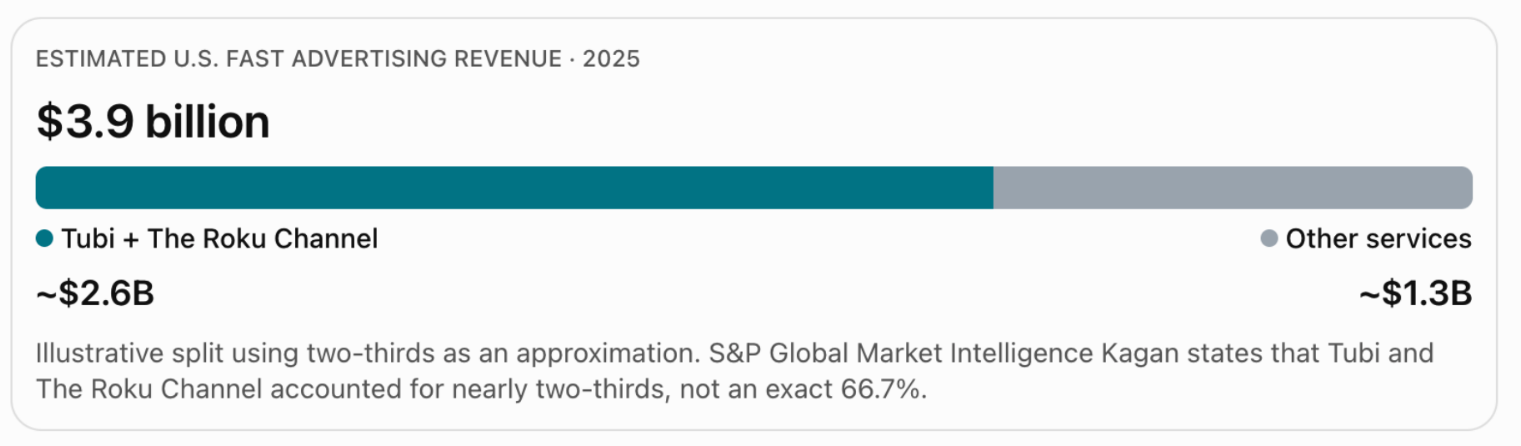
The advertising opportunity is substantial. S&P Global Market Intelligence estimates that U.S. FAST advertising generated approximately $3.9 billion in 2025, with Tubi and The Roku Channel accounting for nearly two-thirds of that revenue.
In August 2026, Tubi announced 110 million monthly active users, with engagement increasing 17% and revenue growing 35% year over year. Samsung TV Plus has also reported more than 100 million monthly active users globally. Importantly, FAST is not simply replacing subscription television. It is increasingly complementing it, becoming another destination within consumers' fragmented viewing experiences.
From Channel Proliferation to Audience Discovery
FAST's rapid expansion introduces a familiar challenge: fragmentation. With thousands of channels competing for attention, simply making content available is no longer sufficient. Discovery is becoming as important as distribution. The next generation of FAST platforms must help consumers navigate increasingly complex content environments through better recommendations, personalized experiences, intuitive interfaces, and stronger programming strategies. Content availability creates opportunity. Content discovery creates engagement.
Advertising Monetization Must Catch Up With Audience Growth
As FAST audiences scale, advertisers will demand more sophisticated targeting, measurement, frequency management, attribution, and cross-platform planning. Nielsen's 2026 Upfront Planning Guide reinforces the importance of treating linear television, FAST, and subscription-based ad-supported streaming as an integrated advertising ecosystem.
For publishers, this creates an opportunity to move beyond filling advertising inventory toward optimizing the economic value of every impression. The objective should not simply be more advertising. It should be higher net yield, improved audience experiences, and measurable advertiser outcomes.
The Next Chapter of FAST
The convergence of content, data, advertising technology, and commerce will shape FAST's future. Success will depend on how effectively platforms connect distribution, discovery, engagement, and monetization. The winners will not necessarily be the platforms with the most channels or the largest content libraries. They will be the ones that build the most valuable relationships among audiences, advertisers, and content owners.
FAST has proven that free television can attract an audience. The next challenge is proving how intelligently that audience can be engaged and monetized.
See More From David Dembowski:
The Content ROI Paradox: Why Media's Biggest Investors Don't Always Capture the Biggest Returns
How Publishers Win the Live Sports Streaming Era | David Dembowski, Streaming TV Architect (PODCAST)
Get the SOS. Brief
The sharpest streaming intelligence, delivered to your inbox.