Gaming Is The New Attention Engine: An interview with Alexander Dao @ EA Sports
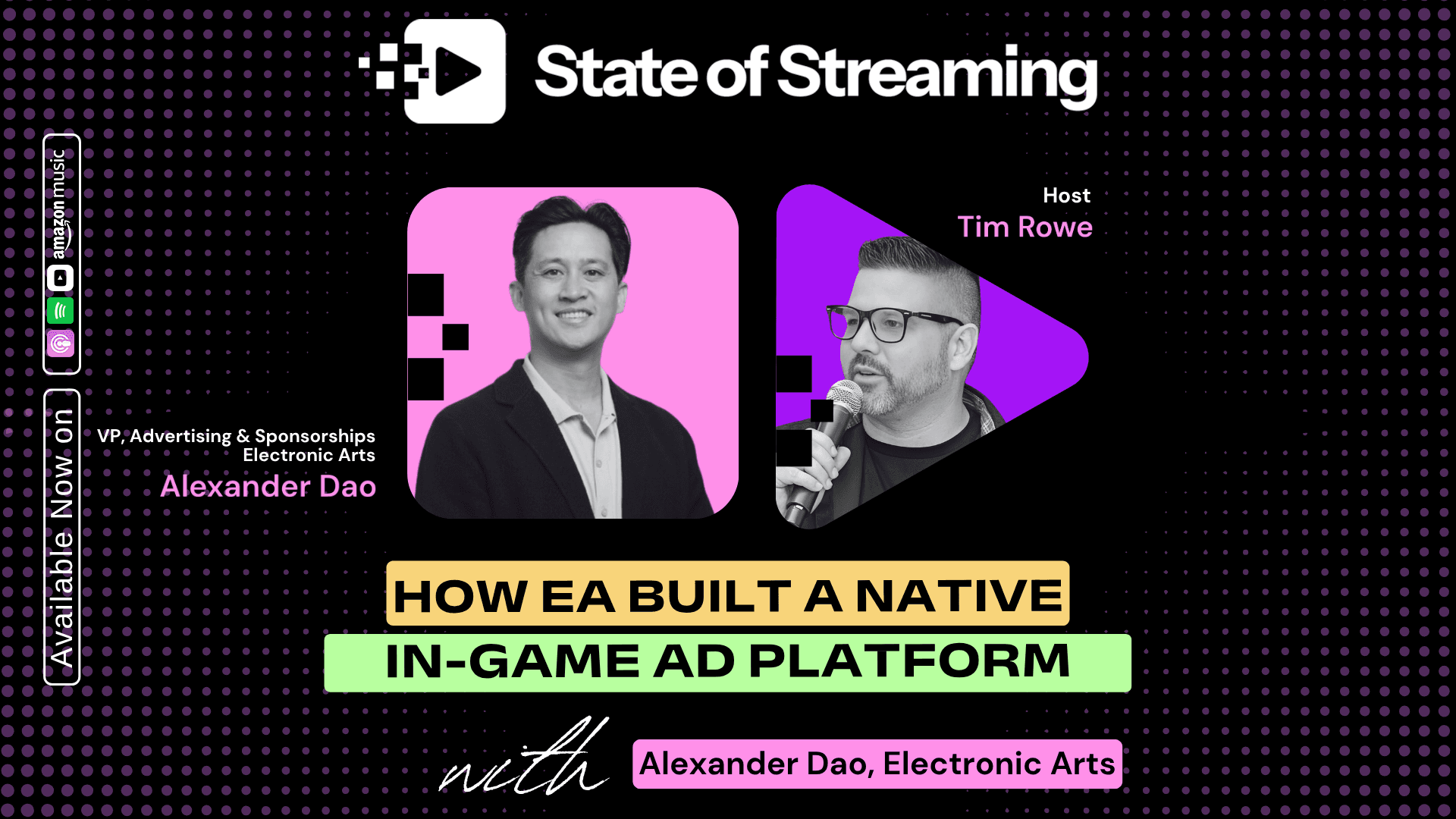
"The controller is actually where fandom starts." - Alexander Dao
In today's conversation, we sit down with Alexander Dao from EA Sports. Alexander breaks down the official launch of the EA advertising platform and how in-game advertising has evolved from static background logos into dynamic, highly targeted brand experiences. We walk through real-world case studies from Visa, Red Bull, and Domino's, exploring why console gaming is quickly becoming one of the most powerful performance channels in the digital ecosystem.
Why EA Launches An Ad Platform
Tim Rowe: Advertising is coming to EA Sports, but really it's always been there. It's been like a native part of the gaming experience. Set a baseline—why ads and why now for EA?
Alexander Dao: When you think about where consumers are spending their time—connected TV, social, watching sports—these all intersect with gaming. Time spent in gaming is one of the fastest growing mediums because it allows people to actually feel that fandom that they have. Engaging with our games is a way for you to deepen that fandom. Especially for younger generations, EA Sports is that front door to fandom. It's no longer a ticket to the game; the controller is actually where fandom starts. ESPN did studies showing that for soccer, 35 to 40% of fans actually became fans through our games.
How Games Create Sports Fans
Tim Rowe: Are you seeing a relationship between what we're doing on the console and the actual game itself on TV?
Alexander Dao: Definitely. If you think about the modern sports fan, they are passive, active, and interactive. They're passive by watching broadcasts. Sports fans have a higher likelihood of playing the sport itself, and when we see them playing our games, they also have a higher likelihood of playing the actual sport. The interactive piece is part of the difference between gaming versus watching a broadcast. You learn so much more about the sport because you understand the players, their skills, and team dynamics. There are so many ways to build this interactivity that really feels like sports fandom itself.
What In-Game Ads Look Like
Tim Rowe: Can you walk us through what the advertising experience actually looks like? How do I experience that?
Alexander Dao: It always has to be driven on what value this can drive for our players. First is authenticity. As a sports fan, whether at a live match or watching a broadcast, you're used to seeing brands around the ad boards and on team kits. Instead of generic logos, we brought real world sponsors into all these authentic environments. The second area is figuring out what players want in-game—they want to compete and progress. With Visa, players created squad building challenges to play in a live tournament in a Visa branded stadium with Visa vanity kits. Red Bull did the same in-game, but then brought it into the real world with a global university tournament called the Winx Cup, putting an FC QR code on hundreds of millions of retail cans globally to unlock content in FC.
Why Brands And Players Say Yes
Tim Rowe: What's the feedback been like from the brand perspective and the user perspective?
Alexander Dao: Brands are used to sponsoring sports in the real world and showing up in broadcast placements. But with gaming, they build interactivity in a way where they can't anywhere else. That depth of engagement and interaction with the community is what drives brand affinity and brand love. You're not just seeing a logo passively; you're interacting with it. Players have been positive too. We're constantly listening to what players want more of, and that's how we think about the strategy for advertising: doing more that's driving value for our players, and ultimately value for our advertisers.
Dynamic Targeting And Easier Buying
Tim Rowe: How do you navigate that conversation with an advertiser?
Alexander Dao: Most marketers have either tried gaming or don't know how to operate within there, or it felt custom or expensive and they haven't found a way to scale it. We set out to change a lot of that by launching our ad platform across multiple titles with dynamic capabilities. Ad boards around the pitch and broadcast placements are all dynamic now. For folks who don't have licenses, we have unlicensed modes like Ultimate Team in FC where we bring in other brands. Broadly, we educate marketers not to treat it as just gaming, but as a way to invest in sports and get in front of a premium, highly engaged audience. If a brand wants to target just Canada for two weeks or a month, our dynamic capabilities allow that without activating globally for the entire life cycle of the game.
Measurement Plus The Domino’s Test
Tim Rowe: How do you approach the measurement conversation with an advertiser?
Alexander Dao: We partnered with the IAB to create standardization within gaming so impression reporting is standardized by a third party. On mid-funnel engagement, we share how many times someone equipped a jersey, how many games it was played in, and the impressions generated. We deploy brand lift studies and social listening tools. We also had a really cool activation with Domino's, messaging competitive FC players on Friday nights with free pizza codes. Domino's was able to track checkout codes to see how many people redeemed the pizza and whether they were new or existing customers.
What’s Next?
Tim Rowe: What are you most excited about over the next 18 to 24 months?
Alexander Dao: Historically, marketing and advertising grow rapidly where people spend their time—social media, streaming, CTV, retail media. People spend a lot of time gaming, and it's an ever-growing industry. What I'm excited for is to watch this space grow as more companies continue to invest in standardization and tools to make marketers' lives easier. We're early, and there's a ways to go, but it's exciting to be at the center of it.
Want to watch or listen to the entire conversation?
Get the SOS. Brief
The sharpest streaming intelligence, delivered to your inbox.