Why You Need Impression-Level Data For Executive-Level Insights - "see Fou yourself" FouAnalytics | Dr. Augustine Fou
Editor's Note
FouAnalytics is a syndicated column by Dr. Augustine Fou—one of the leading independent voices in ad fraud detection and digital marketing measurement—applying methodological rigor to the programmatic advertising supply chain. In this piece, Dr. Fou breaks down the critical difference between platform "log-level data" and independent "impression-level measurement," revealing how drop-offs between DSP bids and rendered ads cause advertisers to pay for impressions that never reach a screen.
You've heard me talk about impression-level data. That means every single ad impression is measured. And you've heard me describe how this is different from "log-level data" which trade associations recommended as crucial for transparency. But log-level data still comes from the platforms you buy from, so you still can't trust it or use it for "transparency." The platforms are not overtly trying to rip you off, like fraudsters are. But their data contains basic errors — i.e. it records the domain passed in the bid request, which is not the same as where the ad ended up. That means fraudulent sites and mobile apps won't show up in the log-level data even though they are still there. By using a FouAnalytics post-bid JavaScript tag to measure where the ad actually went, we can detect that it went to a fraudulent site or app, even if it doesn't show up in the bid request (due to deliberate falsification).
Which quantities of impressions to pay for
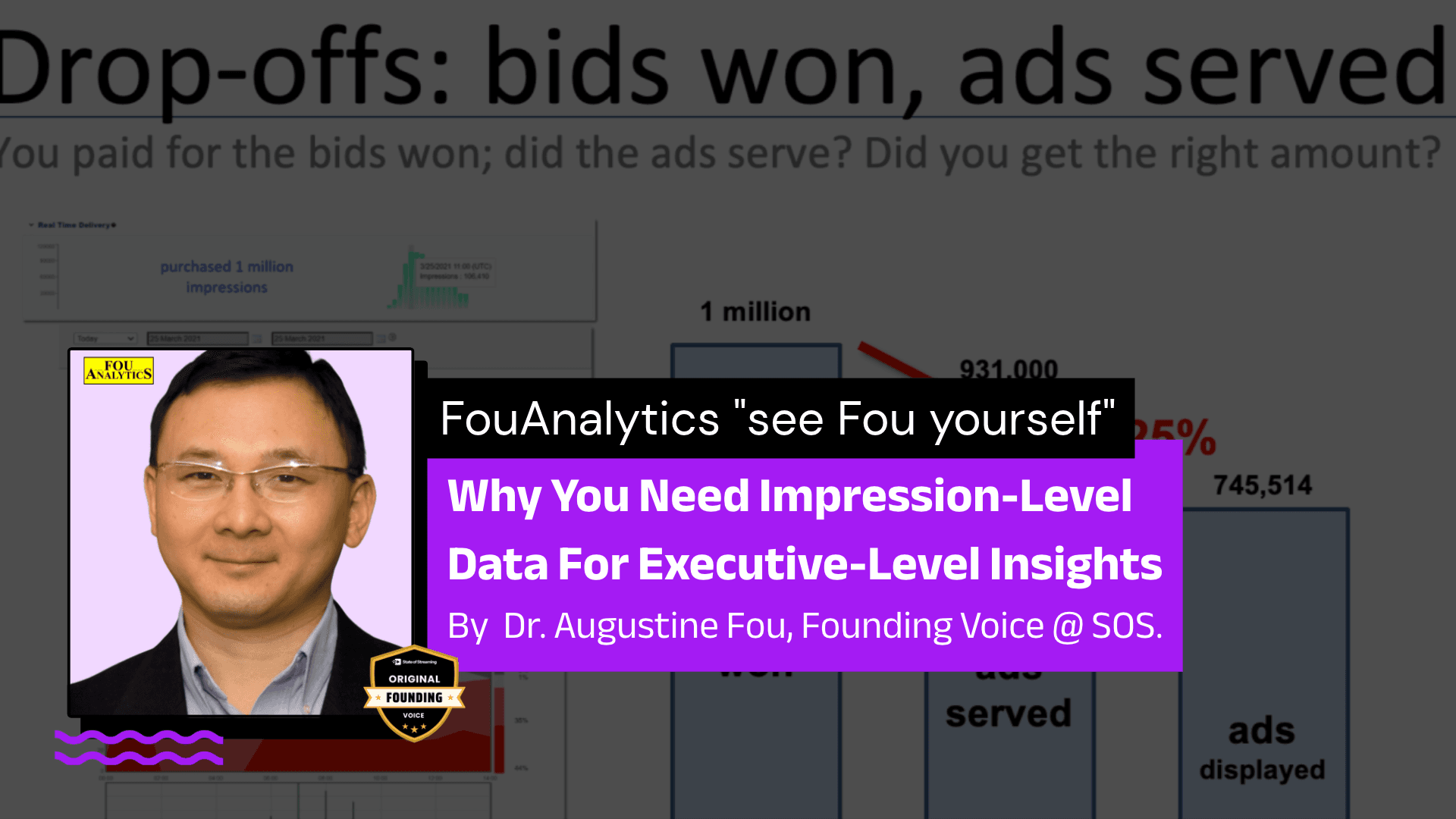
Let me reprise some older slides. In the two following slides, you see "drop-offs." This means differences in quantities between the DSP, the ad server, and FouAnalytics. The DSP reports the number of bids won. For every bid you win, there is supposed to be an ad served. It's supposed to be 1:1. The third column is "ads rendered" which means the ads downloaded into the device and rendered on-screen. Ads have to render on screen before someone can see it, right? That's different from viewability, a metric that has been easily gamed by bad guys, making all their fake ads appear to be 100% viewable 100% of the time.
As a marketer paying for these digital ad impressions, which quantity do you want to pay for? 1) Bids won, 2) ads served, or 3) ads rendered? In the first example below, there was a 33% drop off, and the second example shows a 25% drop off. That's a third, or a quarter, less than what you typically pay for - the number the DSP tells you. Everyone who previously told you that you don't pay for fraudulent ads has lied to you, whether they knew it or not. If you don't understand this point, message me privately.


The above is why you need impression-level data from a measurement platform that is independent from the vendor you are buying from. Even if they wanted to or intended to tell you the truth, they can't. In this case, if you use FouAnalytics, you have a way to verify that you got what you paid for — specifically the quantities. If the quantities measured by FouAnalytics are significantly lower than the DSP quantities or your ad server quantities, you can ask why. Over time, as advertisers bake into their MSAs the terms to only pay for what was measured, they will only need to pay for what was served and what was rendered on screen, not the quantities the DSP said they should pay for.
Click HERE to read the rest from Dr. Augustine Fou.
Subscribe below to read more from FouAnalytics weekly here on State of Streaming.
Why Subscribe
Because paying for "bids won" in a DSP log doesn't mean your ad ever rendered on a real person's screen. Every week, FouAnalytics uses forensic campaign data to dismantle flawed ad-tech metrics, expose hidden take rates, and give media buyers the independent verification needed to reform their vendor MSAs and protect campaign budgets.
Get the SOS. Brief
The sharpest streaming intelligence, delivered to your inbox.