Ranking the Top 3 Streaming Ads of Olympics Opening Weekend

Most brands paid Olympic premiums to show up. These three showed up.
Here's something nobody in the planning meeting will admit out loud: most Olympic advertising is furniture. It fills the room. You know it's there but you couldn't describe a single piece of it a week later.
On Friday night, 21.4 million people watched the Milan-Cortina opening ceremony on NBC and Peacock. That's up 34% from Beijing in 2022 and the biggest streaming viewership for any Winter Olympic Games on record. Peacock and NBCUniversal's streaming platforms logged over 700 million minutes through Friday alone, 2.5 times the streaming consumption of the Beijing Games in the same window.
And most of the ads that we saw looked like they were assembled from the same AI-powered mood board. Athletes in slow motion. Flags. Swelling orchestral scores. Product shot. Logo. Gone.
But three brands did something else entirely. Hershey's, FIGS, and Saatva didn't just rent space at the Olympics. They became a part of the Olympics. And the difference between those two things is the difference between burning money with your logo on it and making people remember your name.
🥉Bronze Medal: Saatva
Ryan Cochran-Siegle's mom won Olympic gold in slalom in 1972. Fifty-four years later, her son is a U.S. Olympic skier with a silver medal, going for gold in Milan-Cortina, and trying to sleep at night knowing the entire country will measure him against her legacy.
That's a mattress ad.
Saatva understood that and did something clever with it. Instead of the typical Olympic spot (inspirational montage, logo, forget it by the next commercial break) they let Cochran-Siegle talk directly to camera about what restorative sleep actually does for an elite athlete. Keeps him alert. Strengthens his immune system. Speeds up muscle recovery. The legacy tension with his mom gives you a reason to care. The product information gives you a reason to act.
Then Saatva closed the loop. They carried the Olympic branding through to their website with clear calls to action that connect the emotional hook to an immediate purchase decision.
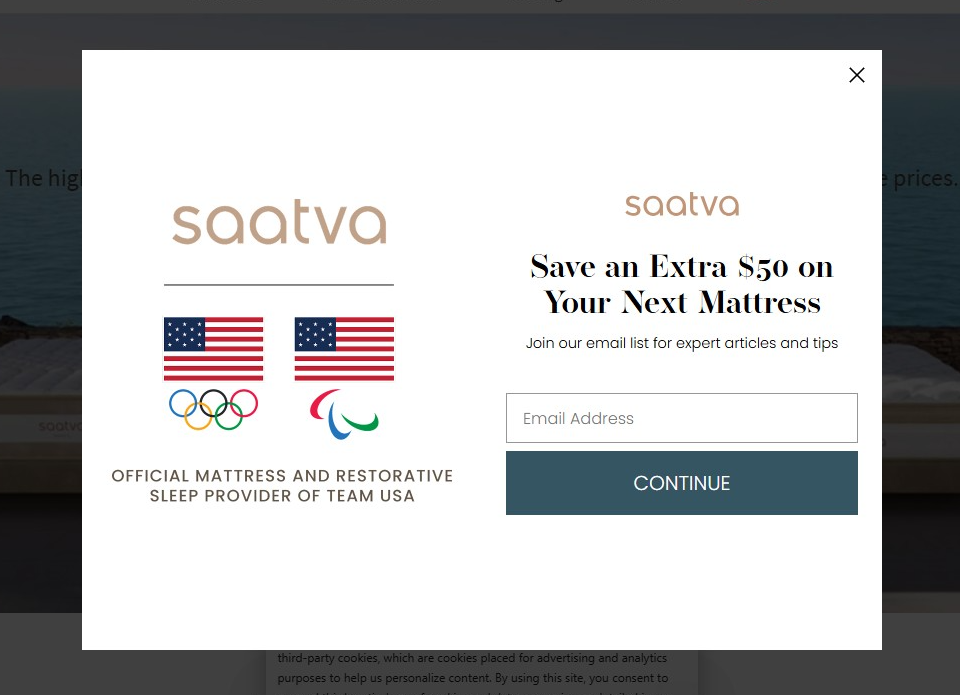
This is what most brands miss about the supposed divide between brand building and performance marketing - thinking you have to pick one. Saatva picked both. They made you feel something, then they made it easy to do something about it, and the whole thing felt like one continuous thought instead of an ad bolted onto a landing page. The brand story and the conversion path were the same story.
The lesson isn't complicated: Don't treat your thirty-second spot and your website like they live in different universes. They don't. Your customer doesn't experience them separately, so let them work together.
And judging by this Google Trends snapshot, it's delivering the intended effect.

🥈Silver Medal: FIGS
Here's a question worth asking about advertising during a major sporting event like the Olympics: whose story are you actually telling?
Most brands that partner with an athlete tells the athlete's story and hopes some of the glory transfers. This is called borrowed interest. It's the advertising equivalent of name-dropping someone you met once at a conference and calling them a close friend. The brand shows up next to the athlete and prays that proximity equals relevance. It rarely ever does, because the audience can feel the difference between a brand that belongs in the story and one that bought its way in.
FIGS did something different. They partnered with Lindsey Vonn and told the story of the five people who made Lindsey Vonn possible.
Vonn narrates the spot herself, and she introduces her medical team the way you'd introduce your closest friends. Because that's what they are. There's Dr. Hackett, who "went to town" on her knee after a Mako partial knee replacement so unprecedented that there was no real track record of evidence-based outcomes to lean on. There's Lindsay, who she introduces with a grin as "another Lindsay, my physio, my friend." Lorenzo, whose rehab work she lovingly calls "incredibly boring." Shauna, who "relieves pressure by applying a lot of it." And Leo, emotional support.
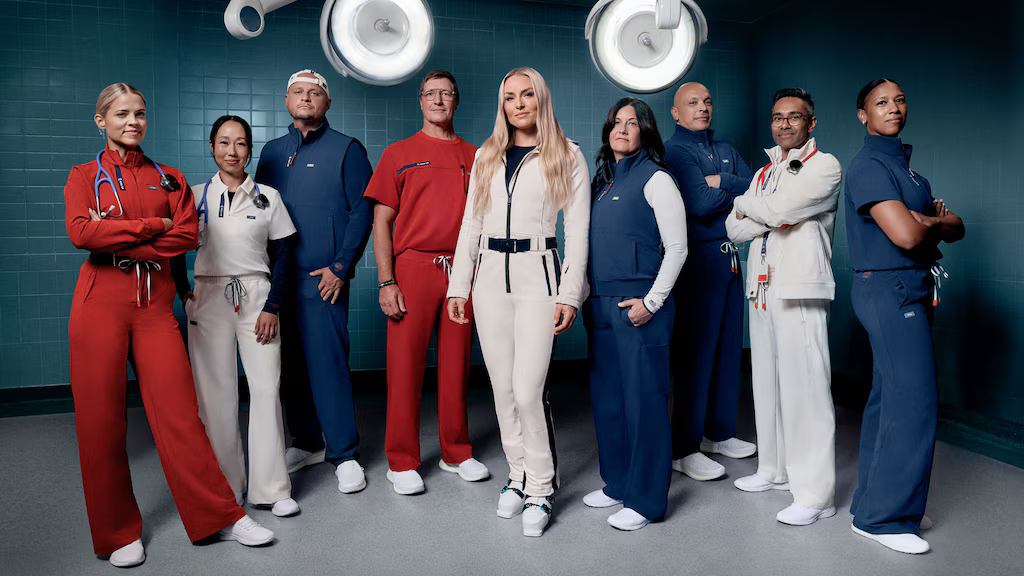
The visuals match the narration. Gritty. Technical. Real. You see the reps, the grind, the moments where everyone in the room is pushed to their limit.
The tagline lands it: "It takes heart to build bodies that break records."
This works because FIGS hasn't manufactured a position for the Olympics. They've held this position for years. They're a healthcare apparel company that has spent its entire existence making medical professionals visible, arguing that the people who fix the bodies deserve the same recognition as the people who break the records. So when they show up at the Olympics and say the real story isn't the athlete but the team behind the athlete, it doesn't feel like a campaign - it's continued conviction.
Then reality did what reality does. After the spot was shot, Vonn crashed in Crans-Montana in training and tore her ACL. That same medical team rallied. She made it to Milan-Cortina. She raced. And on Sunday, she broke her leg in competition and was airlifted off the mountain. The five people FIGS put on screen aren't a creative concept. They're the reason Vonn got to the start line, and they'll be the reason she comes back from this, too. That's what happens when your ad tells the truth. The truth keeps going even after the campaign ends.
🥇Gold Medal: HERSHEY'S
Hershey's interviewed the families of five Team USA athletes (Brenna Huckaby, Erin Jackson, Hilary Knight, Jason Brown, and Jordan Stolz) and asked them a simple question: What do you want most for your athlete?
Every single family said the same thing. Not gold. Not a podium. Happiness.
Then they played those messages for the athletes on camera and filmed what happened.
What happened is people cried. Real, unscripted, caught-off-guard tears from Olympic competitors who spend every waking hour training themselves to be unshakeable. That's the whole ad. And it's devastating, because the insight underneath it is so simple it's almost invisible: the people who love you the most don't care if you win.
They care if you're happy.
You don't need to dress it up. You don't need to layer production tricks on top of it. You just need to find it and get out of its way. Hershey's found it.
They took that insight and turned it into a tagline (happiness is the real gold🏅) that reframes the entire Olympic narrative. Not the medal count. Not the spotlight. The everyday stuff. The phone calls home. The people in the stands. That's the gold that matters.
So here's where Hershey's separates from everyone else: Most brands would have stopped at the spot. Beautiful ad, big moment, move on. Hershey's though, built an entire ecosystem around the idea. Limited-edition chocolate medals, gold foil-wrapped and embossed, positioned as a way to celebrate everyday moments of happiness. On February 7th, the first 400 people at Hershey's Chocolate World in Pennsylvania and Times Square got a free medal. The full product drops on TikTok Shop February 13th and in retail stores February 14th. Valentine's Day. That is not an accident.
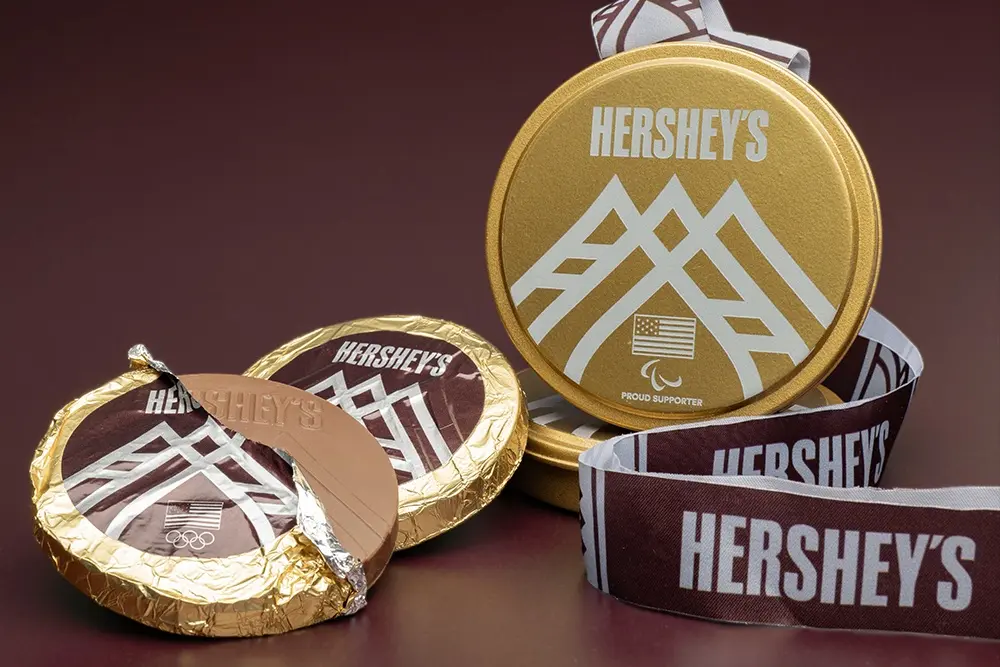
Creative. Product. Retail. Social. All of it pulling in the same direction, all of it extending the campaign's life well beyond opening weekend. This is what the company calls its "first major creative campaign in eight years", and they launched it right as 21.4 million people tuned in. The timing alone would be smart. The execution makes it something worth studying for years.
Hershey's Vice President of Consumer Connections, Vinny Rinaldi shared with State of Streaming: "This makes me so happy. I'm so glad people are tuning into the opening ceremonies and being a part of our Happy Place."
Closing Ceremony
The real premium has never been in the ad inventory. It's in the preparation. The storytelling that's true to who you actually are. The timing that rides the wave instead of fighting it. The follow-through that turns a thirty-second spot into something that lives for weeks.
Hershey's, FIGS, and Saatva understood this.
Most everyone else, didn't. So before you sign off on your next seven-figure cultural moment buy, ask yourself one question: do you have something to say, or just something to sell?
Now, time for the big game.
Get the SOS. Brief
The sharpest streaming intelligence, delivered to your inbox.