The Rented Boom (Part One) - Attention Capital | A Column by Josh Stein

Editor's Note
Attention Capital is a syndicated column by Josh Stein decoding the economics of media, sports, and platform ecosystems — where attention becomes enterprise value and the contracts behind the cash flow get priced like the credit they actually are. This is Part One of a two-part series on the micro-drama market and the difference between category revenue and owned demand. Part Two publishes tomorrow. Subscribe to State of Streaming to get it in your inbox.
Welcome back to Attention Capital.
On July 1, an Israel-based app called Shortical closed $100 million from PvX Partners to scale AI-generated micro-dramas, a deal first reported by Business Insider. The category it plays in is projected by Omdia to clear $14 billion in global revenue by the end of 2026. Downloads passed 2.3 billion last year, more than double the year before. The rounds keep coming. Every comment section under every announcement runs the same question: is this a bubble?
The instinct is earned. The growth curve looks manic. The money is arriving fast. The format barely existed three years ago. Everyone in this business has watched a category get overfunded before, and pattern recognition is doing what pattern recognition does.
It’s still the wrong question. Bubbles describe assets with no earnings, and this category has earnings. Real ones, at scale, growing triple digits. The category lacks ownership of the demand underneath those earnings. Capital is pricing a rented growth curve as if it were a durable asset. That mistake has a long history in media. The last time it ran at full size, $5.7 billion of equity value went to zero. This time it’s running at ten times the velocity.
For the Attention-Constrained
The wave: Shortical just raised $100 million in user-acquisition financing. Omdia projects the micro-drama category at $14 billion globally in 2026. The reflex question “Is this a bubble?” misdiagnoses the risk.
The receipts: The revenue is real. ReelShort cleared roughly $1.2 billion in gross consumer spend in 2025. In China, the duanju market passed the theatrical box office in 2024. Anyone reaching for tulip comparisons hasn’t read the receipts. Tulips had no cash flow.
The mechanics: The business model is mobile gaming’s whale model wearing a soap opera costume. A thin layer of heavy spenders carries the revenue. The funnel that finds them is bought by impressions on Meta and TikTok every day, forever. The Shortical facility is repaid from the revenue of newly acquired user cohorts; the lender is explicitly underwriting that ad spend will continue to convert.
The behavior: Smart capital chases this because the numbers clear every screen built for the last asset class. Revenue growth, engagement minutes, market projections. No standard screen asks who owns the relationship underneath the revenue. Momentum starts doing the underwriting.
The audit: Run the ownership test and the answer is uncomfortable. The demand belongs to Meta and TikTok. The apps rent distribution by the impression, the same structural position Vice held renting reach from Facebook, compressed from a decade into quarters.
The screen: A durable operator in this category would show franchises that get re-watched without being re-bought, creators whose followings travel, and retention curves that survive a spend pause. The current capital structure is priced to find whales. It would walk right past the durable operator without noticing.
The Receipts Are Real
Start where the skeptics won’t: the revenue deserves respect.
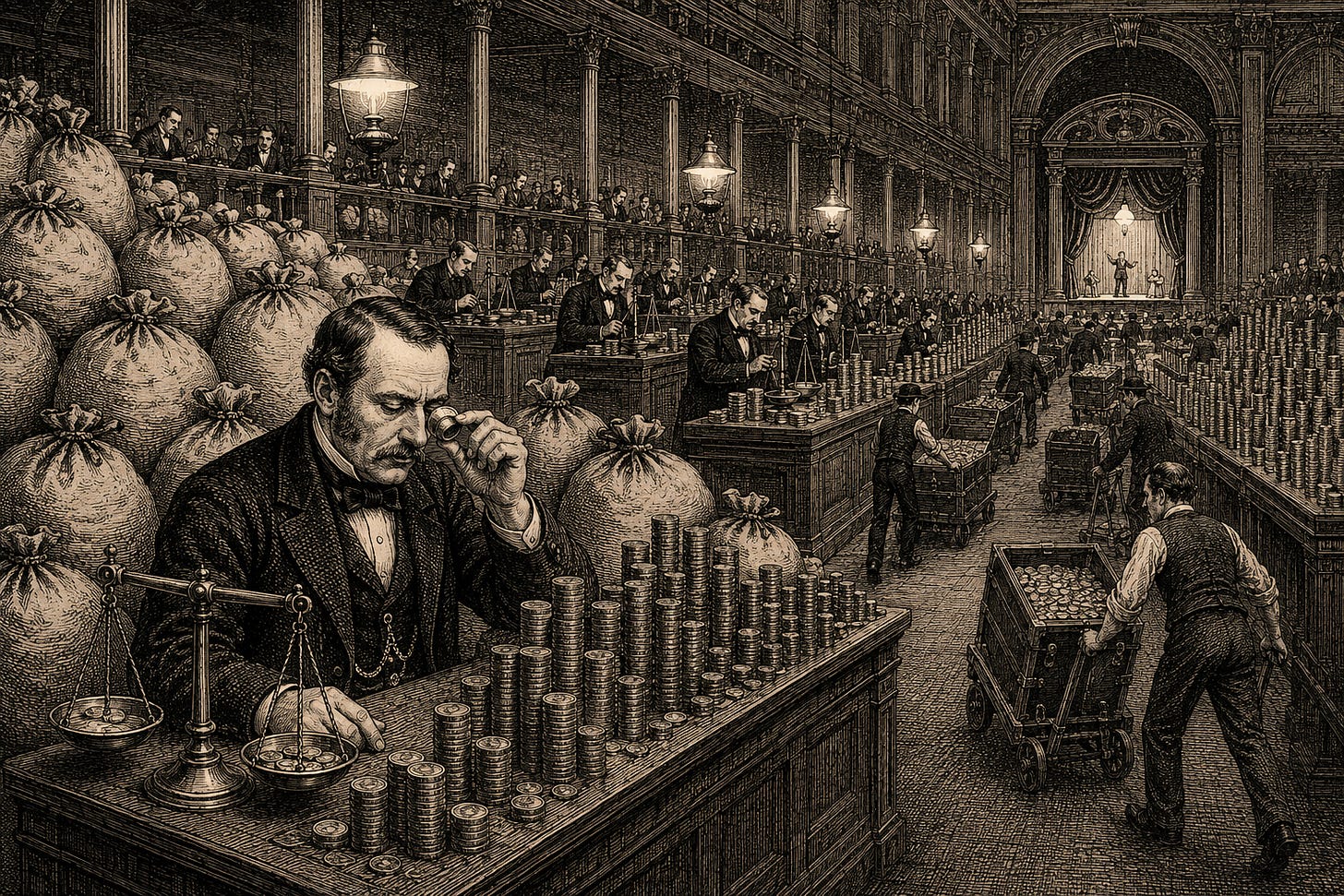
ReelShort, the category leader, cleared roughly $1.2 billion in gross consumer spend in 2025, up 119% year over year, per app intelligence firm Appfigures. The same tracking puts DramaBox north of $270 million for the year. Across the category, short-drama apps generated $2.98 billion in in-app purchase revenue in 2025, up 115% year over year.
China is further down the curve, and the numbers get louder. The duanju market reached 50.5 billion yuan in 2024, about $6.9 billion, and passed the country’s theatrical box office for the first time, per the China Netcasting Services Association. Domestic viewership hit 662 million people by the end of 2024. A format that didn’t meaningfully exist in 2020 out-grossed every movie theater in the country by 2024.
The engagement data holds up under the revenue. ReelShort users in the US spend 35.7 minutes a day in the app. Netflix gets 24.8. Prime Video gets 26.9, per Omdia.
So retire the lazy comparison now. Tulips had no cash flow. NFT collections had no cash flow. This category prints cash flow every night, at scale, at the paywall on episode eight where the husband turns out to be the billionaire. Evan Shapiro has called the model “dangerous bullshit” and the content crap. That’s his fight. Content quality has no bearing on a credit analysis, and plenty of people building in this category are building carefully. The receipts are real either way.
Tulips had no cash flow. Whatever is wrong here, it is a different disease.
Diagnosing the actual disease is the whole piece.
How the Money Actually Moves
The micro-drama business model came out of mobile gaming with the serial numbers still visible.
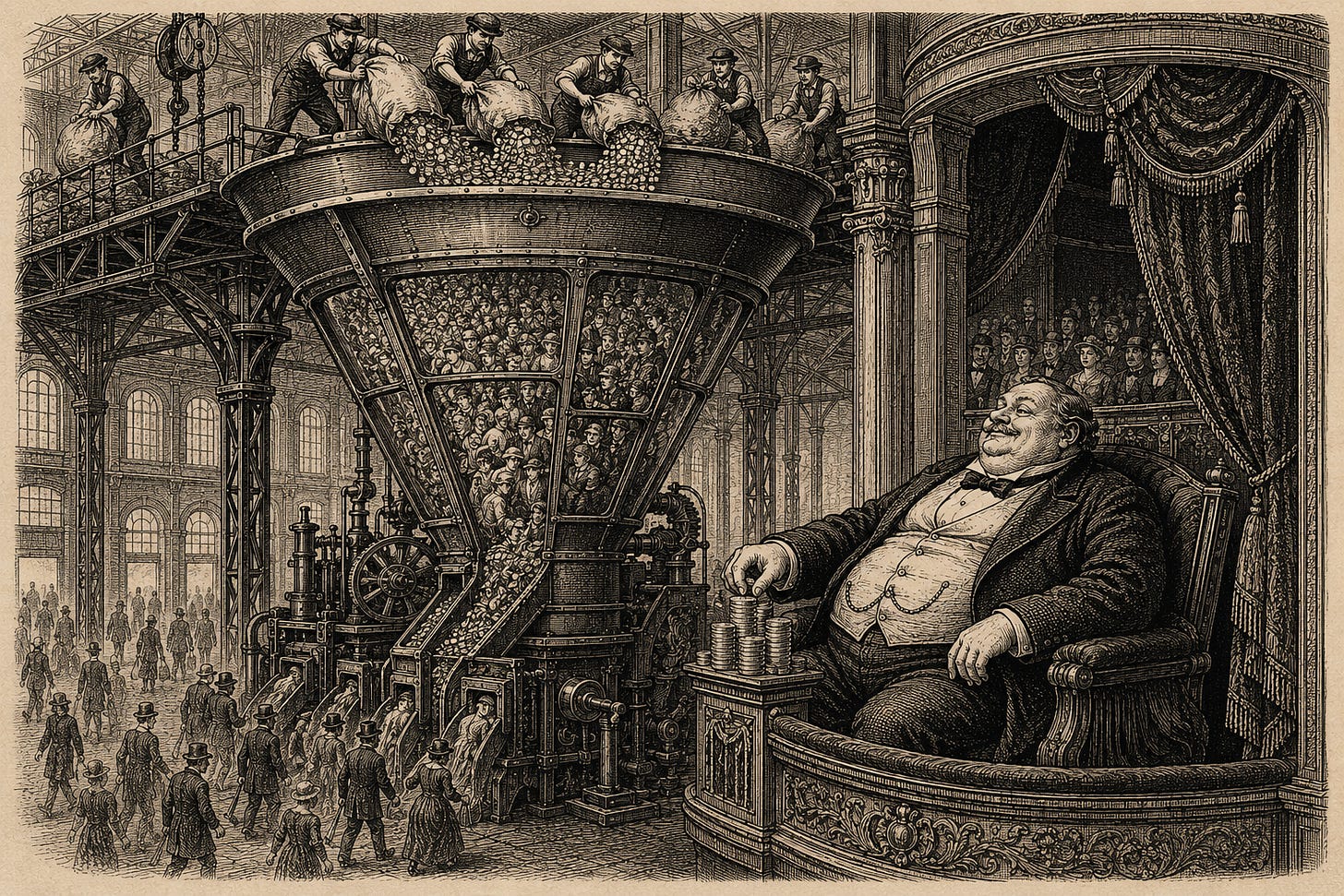
The revenue engine is the whale model. A thin layer of heavy spenders carries the economics, and the wide funnel exists to find them. In mobile gaming, analytics firm Udonis puts whales at 1-2% of players, accounting for as much as 70% of in-app purchase revenue. Short-drama monetization runs on the same chassis: free episodes in, coin walls at the cliffhanger, urgency pricing when the viewer is emotionally activated. Revenue concentrates accordingly. The top five apps captured 68.8% of tracked category revenue over the twelve months through April 2026, on only 28.8% of downloads.
The apps buy the funnel that finds the whales. Paid user acquisition is the growth engine of the entire category. For some apps, paid channels account for over 80% of downloads, and ReelShort alone has deployed 1.34 million ad creatives globally. Between January and September 2025, 68% of US ad spend by major micro-drama apps went to social networks: Facebook 25%, TikTok 19%, Snapchat 16%, and Instagram 8%, per Sensor Tower. The category’s customer base lives inside an ad auction, and the apps visit it daily with a checkbook.
Now read the Shortical facility as a credit document, because that’s what it is. PvX writes non-dilutive revolving facilities repaid from the revenue of newly acquired user cohorts. The structure prices one thing: the probability that the next dollar of ad spend converts like the last one. The collateral is the conversion math on the next cohort of bought users. Libraries and brands appear nowhere in the repayment logic. Lenders are unsentimental about what an asset actually is, and the repayment terms are their written opinion.
Here is the distinction the category’s pricing ignores. The two kinds of recurring revenue carry different risks and durations, and they deserve different multiples. Right now they’re getting the same one.
Revenue that recurs because you keep buying it and revenue that recurs because people come back on their own are two different assets.
Only one of them is collateral.
Why Smart Money Buys a Rented Curve
None of the capital flowing into this category is dumb. That’s what makes the pattern worth studying.
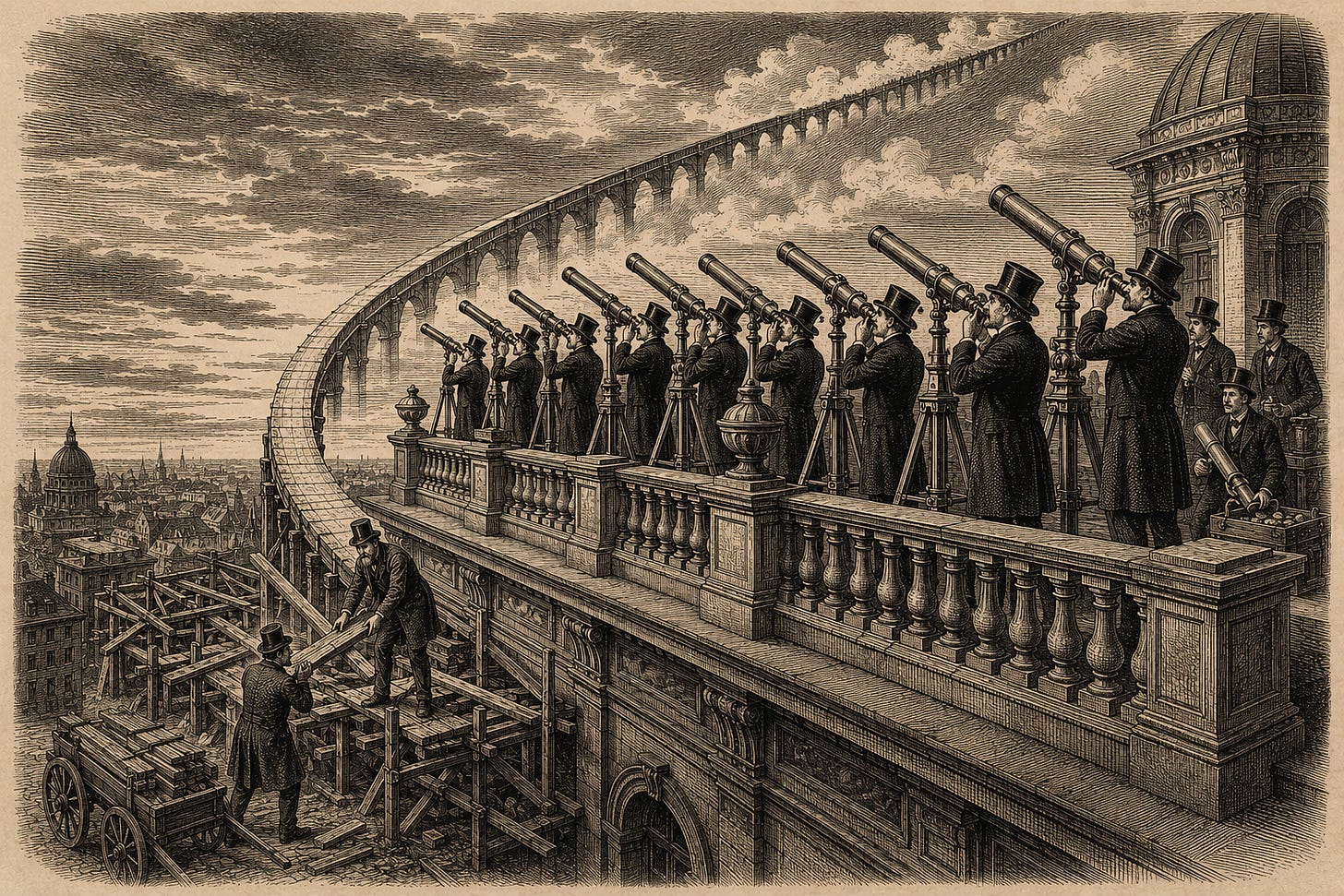
The capital cycle runs on visibility. Money flows toward growth it can see, and category revenue is the most visible number in any market. The mistake occurs in the translation: “category revenue” is read as “company durability”. A $14 billion category projection says nothing about whether any single operator within it owns the demand that produces its share. But the projection is what gets underlined in the memo, because it cleared the partner meeting at the last three firms that passed on the round and later regretted it.
In this category, the cycle has a mechanical twist that makes it faster and meaner. The growth input is a shared auction. Every new entrant, and every incumbent freshly loaded with UA financing, bids the same Meta and TikTok inventory to find the same whales. Capital raised to chase the category inflates the price of the category’s only growth input. The funding wave and the CAC curve are the same line drawn twice. India’s micro-drama market is already showing the symptom set: steep acquisition costs and shaky retention arriving together.
The screens don’t catch it because the screens were built for other asset classes. SaaS diligence asks about net revenue retention because contracts recur. Gaming diligence asks about D30 retention because habit recurs. Streaming diligence asks about churn because subscriptions recur. Micro-drama numbers clear the surface version of every one of those screens: triple-digit revenue growth, engagement minutes that embarrass Netflix, a market projection with a B in it. No standard screen asks who owns the relationship underneath the revenue, because in the asset classes the screens were built for, the answer was assumed.
Then momentum starts doing the underwriting. DramaBox went shopping for $100 million from US backers at a $500 million valuation, with Disney already invested through its accelerator, per Business Insider. Holywater raised $22 million, calling it the largest micro-drama investment outside Asia, with Horizon Capital leading and Endeavor Catalyst participating. GammaTime raised $14 million in seed money from vgames and Pitango, with Alexis Ohanian, Kris Jenner, and Kim Kardashian on the cap table, and founders from Miramax, Quibi, and Google on the masthead. Each round makes the next one easier to justify. The comps start doing the diligence work. And once a category’s rounds start clearing on comps and heat, price discovery has stopped, and the operative diligence question has quietly shifted from “what do we own” to “how fast can we deploy.”
Notice who’s positioned where, because the capital stack is confessing. The UA lenders hold the shortest duration and the best information. A PvX-style facility recycles in months, repaid cohort by cohort, and the lender watches conversion data in close to real time. If the auction turns, the lender’s exposure runs off before the damage compounds. The equity arriving at a $500 million mark holds the opposite position: terminal-value duration, priced on demand the company doesn’t own, with the least visibility into the cohort math and the last claim on the way out. In most markets, the long money knows the most. Here the long money knows the least, and it’s paying the highest price for the privilege.
That inversion is the purest symptom of momentum underwriting. When participants with the best data commit for months and those with the worst data commit for a decade, diligence follows deal heat rather than risk.
Mobile gaming ran this exact cycle a decade ago, and the ending is on the public record. Same whale math, same UA arms race, same auction. Acquisition costs inflated through the mid-2010s until UA-dependent studios consolidated or died. Demand grew through every year of the shakeout. The dying happened anyway, because the demand belonged to the auction. The survivors, the Supercells and Kings, were the operators who converted bought installs into owned franchises: recurring characters, live-service habits, brands that pulled players back without a banner ad doing the pulling. Everyone else returned their capital to the ad platforms a click at a time.
That’s the behavioral core of the whole episode. Nobody in the chain is being stupid. The operator is rationally scaling what works. The lender is rationally pricing cohort math. The equity investor is rationally reading category growth. The system produces the mispricing anyway, because every participant is underwriting the curve and nobody is underwriting the demand.
Every participant is underwriting the curve. Nobody is underwriting the demand.
The revenue is real. $14 billion in projected global spend, triple-digit growth, engagement minutes that embarrass Netflix. Anyone reaching for tulip comparisons hasn't read the receipts.
The demand underneath that revenue is rented. Every dollar of it bought through a Meta or TikTok auction, recycled daily, owned by the platform that sets the price.
Smart capital keeps buying anyway — because every screen it runs clears on the curve, and no standard screen asks who owns the relationship underneath it. Tomorrow: the ownership audit, what durable actually looks like, and the question that reprices everything.
Subscribe to State of Streaming to get Part Two in your inbox tomorrow.
Get the SOS. Brief
The sharpest streaming intelligence, delivered to your inbox.