The Debate Is Over. The Pricing Isn't. Today's News, and the Podcast That Explains It
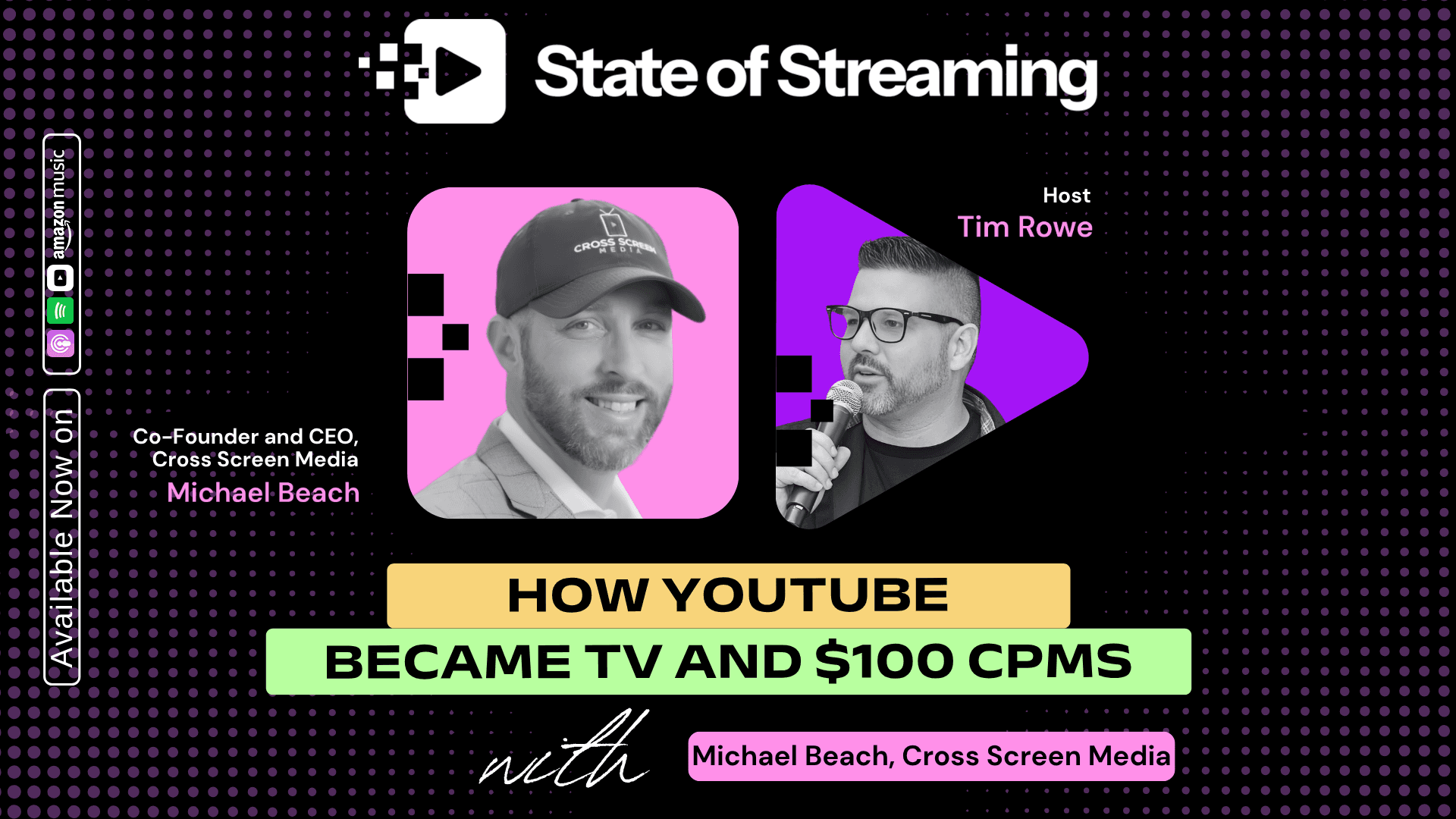
Three things published on State of Streaming today, and they're really one story.
New research from Looper Insights shows YouTube, Netflix, and Roku fighting to own the home screen, priced in dollars. Michael Beach's State of the Screens column shows YouTube commands 28% of streaming TV time but only 12% of ad spend. And on today's podcast, Beach — author of Screen Wars and ad tech founder — makes the case that the fix for that gap already exists, and it isn't coming from Madison Avenue. It's coming from political advertising.

Read the research piece here. Read Beach's full column here. Below is what the conversation added.
The Consumer Already Voted
Beach didn't hedge on the question that anchors today's coverage.
Is YouTube TV?
"I think that's an argument by the consumer has been settled for years," he said.
The argument that persists — YouTube isn't premium enough, isn't brand-safe enough, isn't structured enough — is a compensation and turf argument dressed up as a definitional one. Beach's column makes the same point with a number:
YouTube already accounts for 28% of streaming TV time, more than Netflix, more than Disney, more than Fox and Roku combined.
What the podcast adds is the mechanism. Beach described his own household: paying for an app, finding nothing to watch, defaulting to YouTube because he knows something worth watching is a few scrolls away. That's the same behavior Looper's research documents structurally — Roku captured 95.4% of the WNBA's home-screen placement value in Q2 not because it had broadcast rights, but because it built the hub first. Distribution habit, not content ownership, is what's actually being fought over.
Why the Ad Market Hasn't Caught Up
The math, per Beach: linear TV runs 16 minutes of ads per hour. Streaming runs somewhere between four and twelve. A smaller share of streaming time carries ads at all, and the share that does carries fewer of them. Run that forward to 2035, per Beach's own modeling, and total ad impressions fall roughly 11% from today even as the market grows. Two things moving in opposite directions compound. That's Beach's case for why streaming CPMs are headed toward triple digits — a forecast he says still gets him pushback everywhere he makes it.
Hear about how Viant's TVision was able to monitor NY Knicks Game 5 CPMs spike to $120+ in real time here 👇
The comparison he reaches for is Facebook, which doesn't get its highest margins from the top hundred brands — it gets them from ten million advertisers most media companies have never tried to sell to. Streaming's ad business is still built for the small room of national buyers. Beach's argument is that the room needs to get much, much bigger.
Political as the Test Lab
The clearest evidence Beach has for that isn't hypothetical. It's happening now, in a category most streaming executives don't watch: political advertising.
Beach's Cross Screen Media works local and political inventory almost exclusively — a deliberate contrarian bet, he said, after watching competitors chase national ad agencies with pricing power that made profitable products hard to build. His pitch to those advertisers is addressable geography and intent data layered on top of reach. A car dealership targeting anyone within a reasonable driving radius sees its effective cost per thousand jump into the hundreds of dollars. Narrow that further to people showing purchase intent in the next 12 months, and it clears a thousand. Sell that same targeted audience back to the advertiser for a hundred dollars, Beach said, and they take it every time.
Political campaigns already operate this way because a campaign gets an unambiguous scoreboard — win or lose — inside a single election cycle, compressing years of brand advertising's trial-and-error into weeks. Beach's read: 13% of persuadable voters in the 2024 cycle saw zero streaming or linear TV advertising at all, despite billions in spend, because the reach math wasn't being done. Whatever political figures out first about reaching that gap tends to migrate to brand advertising a cycle or two later.
SOS Insight
Layer these three pieces and a single thesis holds across all of them: home-screen ownership and viewing-time share are already being priced correctly, by Looper's data and by advertiser behavior in political. Streaming's ad market is the one lagging asset in this whole picture — not because the audience is unclear, but because the sales infrastructure built for a room of two hundred national brands hasn't been rebuilt for an auction with ten million buyers in it. That's not a YouTube problem. It's every streaming ad seller's problem, and it's the opportunity for whoever solves it first.
Key Takeaways
YouTube's 28% share of streaming TV time and 12% share of ad spend, detailed in Beach's column, is the same gap Looper's $MPV research prices out at the individual home-screen level — home-screen placement and viewing share are being valued correctly; ad rates aren't.
Beach's model projects total streaming ad impressions falling roughly 11% by 2035 even as the market grows, compounding to push CPMs toward $100 — a number he says still meets resistance industry-wide.
Political and local advertising are already running the addressable playbook — geography plus intent data layered on reach — that Beach argues brand advertisers will eventually be forced to adopt as the fastest way to close the CPM gap.
Listen to the full conversation with Michael Beach on the State of Streaming podcast, and get his weekly analysis at State of the Screens.
📺 Watch or 🎧 Listen to the full episode here: https://podcast.stateofstreaming.com/michael-beach-screen-wars-q3-26/
Get the SOS. Brief
The sharpest streaming intelligence, delivered to your inbox.