The Presold Epic - Attention Capital | A Column by Josh Stein
Editor's Note
Attention Capital is a syndicated column by Josh Stein decoding the economics of media, sports, and platform ecosystems. This piece argues that Universal's year-early Odyssey sellout — 95% of IMAX 70mm seats gone in an hour, a year before release — was not a marketing stunt. Rather it was the first time a studio measured paying demand before the product existed, and the greenlight will never price the same way again.
At midnight Eastern on July 17, 2025, Universal put tickets on sale for a film that had not finished shooting. The picture was Christopher Nolan’s The Odyssey. The seats were IMAX 70mm, roughly 25 locations on the entire planet, and the show dates started July 17, 2026, one full year away. Within an hour, 95% of the seats were gone, per The Hollywood Reporter. Within days, resale listings were asking $300 to $400 for seats that carried a face value under $30, per Variety and THR.
A movie ticket bought a year early used to be a joke setup. A man walks up to the counter and asks for two seats to a picture that does not exist yet. The counter staff laughs. For a century, the laugh was correct. No mechanism existed to sell that man his seat, because no studio had ever asked an audience to put down cash a full year before the film existed.
Universal asked. The audience answered in about 60 minutes.
Welcome back to Attention Capital.
This publication argues one thing from every angle: documented audience demand is a financeable asset. As I wrote in The Film Bond, every prior proof arrived from the creator end of the market, where the audiences were counted on YouTube before a dollar of production capital moved. The standing objection was scale. Fine for a $4.5 million horror picture, the objection went, meaningless for the top of the market. The most expensive film of Christopher Nolan’s career just retired that objection with receipts.
For the Attention-Constrained
The event.
Universal sold out its select IMAX 70mm engagements for The Odyssey a full year before release: 95% of seats gone within an hour, roughly $1.5 million collected from a deliberately small ticket pool. The film opened July 17, 2026, on a $250 million net budget, the largest of Nolan’s career.
The history.
Hollywood could never measure demand at the greenlight, so it built proxies: contracted stars, blockbooking, roadshow engagements, tracking surveys, and foreign pre-sales. Each era of financing fossilized the best proxy available at the time. The one company that claimed to model its way past the problem, Relativity Media, filed Chapter 11 in 2015.
The mechanism.
A year-early on-sale is a direct demand measurement. Cash collected, person by person, card by card, 12 months before the product exists. Nolan’s 20 years of documented opening-weekend behavior perform the same function a subscriber base performs for a creator: a demand record a buyer can price.
The convergence.
The creator end of the market ran this play first. A24 signed the Backrooms director before a frame existed and the film opened to $81.5 million. Focus paid roughly $15 million at TIFF for a $750,000 production. Markiplier put Iron Lung in 3,015 theaters with no traditional distributor. The Odyssey is the same transaction executed from the top of the market down.
Why it matters.
Once demand moves from guessed to counted, film equity stops pricing as the riskiest money in the stack and the greenlight starts behaving like an underwritten instrument. Watch where the value migrated in the Sky and ITV deal. Watch Netflix stop publishing engagement data. The market has noticed.
I. The Sale
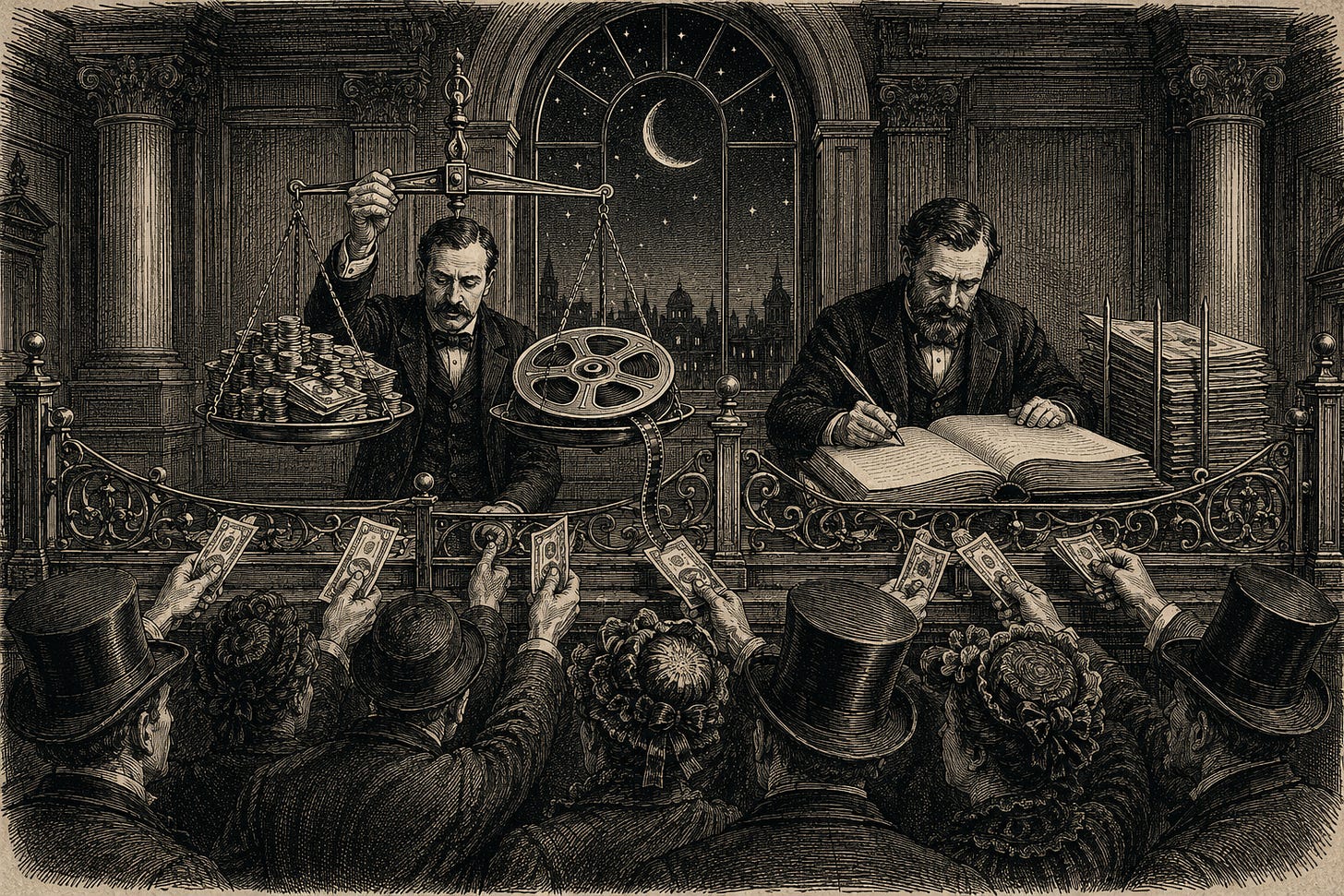
The mechanics deserve a slow read, because the industry will spend years filing this under marketing. It was a measurement.
Universal opened the sale at midnight on July 17, 2025, covering select IMAX 70mm engagements at roughly 25 theaters across the US, Canada, the UK, Australia, and the Czech Republic, per The Hollywood Reporter. The pool was small by design. Those 25-odd houses hold the rare projection rooms built for the format Nolan shot in, and The Odyssey is the first studio feature shot entirely on IMAX cameras, per Variety. Within the hour, 95% of the available seats had cleared, and the gross from that deliberately tiny pool ran to roughly $1.5 million, per 3DVF’s July 2026 accounting of the run-up. Northeastern Global News called it one of the longest pre-sales in cinematic history (July 31, 2025). The secondary market rendered its own verdict inside a week: $300 to $400 a seat, per Variety and THR.
Consider what Universal was holding at that point. A $250 million net production budget, the most expensive commitment of Nolan’s career, per THR. A film still in production. And a stack of receipts proving that thousands of people had paid cash for a specific seat, on a specific night, 12 months in the future, for a product none of them had seen a single frame of. Studios have commissioned demand research for 50 years. This was demand itself, collected and banked.
Grade the evidence the way an underwriter would, because grading evidence is the entire business. A survey answer costs the respondent nothing, which is why tracking numbers wobble. A social following costs a click. A prepaid ticket for a night 12 months out is a costly, dated, non-refundable-in-spirit commitment made with the buyer’s own money, and a scalper market forming on top of it is price discovery, thin and partly speculative, and still a market ruling the seats underpriced. In any other asset class, we would call that an order book with a secondary market. A thin book, covering a sliver of the budget: $1.5 million finances nothing against $250 million. The value was the information, arriving a year before any other instrument could produce it, in a business that has never had it before the product existed.
The follow-through confirmed the reading. When the wider IMAX and premium-format on-sale opened on June 4, 2026, demand overwhelmed the booking systems at AMC and Fandango, per 3DVF. Scarcity at 25 theaters could be dismissed as a collector event. A crashed national ticketing pipe six weeks out cannot.
The weekend settled the question the pre-sale could not answer. The Odyssey opened to $264.1 million worldwide, $124.5 million domestic and $139.6 million international, per Variety and Reuters, on the studio’s Sunday figures, and the biggest global opening of Nolan’s career, per Forbes. The boutique sellout measured the demand curve's core. The opening weekend measured its width. A year of collected receipts and a record weekend now sit in the same file, and they agree.
None of this was a blind leap. Oppenheimer grossed $975.8 million worldwide, with IMAX screens contributing more than $190 million, about 20% of the total, per THR. Universal had already watched a three-hour biopic about a theoretical physicist behave like an event. The year-early sale converted that observation into something no tracking survey ever produced: a payment record.
A studio counted paying demand 12 months before release. That sentence would have read as fantasy to every film financier of the last century.
II. A Century of Proxies
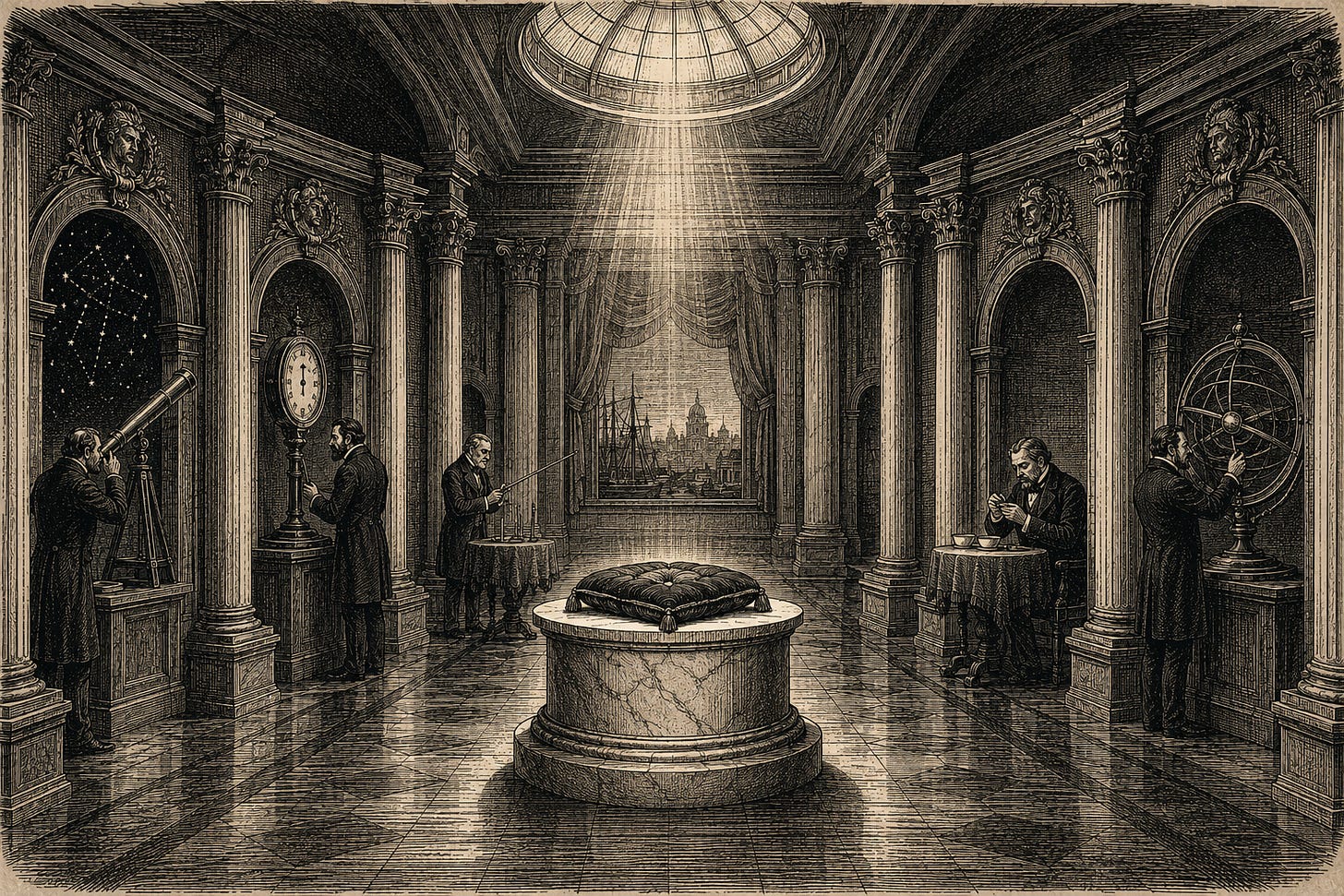
Hollywood never lacked demand for demand data. It lacked the instrument. The industry has always been desperate to know, at the moment of the greenlight, whether an audience will show up 18 months later. Since no tool existed to measure that directly, each era built the best proxy its technology allowed and then built its financing structures on top of it. Read the history this way and a century of film finance turns into a single engineering project with one missing part.
Start with the star system, the first industrial-scale demand proxy. The classical studios signed performers to term contracts lasting up to seven years, granting the studios exclusive rights to the star’s name, image, and voice, per the Schirmer Encyclopedia of Film’s account of the system. Studios manufactured stars deliberately: scouting, coaching, staged publicity, graduated buildup through bigger roles. Suspension clauses extended the contract when a star refused a part. Loan-outs rented the asset to rival lots at a markup. Strip away the glamour and the structure is legible to any credit analyst. A star was a portable, ownable bundle of prior audience behavior. Casting Gable was the 1939 version of counting demand, executed at the resolution the technology allowed, which was one name on a marquee.
The proxy’s flaw was baked into its resolution. A star’s record aggregated everything: the scripts, the co-stars, the release timing, the studio’s marketing muscle. A financier reading that record could never separate the demand for the person from the demand for the last three pictures the person happened to be in. The studios solved this the way monopolists solve measurement problems, by owning the whole apparatus so the imprecision landed on someone else’s side of the ledger. When the contract system collapsed in the 1950s, the stars kept their names and lost the machine that had been compounding them. No individual demand record survived the transition intact. That detail matters later in this essay, because one eventually did.
The distribution side handled the demand unknown a different way: it shoved the risk downhill, and eventually got sued for it. Block booking let studios sell films to exhibitors in bundles, often before the films existed, forcing theaters to take the whole slate to get the hits. Its companion practice, blind selling, moved product without so much as a trade screening. The exhibitor wrote checks for a season of unmade pictures on the strength of the studio’s brand and last year’s slate. The seller’s reputation served as demand evidence for every title in the block, which meant the party with the worst information bore the demand risk on each one. The Supreme Court outlawed the practice in United States v. Paramount Pictures, decided May 3, 1948, and the consent decrees that followed broke the studios off from their theater chains. A court had to dismantle the proxy because the proxy had become market power.
The roadshow era came closest to the real thing. For the biggest releases of the 1950s and 1960s, Ben-Hur in 1959 and The Sound of Music in 1965 among them, distributors ran reserved-seat engagements in a limited set of theaters: advance ticket sales, premium prices, two shows a day, souvenir programs, an overture and an intermission, the works. The standard history of the practice is Sheldon Hall and Steve Neale’s Epics, Spectacles, and Blockbusters (Wayne State University Press, 2010). Audiences planned for a roadshow, booked a specific seat in advance, and paid up for the privilege, which is to say they behaved exactly the way an Odyssey buyer behaved last July. The event positioning, the scarce premium engagements, the reserved seat as an object of value: Nolan’s play is a roadshow with a ticketing API. The lineage runs straight through.
The limitation was resolution and timing. The roadshow measured demand in one aggregate, city by city, after the film was finished and the capital was spent. It could confirm appetite and extend a run. It could never inform a greenlight, because by the time the reserved-seat window opened, every dollar of production risk had already been taken on faith.
So the industry built a guessing apparatus and professionalized it. Joseph Farrell founded the National Research Group in 1978 with Catherine Paura and brought polling discipline to the studios: tracking surveys, test screenings, trailer testing, the quadrant grid that still governs marketing meetings, per Variety’s obituary of Farrell. By the time Farrell died in 2011, his methods were so standard that studios budgeted for them the way they budgeted for prints. The next year, 1979, Ed Mintz launched CinemaScore to poll audiences on opening night with letter-graded ballot cards, roughly 400 cards a film, collected in randomly selected cities, per Deadline.
Understand what both firms actually sold, because the distinction is the whole point of this section. Tracking measures stated intent: awareness, interest, first choice, collected by survey weeks out from people spending nothing. CinemaScore measures satisfaction after purchase, useful for projecting the second weekend from the first. Neither instrument ever touched the question the greenlight needed answered, which is whether real people will surrender real money for this specific film, because no mechanism existed to collect that answer. The studios knew it. They bought the surveys anyway, for the same reason a sailor without a barometer studies clouds. An entire industry of professional guessing grew in the crater where the instrument should have been, and its revenue was a standing measure of how badly the industry wanted the real thing.
The independent film world, which never had studio balance sheets to absorb the risk of guessing, financed itself with a proxy of its own: the foreign pre-sale. Producers licensed distribution rights on a territory-by-territory basis in advance, with buyers committing against a script, a cast list, and a genre, and banks lending production capital against the signed contracts. The mechanics are laid out in Mark Litwak’s standard film financing overview. Carolco ran the model at its peak scale on Terminator 2: Judgment Day, covering roughly $91 million of the budget in advances and guarantees before release, including $61 million for international rights, per contemporaneous trade accounts of the deal. Look at what the buyers were actually pricing: Schwarzenegger, Cameron, and the first film’s grosses. Cast and track record as demand proxies, papered into contracts. The pre-sale market was an honest admission that demand evidence was worth more than taste, executed with the only evidence available.
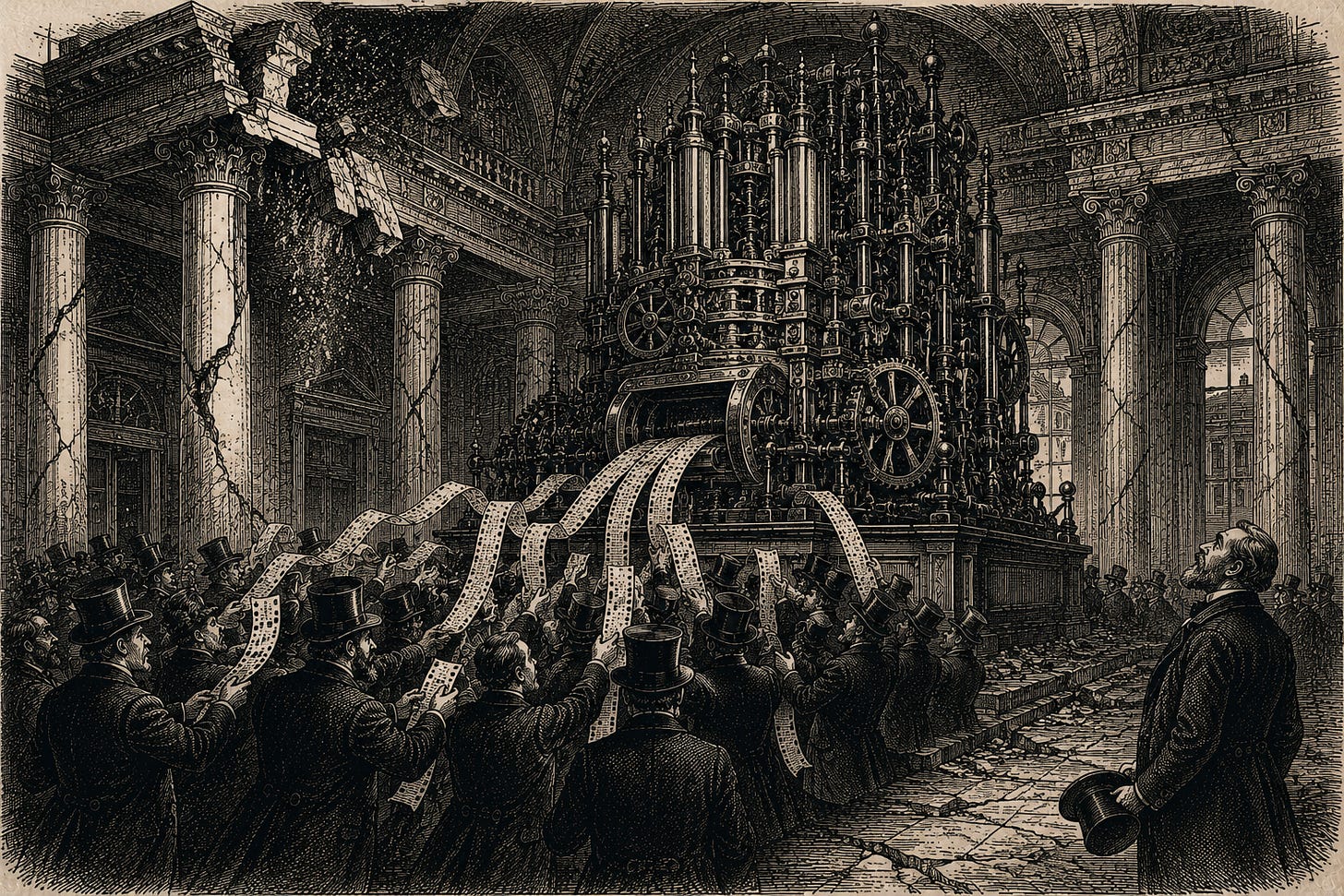
Then came the company that claimed to have solved the problem with math, and its story is the cautionary centerpiece of this whole history. Ryan Kavanaugh’s Relativity Media told investors it had a quantitative engine, a Monte Carlo simulation that modeled slate outcomes and picked winners, with claimed accuracy in the 85% range, per the Vanity Fair and Esquire profiles of the era. The pitch landed in the exact crater described above. Here, finally, was a firm telling Wall Street that the unmeasurable thing had been measured, and Wall Street had been waiting a century to hear it. Elliott Management bought 49.5% of the company for $67 million in 2008, an investment that opened access to roughly $1 billion in capital; Ron Burkle and Colbeck Capital followed with hundreds of millions more in subsequent rounds.
Relativity filed for Chapter 11 on July 30, 2015, listing liabilities between $500 million and $1 billion, per Deadline and Forbes. Benjamin Wallace’s post-mortem in New York magazine, “The Epic Fail of Hollywood’s Hottest Algorithm” (January 2016), documented what the model actually ran on: comparable-film data, star scores, genre history, release-date math. Proxies, every input. The model was a simulation of the guessing apparatus, run faster. Modeling proxies is astrology with a spreadsheet. The market priced that discovery at zero, and the wreckage set the quantitative ambition back a decade, because for years afterward any pitch containing the words “predictive model” and “slate” carried Relativity’s smell.
The failure deserves one more sentence of precision, because the wrong lesson is the popular one. Relativity the company died of many things, leverage and slate performance among them. Relativity the idea died of one thing: it dressed proxies up as measurements and charged measurement prices for them. The distinction between those two deaths is the distinction this entire essay turns on.
The lesson of the century is consistent. The star contract, the block, the roadshow, the tracking survey, the pre-sale contract, the Monte Carlo run: each was a workaround for the same missing measurement. Other forces shaped the paper too: tax treatment, labor, antitrust exposure, distribution control. The demand unknown is the one that never left the room. The industry kept building better telescopes to avoid admitting it wanted a scale.
Every financing structure in film history is a fossil of the demand proxy available when it was built.

III. The Auteur as Owned Audience
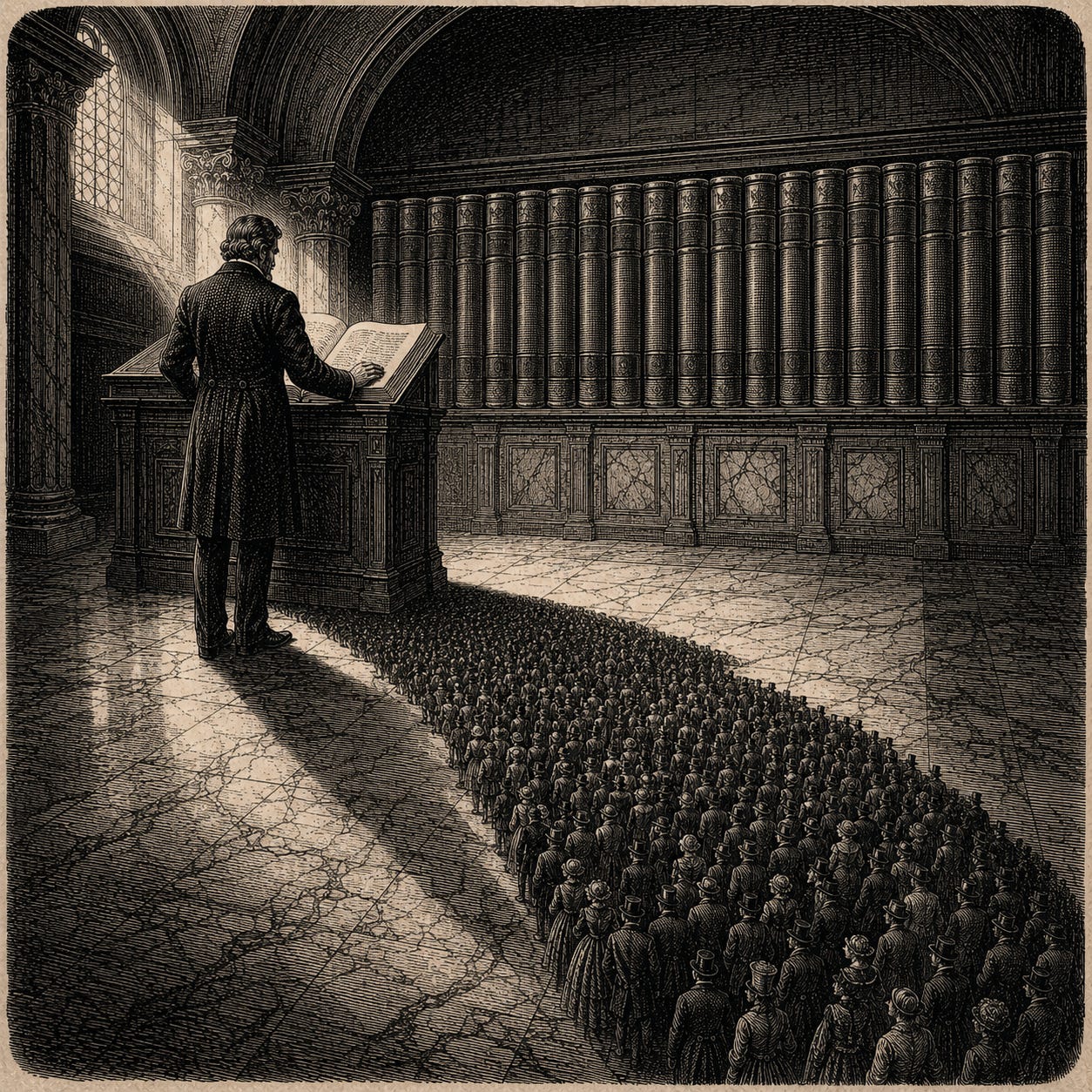
Which brings us to the one demand record the traditional system ever allowed an individual to compound: the auteur brand.
Nolan spent 25 years building his. The stretch that matters to a buyer is the last two decades of it, the run at event scale. From Memento to The Dark Knight trilogy to Inception to Interstellar to Dunkirk to Oppenheimer, each release adding a documented data point: this many people, this much money, this fast, on this name. By 2023, the record had reached a resolution no tracking survey could match. Oppenheimer, a dialogue-driven three-hour period drama, grossed $975.8 million worldwide with $190 million-plus from IMAX screens alone, per THR. The audience paid a premium for the format because the name on the poster guaranteed the format would matter. That is price-inelastic, repeat, documented demand, attached to a person.
Comscore’s Paul Dergarabedian said the quiet part to Variety when the year-early sale landed: “It’s bold, it’s brilliant, and it’s audacious... only someone of Nolan’s stature could pull this off. He’s a brand unto himself.” Read that sentence as an underwriter. Stature is the industry’s word for a payment history. Brand unto himself is the industry’s word for demand that attaches to the individual and travels with him.
State the claim precisely, once, because precision is what keeps it honest. Nolan’s name performs the function a subscriber base performs for a creator: it converts an unannounced future product into measurable present demand. The function is identical. The infrastructure differs. A creator’s demand record updates continuously and publicly, view by view. Nolan’s updated in a few dozen large observations across two decades, each one a theatrical release with audited grosses. Two decades of openings is a payment history by any lender’s definition, and the year-early sellout was the market letting him draw against it.
Run the record through a lender’s checklist and the parallel holds at every line. Identity: the demand attaches to a name, and the name shows up for work. History: consecutive obligations met across 20 years, across genres, through a pandemic that closed the venues. Recurrence: the same buyers return, at premium prices, for a product they have not seen, which is the behavioral definition of a franchise without the franchise. Concentration risk: one man, no succession plan, the same single-name exposure every creator deal carries and every underwriter of one has learned to price. The vocabulary changes from floor to floor in this industry. The credit file reads the same. None of this confuses a ticket with a coupon. One is voluntary, one is contractual, and the claim sits precisely where they overlap: both records let a stranger price the future behavior of people he has never met.
Why did the system allow only this one kind of record to compound? Because the auteur was the one participant whose contribution could never be recast. Stars stopped compounding when the term contract died; the studios lost the machine, and the stars lost the continuity. Studio brands diluted across slates; nobody has ever bought a ticket because Universal distributed the picture. Franchise IP compounds, but it belongs to a balance sheet and gets reassigned to new hands every few years. The director who writes, produces, and delivers the film personally was the single position in the credits where audience trust could accumulate on an individual, deal after deal, and walk out the door with him. Warner Bros. learned the walking part in 2021. Universal has been collecting the arriving part since.
The auteur, in other words, was the single crack in the traditional system where an individual could accumulate an audience relationship deal by deal and own it outright. The creator economy widened that crack into a door. As I wrote in What the Audience Built, the crowd that comes back on its own is the asset. Nolan has one. He built it at 24 frames per second over 25 years.
The industry calls it an auteur brand. A lender would call it a demand record with a 20-year payment history.
IV. The Same Instrument, Arriving From Below
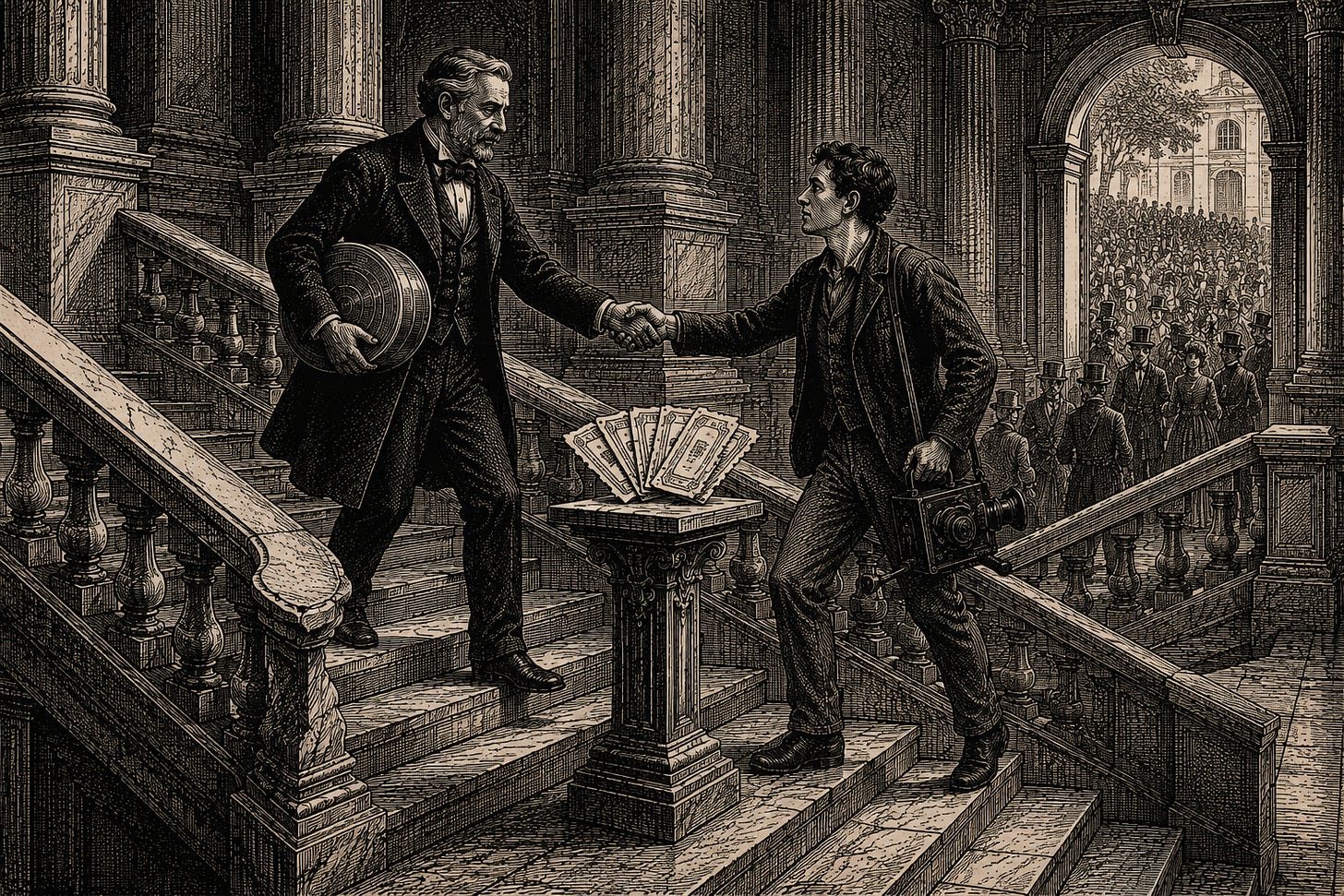
Regular readers know the bottom-up version of this story, because this publication has been keeping its receipts for months.
As I wrote in The Film Bond, A24 signed Kane Parsons to develop Backrooms before a frame of the feature existed, when his channel sat under 2 million subscribers. The audience kept compounding through production, and the film opened to $81.5 million domestic this May, the biggest opening in A24’s history. The studio’s own exit polling found 58% of opening-weekend buyers came because of the YouTube series, a number I walked through in What the Audience Built. Focus Features watched Curry Barker’s audience the same way and paid roughly $15 million at TIFF for Obsession, a film produced for about $750,000, around 20 times its cost and a record sale for the festival. Markiplier skipped the intermediaries entirely: Iron Lung cleared more than $50 million theatrically across 3,015 theaters booked through Centurion Film Service, with no traditional distributor anywhere on the paper. Three transactions, one underwriting logic. In each case, a buyer read a live, counted audience and priced the film off the count before release.
Notice what each buyer paid for the measurement. A24 paid a development deal for a teenager’s compounding audience. Focus paid 20 times cost for a finished film whose audience arrived pre-attached. Universal paid nothing for its measurement at all; the audience paid Universal, $1.5 million of it, a year in advance. The instrument gets cheaper as the demand record gets longer and stays paid. Ask any borrower who has refinanced. A first-time borrower pays for the underwriting. A 20-year payment history gets courted.
The counter-case shows the instrument cutting in both directions, and I laid it out in What the Audience Built: RackaRacka’s channel has been dark since August 2023, when the last upload announced Talk to Me going worldwide. Talk to Me, bought while the channel was live and compounding, returned roughly 20 times its cost: $92.2 million against $4.5 million. Bring Her Back was greenlit at triple the budget with no live signal to read, and returned 2.6 times. Same brothers, same studio, same genre. The measurement was present for one deal and absent for the other, and the absence got priced too. An instrument that only ever flattered its subjects would be a marketing gimmick. This one cuts.
Now hold those transactions next to last July’s midnight sale. A24 priced Parsons’s counted audience before the product existed. Universal priced Nolan’s counted audience before the product existed, and went one step further than any creator deal has gone: it collected the demand in cash, a year out, through a public box office. The creator market and the studio market discovered the same instrument from opposite ends. One built it out of subscriber dashboards and channel analytics. The other built it on a two-decade theatrical track record and a ticketing pipeline. Convergence was the thesis. The biggest film of the year is the proof running from the top down.
The Odyssey and Backrooms are the same transaction: a buyer pricing documented demand before release. One cost $250 million. The other cost a signing bonus.
V. What Countable Demand Does to the Money
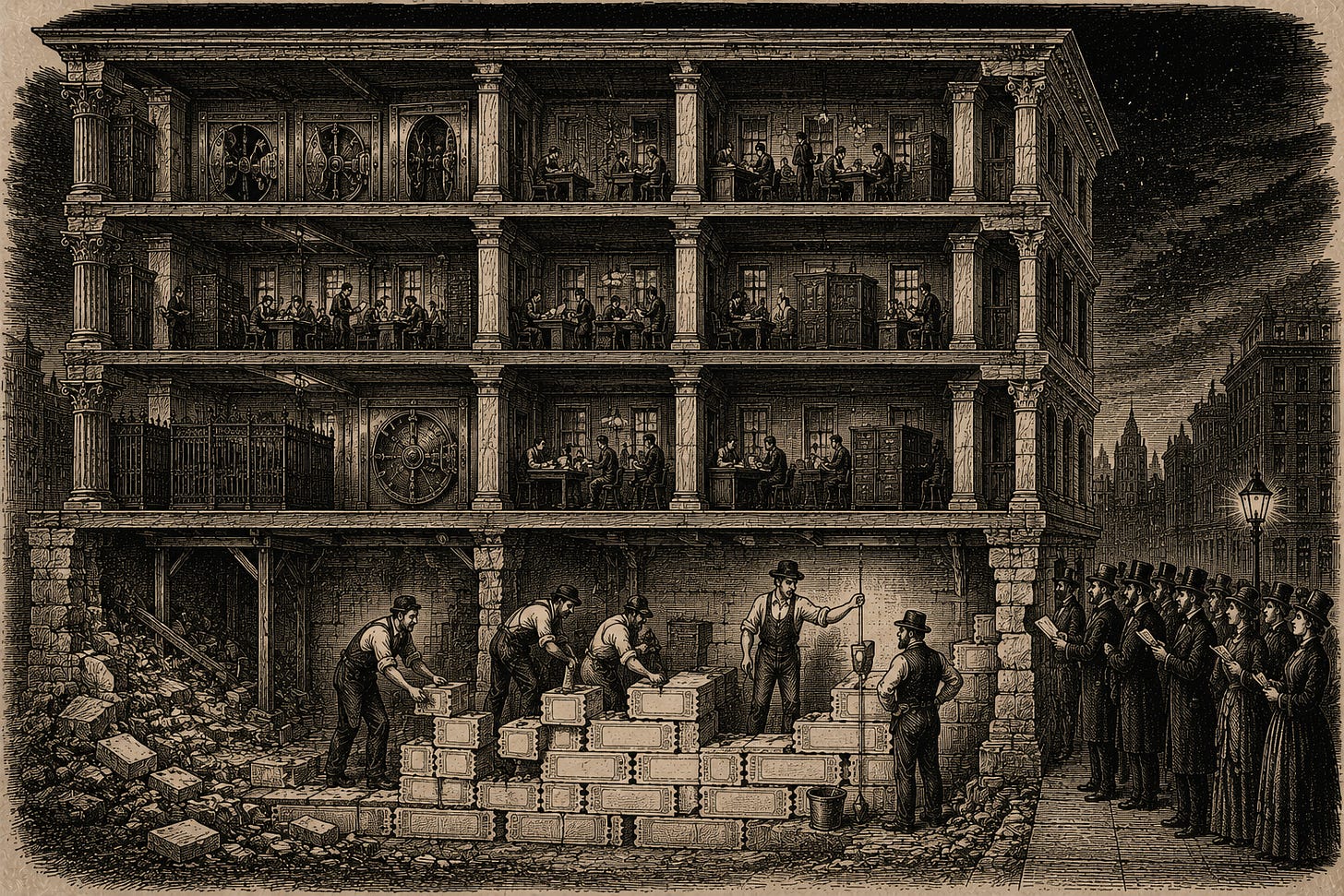
Here is where the allocators should lean in, because the repricing has already started.
Film equity spent decades priced as the riskiest money in the stack, and for a defensible reason: outcome variance was unmeasurable at the moment of commitment. As I wrote in The Film Bond, the senior layers of a film financing were always bankable. Distribution contracts, tax-credit receivables, pre-sold territories, all of it papered and lendable. The equity at the bottom priced like toxic waste because it absorbed the one risk nobody could measure: whether an audience would materialize. Every structure in Section II existed to shave slivers off that unknown. None of them removed it.
Direct demand measurement removes a piece of it, and a piece is all a capital structure needs to start moving. When a studio can collect cash commitments 12 months before release, when a buyer can watch an audience compound in real time before signing, part of the variance migrates from unknowable to priced. The greenlight starts to look less like a wager on taste and more like an underwritten instrument: demand evidence is gathered first, capital is committed against the evidence, and the residual risk carries an actual price. That is the same sequence every other financeable asset class ran on its way to institutional money.
Play the mechanics forward one step and the shape of the next film financing becomes visible. A presold engagement is senior evidence, cash in hand against named seats. A live, compounding audience is documented collateral behavior, the film equivalent of receivables aging beautifully. A dark channel, as the RackaRacka pricing showed, prices like a covenant breach the market already knows how to discount. None of this requires new law or new paper. It requires allocators willing to read demand records the way they already read payment histories, and the transactions in this essay are the market doing exactly that, one deal at a time, without waiting for anyone’s permission.
Watch where the value sat when a legacy business got marked this month. Sky is acquiring ITV’s Media & Entertainment arm, 70 years of broadcast reach, for up to £1.6 billion: £1.2 billion in cash, Love Productions contributed at £200 million, and up to £200 million in an earn-out tied to 2027 advertising revenue, per the company announcements and the Deadline, Variety, and FT coverage of the deal (July 2026). Alongside the purchase, Sky signed a content supply agreement with ITV Studios, the arm that owns the programming, worth a minimum of £ 2.1 billion over five years, and the content terms were reported as the hardest-fought part of the negotiation. The two figures measure different things: a purchase price and a supply commitment, and no honest model sets them side by side. The negotiation is legible anyway. The reach sold with contingencies attached. The arm that owns the programming walked out with a guaranteed floor. The sellers knew exactly which asset they were keeping.
The Sky and ITV structure also answers the question allocators always ask about this thesis: where does the return come from once everyone can see the demand? It comes from the same place it went in every prior repricing, to whoever owns the thing being measured. Legible demand moved the bargaining power to the arm the audience follows. The £2.1 billion floor is what a buyer commits to when the seller can document that audiences follow the programming wherever it goes. Distribution used to hold the leverage because it held the only door to the audience. Measurement moved the leverage to the parties the audience actually follows.
One more exhibit, and it needs only a paragraph. The same week The Odyssey opened, Netflix reported Q2 revenue of $12.56 billion, up 13%, and told investors it will give fewer engagement updates going forward, per CNBC (July 16, 2026). Members watched more than 97 billion hours in the first half. Netflix holds the largest continuous demand-measurement apparatus in the history of entertainment, and it is reducing disclosure. The skeptical read says the numbers flatter less than they used to. The strategic read says a company publishes the numbers it wants priced and guards the numbers that do the pricing. Both reads agree on the part that matters here: the engagement number moves value, and the holder of the best copy of it stopped sharing.
When demand becomes measurable, the greenlight stops being a bet on taste and becomes a priced instrument. The rest of the capital stack reprices around that fact.
VI. What This Does Not Mean
An argument this convenient deserves its own cross-examination, so here is the honest version.
Presales are old. The roadshow proved advance appetite 70 years ago, and every independent producer since the 1980s has financed against pre-commitments. What changed is scale and directness. The roadshow measured a city in aggregate after the film was finished. Foreign pre-sales measured a distributor’s guess about a territory. Fandango at midnight measures individual humans, card by card, a year before the product exists. The difference between those readings is the difference between a survey and a census.
The measurement is real and narrow. 25 sold-out auditoriums a year early prove intensity at the core of the demand curve. They say nothing about its width. A film can sell out every 70mm house on Earth and still miss a $1 billion run, because the collectors who buy at midnight and the families who decide on a Saturday are different populations. Anyone extrapolating a global gross from a boutique sellout is running the Relativity error with better inputs.
The sale also postdated the greenlight, and that objection deserves a straight answer. Universal committed the $250 million on the record, two decades of audited openings, before a single seat sold. The census came after, and this time it confirmed the record with cash. What changes is the next structure. A measurement that has been run once at full scale can be scheduled, and a scheduled census inside a financing is underwriting. The roadshow could only ever confirm a finished bet. The year-early on-sale is a template the next greenlight can paper in from day one.
The instrument also covers a thin slice of the market. Most films arrive at the greenlight with no demand record anywhere in the file: no auteur ledger, no compounding channel, no counted audience. The repricing starts in the small class of projects that can produce evidence, auteurs at the top of the market and creator properties at the bottom, and widens only as far as the records do. Every underwriting instrument has entered every market the same way: the first loans go to the borrowers with files.
Taste did not die, and this essay makes no claim on it. Demand data prices the bet. It does not pick the film. Somebody still had to decide that Homer, shot on IMAX cameras, was worth $250 million, and no dashboard on Earth produces that decision. If anything, the maker’s judgment appreciated. A director’s instinct now arrives at the greenlight, pretested against a counted audience, which makes the instinct easier to finance and the people who have it more valuable.
One live risk deserves naming. A presold format can be gamed into a manufactured scarcity play: cut the pool small enough and any release can engineer a sellout headline. The difference between a measurement and a stunt is disclosure and scale. Universal disclosed the pool, and then demand crushed a national booking system 11 months later. The next studio that runs the play deserves scrutiny on both counts, and on a third: whose money filled the pool, the audience’s or the flippers’.
Closing
Go back to the man at the counter. A year ago he bought a ticket to a film that did not exist, and the whole scene still carried the residue of the old joke. The film exists now. It opened Friday on 3,919 screens, per Deadline’s count. His seat was waiting, and the listings that formed within a week of his purchase said he could have flipped it for 10 times what he paid. Nobody at the counter is laughing at the receipts.
The industry that spent a century building proxies just watched its most traditional member step around all of them and measure the thing itself. That precedent does not expire. Every studio distribution chief now knows a year-early census is operationally possible, and every one of them watched what it did for a $250 million commitment. The creator end of the market never needed convincing; A24, Focus, and a one-man distributor already run their greenlights off counted audiences, and, as I wrote in When Attention Becomes Financeable, the capital that prices documented demand first tends to keep the franchise.
So the forward motion is set at both ends. More greenlights will arrive with demand evidence attached, from the top of the market and the bottom at once. More capital will learn to read the evidence, price it, and structure around it. The counting has started, and money follows a count the way it never followed a guess. The only open question worth asking is the one every era of this history eventually answered: who builds the instrument the next financing structure fossilizes?
Why Subscribe
Because the most expensive film of Christopher Nolan's career just retired the standing objection to this publication's entire thesis — and most of the capital that should be repricing around it is still filing it under marketing. Every week, Attention Capital tracks the deals where documented audience demand becomes a financeable asset, before the term sheets reflect it. Josh Stein joins the State of Streaming podcast in August to break down exactly how this repricing plays out across film, creator properties, and the capital structures forming around counted audiences.
Subscribe to State of Streaming.
Get the SOS. Brief
The sharpest streaming intelligence, delivered to your inbox.