A Knicks Fan in Florida and the Streaming Era's Live Sports Problem
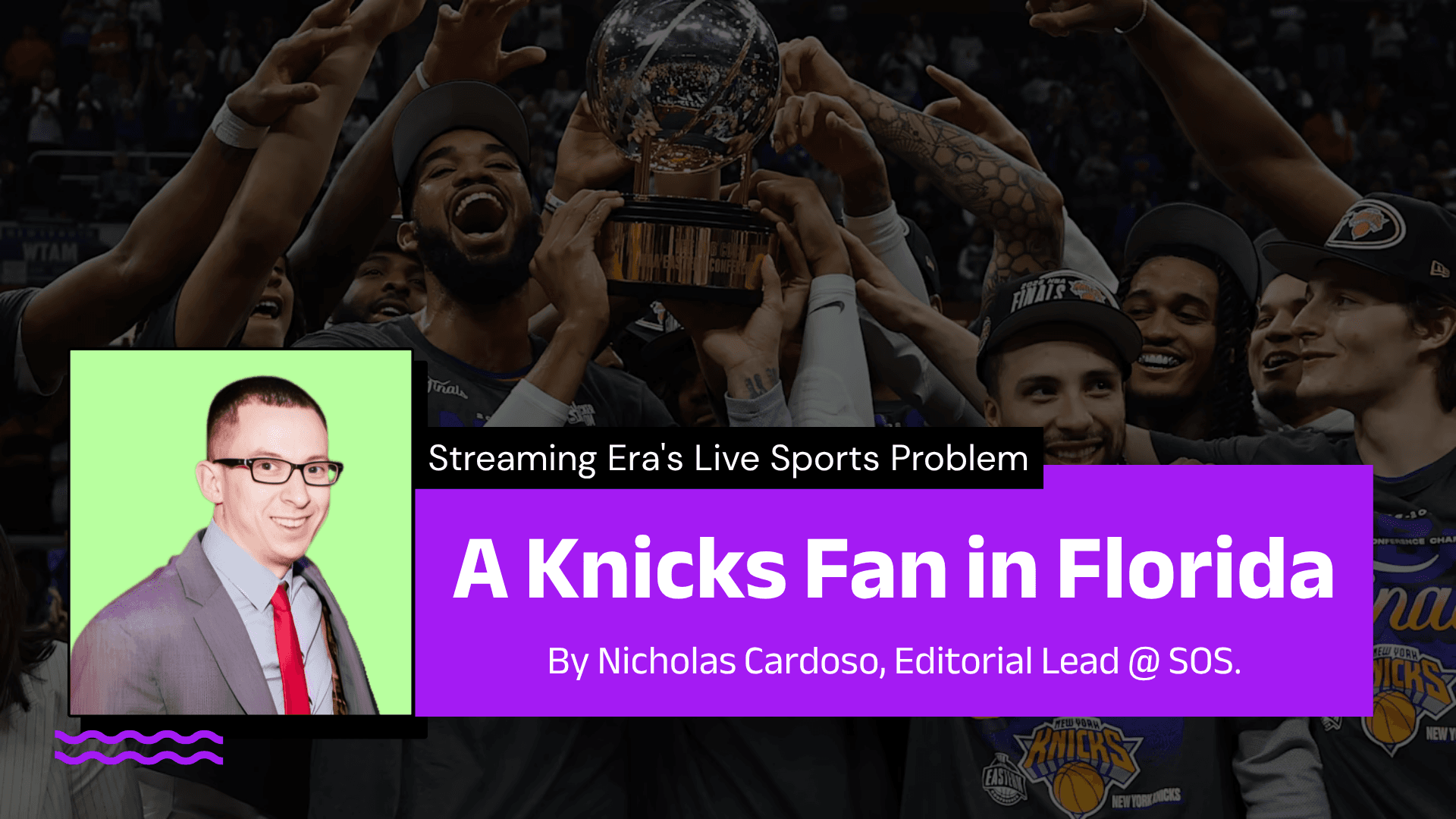
The New York Knicks are in the NBA Finals for the first time in 27 years, something I did not think I would ever see again. Something else I did not think I would ever see is just how difficult it is for a cord cutter to watch the game.
I cut the cord years ago, kept broadband, trimmed subscriptions down to services I actually use and stopped thinking much about television platforms. At the moment, that means Amazon Prime Video and not much else.
Then the NBA Playoffs arrived and my hometown Knicks stormed their way to the Finals. The NBA Finals air exclusively on ABC. That should make things simple, right? ABC is one of the last remaining symbols of legacy broadcast television, one of the channels people assume they can always access. And yet, a modern sports fan can still find themselves conducting the kind of cost-benefit analysis associated with buying a dishwasher.
Do I bite the bullet and pay for YouTube TV or Hulu + Live TV for a month just to watch the Knicks? At the time of writing, YouTube TV runs about $83 a month and Hulu + Live TV is $89. The streaming services still advertise free trials, but those trials have shrunk from weeks to days. Some are now only three or five days. Even combined those would only get me through Game 4 of the series.
Sling TV, which encourages you to ditch cable and stream live TV, would be cheaper, except Sling only carries local channels in select markets. Unfortunately, mine is not one of them.
Then there’s the antenna.
It’s 2026 and I cannot believe I am considering an antenna! One of the most reliable ways to watch your local channels remains a technology associated with rabbit ears and actually having to get up from the couch to change the channel. But even this “solution” comes with homework.
ABC affiliates are often broadcast on VHF (Very High Frequency) bands and many affordable flat indoor antennas struggle to pick them up. Suddenly, a basketball fan who simply wants to watch his hometown team in the Finals for the first time in a generation is comparing VHF and UHF (Ultra High Frequency) compatibility, combing through r/CordCutters about signal strength and contemplating whether rabbit ears are making an ironic comeback.
At a certain point, you stop asking how to watch the NBA Finals and start asking why watching them requires this much effort.
This isn't about one Knicks fan in Florida. It's about the state of live sports in 2026: the fragmentation, the costs, the broadcasting rights deals. Cable was expensive. Streaming entered claiming to be the fix, but it often feels like content is just being siloed and hidden away.
Live sports remain the most valuable property in television because they attract intentional audiences. By the time a cord cutter successfully figures out how to watch the NBA Finals in 2026, they’ve demonstrated persistence and, potentially, a willingness to spend money.
Ask anyone and they will tell you that is a valuable viewer.
All of that helps explain why sports rights deals continue to inflate and spread across dozens of television channels and streaming platforms. The access problem and the rights inflation story are not separate issues. They are the same story viewed from opposite sides of the transaction.
Eventually, I’ll figure out how to watch my Knicks. Maybe through YouTube TV. Maybe through a cheap antenna precariously propped against a window.
Either way, the NBA will get me to watch.
Get the SOS. Brief
The sharpest streaming intelligence, delivered to your inbox.