Netflix Adds Short-Form Video to Combat 'Binge Abandonment'
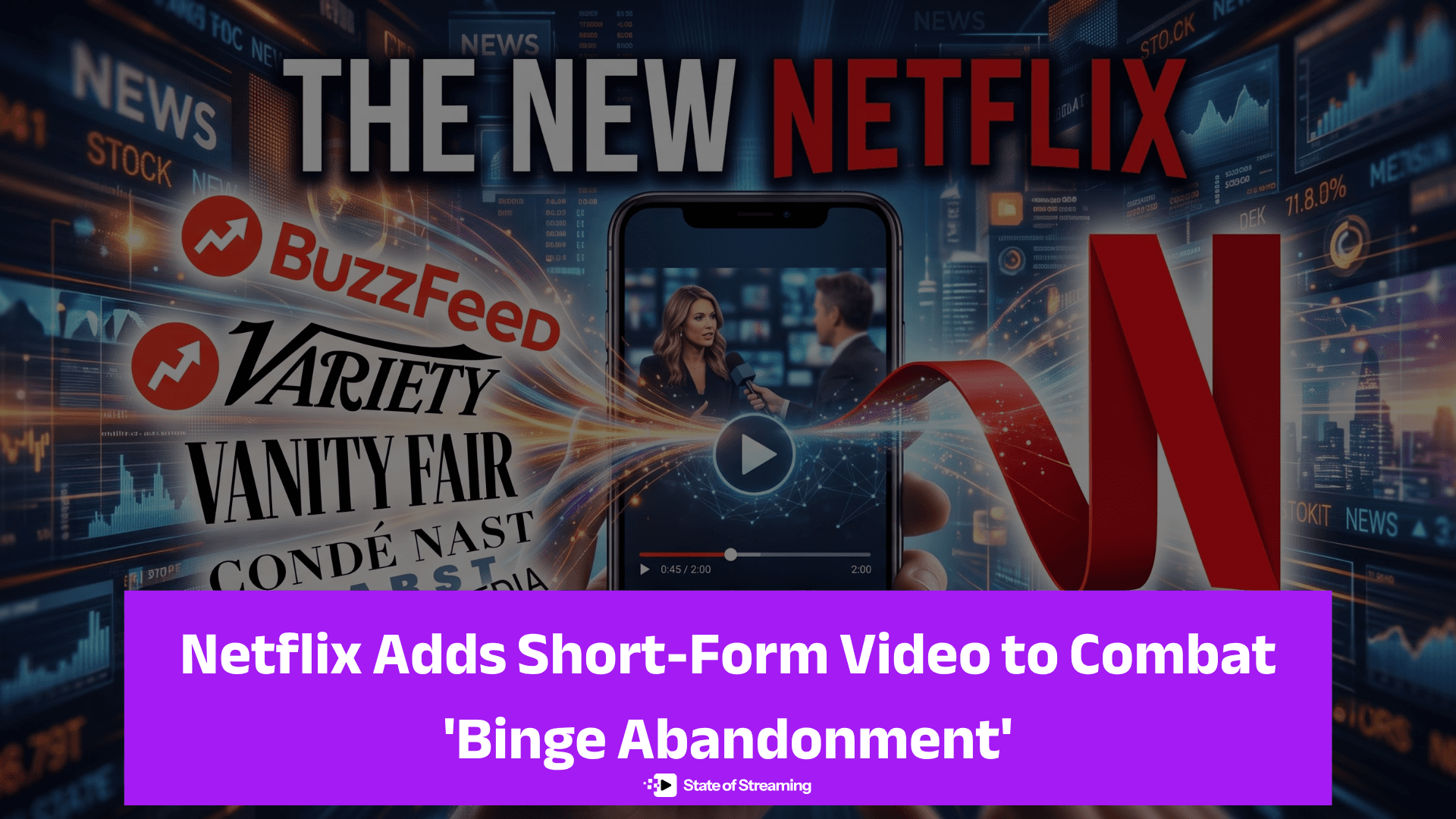
Netflix is altering its programming strategy to capture the scrolling habits of younger consumers who are increasingly turning away from traditional television formats.
What does it mean?
The streaming giant has signed sweeping content licensing agreements with a network of premium digital and print publishers to launch a new short-form video feature. Scheduled to debut August 3, the rollout will target subscribers in six initial markets: the United States, Canada, the U.K., Ireland, Australia and New Zealand.
The upcoming feed will showcase two- to 20-minute lifestyle, news and celebrity clips curated by Condé Nast, Hearst, BuzzFeed Studios and Penske Media. Audiences can expect a mix of archival and ongoing web series, including Vanity Fair’s “Lie Detector,” BuzzFeed Celeb’s “30 Questions” and Variety’s “How Well Do They Know?”
Long Term Outlook
The move serves as a corporate defense mechanism against the market dominance of TikTok and YouTube Shorts. Recent industry reports indicate that internal viewer metrics show a growing trend of "binge abandonment," with audiences frequently dropping standard television series before reaching a second season. Netflix executives realize the traditional long-form model is losing ground to rapid-fire scrolling habits. Rather than letting subscribers exit the app to browse social media, Netflix aims to capture that bite-sized attention layer directly within its own user interface.
How It Works
Financially, the licensing agreements offer Netflix a low-risk strategy to test whether its audience has an appetite for web-native media. Partnering with established digital brands provides thousands of hours of programming that is significantly cheaper and faster to integrate than high-budget, scripted episodic series.
The pivot follows a broader industry shift toward mobile-first entertainment. Competitors like Peacock have already advanced similar mobile strategies, launching vertical video microdramas and deploying real-time artificial intelligence to format live sports for smartphones. Netflix's entry into the space marks a major evolution, proving that top-tier streamers are actively rewriting their playbooks to mirror social feeds.
Reaching New Audiences
For media buyers, this industry-wide evolution helps bridge a critical broadband gap. Millions of U.S. households now access the internet exclusively through smartphones rather than fixed home broadband. Delivering premium, short-form vertical feeds allows entertainment companies to engage these cellular-only consumers while offering advertisers a brand-safe alternative to traditional social networks.
By embedding publisher content directly into its ecosystem, Netflix is betting that the future of streaming retention lies in minutes, not seasons.
If You Liked This You May Also Like
Peacock Doubles Down on Vertical Video to Capture Mobile Streamers
Vertical Video Isn't a TikTok Strategy. It's a Broadband Gap Strategy.
Get the SOS. Brief
The sharpest streaming intelligence, delivered to your inbox.