Behind the Screens: What Makes a Microdrama Possible?
The recent partnership between Peacock and ReelShort has confirmed the ascension of microdramas into pop culture relevance. Starting in 2018 on Douyin, microdramas have risen into an almost $30 billion industry on the back of flashy story lines, never-ending cliff hangers, and a constant new stream of content to keep audiences satisfied.
They are a new enough creative medium that finding an exact definition is impossible; but they are generally characterized by their vertical orientation, episodes hovering around a minute or two in runtime, and fast paced storylines with high emotional stakes and quick plot progression. This new development in video content represents a burgeoning aspect of the streaming TV market, and a constant stream of work for film professionals across the world.
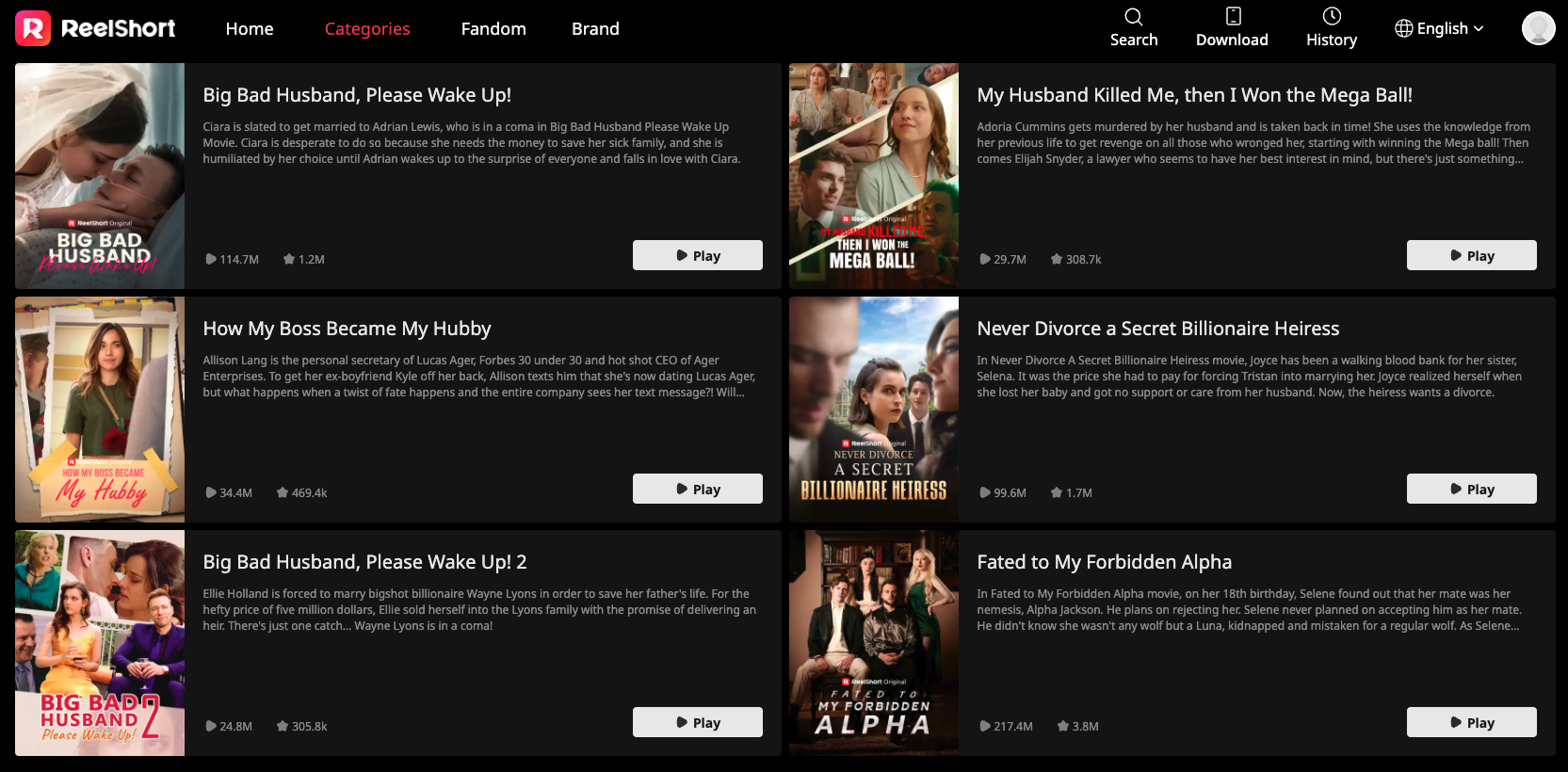
At the time of publication, ReelShort’s “Story Beats” page features 314 pages of possible options despite only being in operation since 2022. Shows have around 50 episodes, making an average of 90-100 minutes total, an absolutely unimaginable content library that takes herculean efforts to produce. To better understand the world of the microdrama, I interviewed production staff in all areas of filmmaking including: a sound operator, a director of photography, a script assistant, and a makeup artist who have all worked on these sets.
Crew Guide: SO (Sound Operator) • DP (Director of Photography) • SA (Script Assistant) • MUA (Makeup Artist)
Q: What is the working environment like on these sets?
Sound Operator: “All of them are done, in my experience, the cheapest, most efficient way possible because you’re trying to do hundreds of these short episodes in a very short span of time.”
DP: “The crew size is not tiny for an indie, but it is small, not like a real production. They are very profitable because they are so low budget. If the budget isn’t conducive to what you have to shoot, your shooting schedule gets tightened down and you end up shooting eight pages a day.”
SA: “Most people I know aren’t happy working on these things. From what I can tell and have heard the sets are a little demoralizing even though pay is supposedly nice.”
MUA: “I’ve worked on verticals where they’ve said ‘we don’t even care if they’re ready, just put them on camera.’ For one shoot I worked on, the costume designer was so stressed out the actors started stealing clothes for her.”
Q: Do people enjoy the stories they are getting to help make?
Sound operator: “No, they’re one rung away from pornography, in the vein of soap operas, but just emphasized salacious content and shock value.”
DP: “They’re so melodramatic, and the cliffhangers are so constant that the joy you get watching these talented actors trying to sell this material is really entertaining to watch.”
SA: “For some reason, it’s always something like the man who is super rich and there’s always a woman who’s really poor.”
MUA: “Some have been really interesting. My girlfriend worked on one that was a really well-made queer story, so there are ways it can be done.”
Q: What does the future of the industry look like regarding the Microdramas?
Sound Operator: “Short form content and social media content aren’t going anywhere, everything will evolve. I just hope that the avenue from doing social media and short stuff to doing bigger things becomes a bit clearer, so it’s not just a self-sufficient circle.”
DP: “The way to reach people is really through their phones, on social media. How many of the biggest artists now became big because of TikTok or Instagram? I think vertical narratives are going to continue to have their own little niche and probably continue to grow.”
SA: “I worry about acting in microdramas. The kind of acting demanded in microdramas is already AI-like to begin with. I think jobs are just going to get more and more limited. The rise of AI in the process is already affecting other spheres of industry… if it’s already affecting the ‘stable’ path then of course it’s going to affect acting.”
MUA: “I’ve worked verticals with [well known streaming platforms], but the production quality is so much higher. You have PA’s helping, you get good food, you’re able to get a much higher quality of work.”
The general sentiment offered to me over the course of my interviews was the idea that everyone in all parts of the film industry is having to adapt to this new sort of entertainment. Slowdowns in Hollywood and discussions around union sets post Obsession craze are resulting in more people having to take these types of jobs where they are underpaid and overworked.
Film and art in general has never been a career people went into for stable hours or great working conditions, but the rights workers have won over the course of decades shouldn’t be thrown aside purely because companies like Reelshort are able to take advantage of a weak labor market. As these types of shows become more prominent, consumers will have to reckon with the stress put on the talent behind the camera that makes it possible to produce such incredible volume.
Read More From Nathaniel Danziger Here:
The Vertical Shift: A New Column on Short-Form Content, Streaming, and the Culture It's Reshaping.
The Vertical Shift Part Two: When The Derivative Became the Product
Get the SOS. Brief
The sharpest streaming intelligence, delivered to your inbox.