The Rented Boom (Part Two) - Attention Capital | A Column by Josh Stein
Editor's Note
This is Part Two of a two-part series on the micro-drama market and the difference between category revenue and owned demand. If you missed Part One — covering the receipts, the whale model, and why smart money keeps buying a rented growth curve — read it here first. Subscribe to State of Streaming for Attention Capital every week.
Continued from Part One
Why Smart Money Buys a Rented Curve
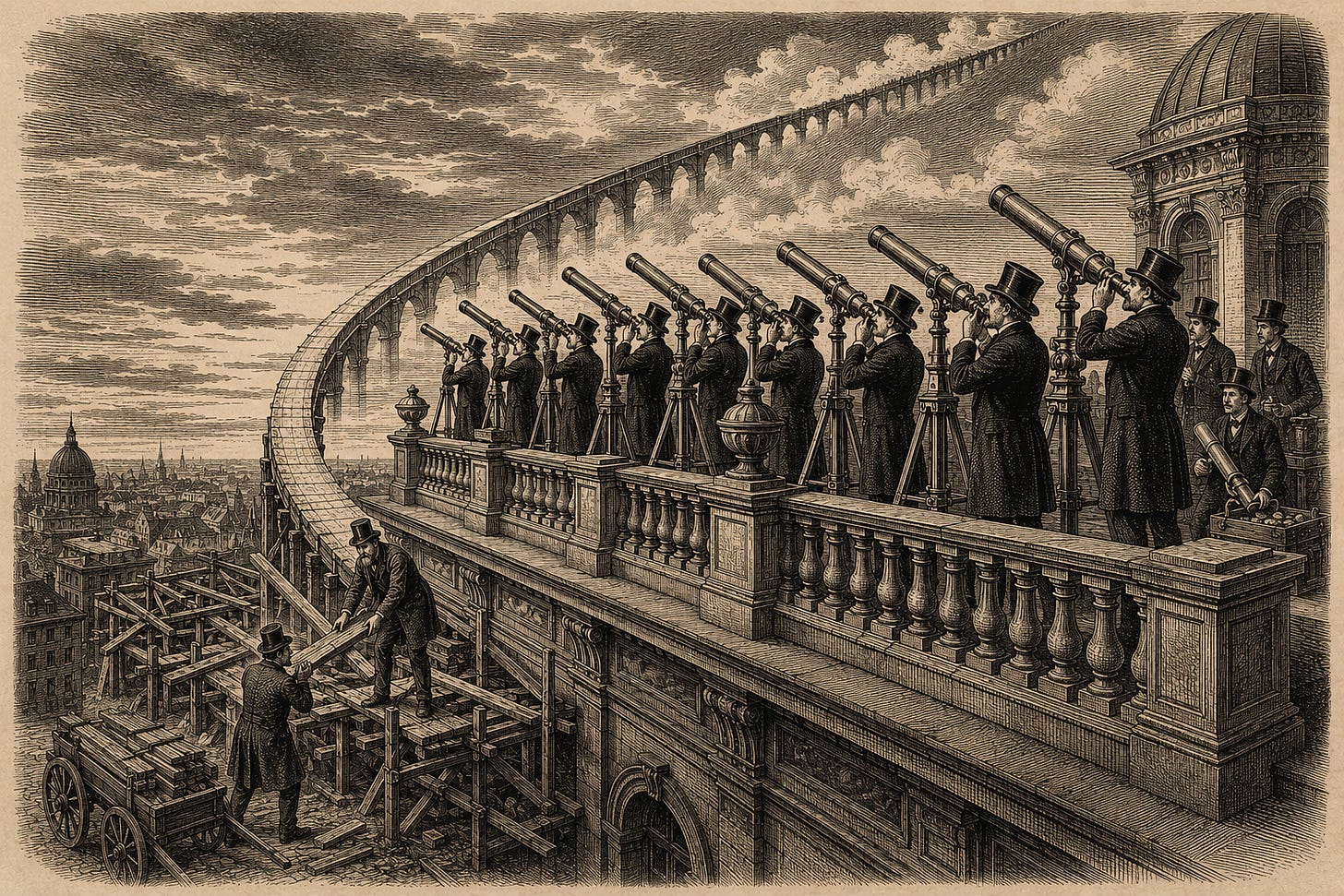
None of the capital flowing into this category is dumb. That’s what makes the pattern worth studying.
The capital cycle runs on visibility. Money flows toward growth it can see, and category revenue is the most visible number in any market. The mistake occurs in the translation: “category revenue” is read as “company durability”. A $14 billion category projection says nothing about whether any single operator within it owns the demand that produces its share. But the projection is what gets underlined in the memo, because it cleared the partner meeting at the last three firms that passed on the round and later regretted it.
In this category, the cycle has a mechanical twist that makes it faster and meaner. The growth input is a shared auction. Every new entrant, and every incumbent freshly loaded with UA financing, bids the same Meta and TikTok inventory to find the same whales. Capital raised to chase the category inflates the price of the category’s only growth input. The funding wave and the CAC curve are the same line drawn twice. India’s micro-drama market is already showing the symptom set: steep acquisition costs and shaky retention arriving together.
The screens don’t catch it because the screens were built for other asset classes. SaaS diligence asks about net revenue retention because contracts recur. Gaming diligence asks about D30 retention because habit recurs. Streaming diligence asks about churn because subscriptions recur. Micro-drama numbers clear the surface version of every one of those screens: triple-digit revenue growth, engagement minutes that embarrass Netflix, a market projection with a B in it. No standard screen asks who owns the relationship underneath the revenue, because in the asset classes the screens were built for, the answer was assumed.
Then momentum starts doing the underwriting. DramaBox went shopping for $100 million from US backers at a $500 million valuation, with Disney already invested through its accelerator, per Business Insider. Holywater raised $22 million, calling it the largest micro-drama investment outside Asia, with Horizon Capital leading and Endeavor Catalyst participating. GammaTime raised $14 million in seed money from vgames and Pitango, with Alexis Ohanian, Kris Jenner, and Kim Kardashian on the cap table, and founders from Miramax, Quibi, and Google on the masthead. Each round makes the next one easier to justify. The comps start doing the diligence work. And once a category’s rounds start clearing on comps and heat, price discovery has stopped, and the operative diligence question has quietly shifted from “what do we own” to “how fast can we deploy.”
Notice who’s positioned where, because the capital stack is confessing. The UA lenders hold the shortest duration and the best information. A PvX-style facility recycles in months, repaid cohort by cohort, and the lender watches conversion data in close to real time. If the auction turns, the lender’s exposure runs off before the damage compounds. The equity arriving at a $500 million mark holds the opposite position: terminal-value duration, priced on demand the company doesn’t own, with the least visibility into the cohort math and the last claim on the way out. In most markets, the long money knows the most. Here the long money knows the least, and it’s paying the highest price for the privilege.
That inversion is the purest symptom of momentum underwriting. When participants with the best data commit for months and those with the worst data commit for a decade, diligence follows deal heat rather than risk.
Mobile gaming ran this exact cycle a decade ago, and the ending is on the public record. Same whale math, same UA arms race, same auction. Acquisition costs inflated through the mid-2010s until UA-dependent studios consolidated or died. Demand grew through every year of the shakeout. The dying happened anyway, because the demand belonged to the auction. The survivors, the Supercells and Kings, were the operators who converted bought installs into owned franchises: recurring characters, live-service habits, brands that pulled players back without a banner ad doing the pulling. Everyone else returned their capital to the ad platforms a click at a time.
That’s the behavioral core of the whole episode. Nobody in the chain is being stupid. The operator is rationally scaling what works. The lender is rationally pricing cohort math. The equity investor is rationally reading category growth. The system produces the mispricing anyway, because every participant is underwriting the curve and nobody is underwriting the demand.
Every participant is underwriting the curve. Nobody is underwriting the demand.
The Ownership Audit
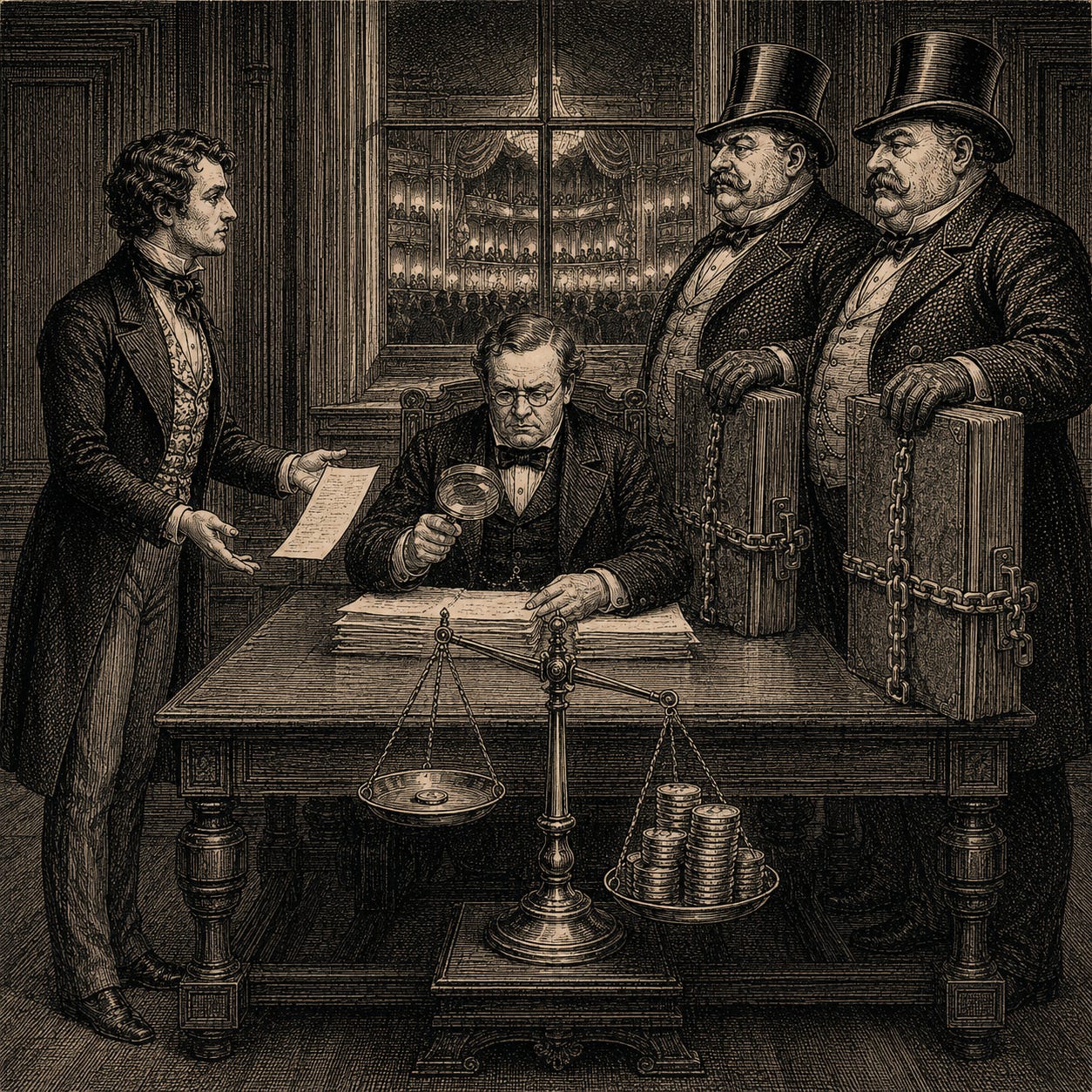
So run the test the screens skip. Three questions.
Who has the relationship? Follow the ad spend. When 68% of a category’s US marketing budget flows to social networks, the customer relationship lives inside those networks. The apps hold payment credentials and viewing history. Meta and TikTok hold the demand curve, the targeting data, and the price of reaching the next customer. One side of that arrangement sets terms. The other side pays them.
What happens if acquisition spend stops for a quarter? The honest answer: revenue decays at the churn rate, and the churn rate is unforgiving. The monetization model is built on urgency at the cliffhanger, and the audience relationship mostly ends when the story does. Viewers finish, refuse to pay, or drift to a rival app running the same formula. China released more than 30,000 micro-drama titles in 2024 alone. That is a volume strategy. Franchises don’t ship thirty thousand a year.
Where is the asset that survives the budget? A franchise audience returns unprompted, a creator whose following travels, a habit that outlives the campaign. The category’s structure works against all three. Series are disposable by design, actors are interchangeable by design, and the app brands are as thin as the differences between their libraries. What persists is the funnel. And the funnel is a lease.
This is the Vice position, and I’ve made that argument at length before. Vice carried a $5.7 billion valuation because equity priced Facebook reach as if Vice owned it. The platform repriced; traffic went away, and equity went to zero while the audience kept scrolling. Established canon. It doesn’t need re-arguing here.
What’s new is the clock speed. Vice’s platform dependency took a decade to build and break. A UA-funded app’s dependency reprices continuously: every CPM print, every auction shift, every quarter Meta decides vertical-video advertisers can bear more. The Shortical structure makes the exposure legible in the term sheet itself, since repayment rides on cohort conversion holding up. Same disease. Ten times the clock speed.
Vice took ten years to build and break its platform dependency. A UA-funded app reprices every time the auction does.
What Durable Would Look Like
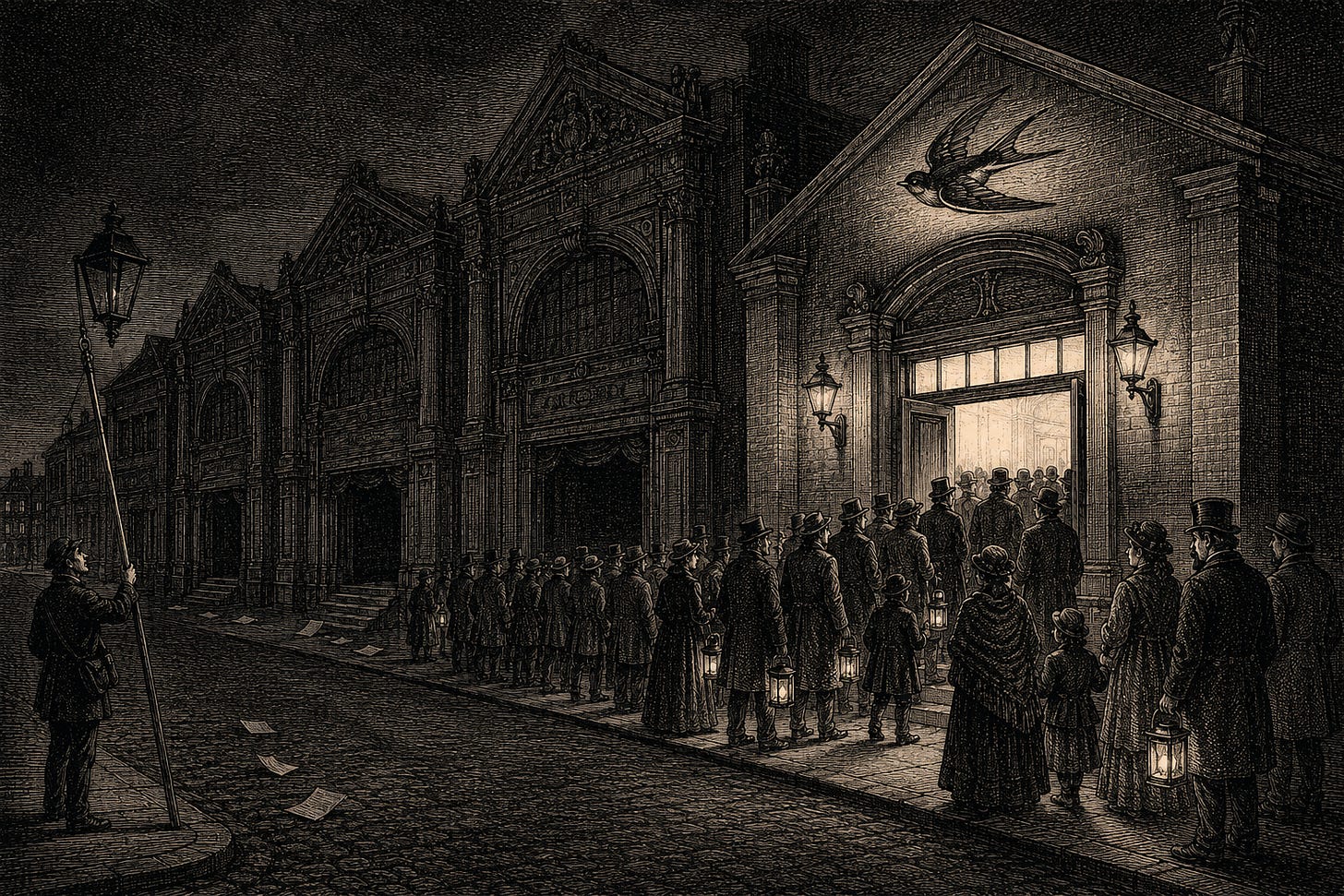
The critique earns nothing unless the screen comes with it. Three things would separate a durable operator in this category from a funded funnel.
First, franchise economics. Sequels and returning characters that convert without matching re-acquisition spend. If season two of a hit acquires its audience at a fraction of season one’s CAC, something is owned. If every new series pays full freight in the auction, nothing is.
Second, portable followings. Named writers, actors, or creators whose audiences travel with them across titles and apps. The moment a viewer searches for a name instead of tapping an ad, the relationship has moved off the platform’s books and onto the operator’s.
Third, direct relationships. Subscriptions that renew through a content drought. Owned channels, email lists, communities. Retention curves that hold through a spend pause. The test is brutally simple: pause the ads for a quarter and see what’s still there.
Is anyone building this? The most instructive case is the least comfortable one. ByteDance’s Hongguo has grown past 100 million daily active users in under three years and more than 200 million monthly users on a free, ad-supported model, fed by the Fanqie web-novel library, which pre-converts millions of readers into viewers of adaptations they already know. That’s an owned demand loop: owned IP pipeline, owned distribution, no auction in between. The most durable demand position in the category belongs to the company that already owned the platform. The exception proves the audit.
The US market is starting its own version of the experiment. Fox took an equity stake in Holywater, the company behind My Drama, and committed more than 200 vertical titles to the app. ReelShort is running promotional partnerships with Paramount. Library IP and studio production muscle are a franchise head start. Whether they convert into relationships the operator owns, rather than cheaper feedstock for the same funnel, is the open question the next two years will answer.
Here’s the evenhanded part, and it cuts against the current money rather than the category. A durable operator would look slow. Lower headline growth, because it isn’t buying every marginal user the auction will sell. Ad spend declining as a share of revenue, quarter after quarter. Retention curves that embarrass the category average. Every one of those traits reads as a weakness in the screens the current capital is running. The capital structure is priced to find whales. The durable operator could walk through the middle of the category, and the money would never see it.
The Question That Reprices Everything
The bubble question dissolved in the first section. The category has earnings. It mostly lacks ownership, and the gap between those two facts is where the losses will come from, on whatever timeline the auction sets.
So the questions that matter are narrower and harder. Which of these operators could survive two quarters of zero ad spend? Who converts bought traffic into owned audience before the auction reprices it out from under them? And which allocator asks the ownership question before the category answers it for everyone at once?
The revenue is real. The question is who it belongs to.
The bubble question dissolved in Part One. The category has earnings. It mostly lacks ownership — and the gap between those two facts is where the losses will come from, on whatever timeline the auction sets.
The revenue is real. The question is who it belongs to.
Attention Capital asks the ownership question before the market prices it — across micro-drama, sports rights, creator credit, and every other category where rented demand is being priced like a durable asset.
Subscribe to State of Streaming for more from Josh Stein and Attention Capital every week.
Get the SOS. Brief
The sharpest streaming intelligence, delivered to your inbox.