How Disney is Turning ESPN, Fubo, and the NFL Into A Streaming Ad Machine Nobody Saw Coming
In late 2022, Wells Fargo called an ESPN spinoff "the best path forward" and "a reasonably probable late-2023 event."
What happened instead has been anything but what was expected.
In February 2023, Bob Iger killed the spinoff.
But what he said about the situation revealed what Disney was actually thinking:
"We just have to figure out how to monetize it in a continuing, disrupting world."
The Book on Disney Was Bad
To that point everyone was thinking the same thing:
ESPN was the most expensive problem in media.
The cable bundle was dying.
Disney needed to cut it loose before the weight pulled the whole company down.
Move #1: The Data Moat
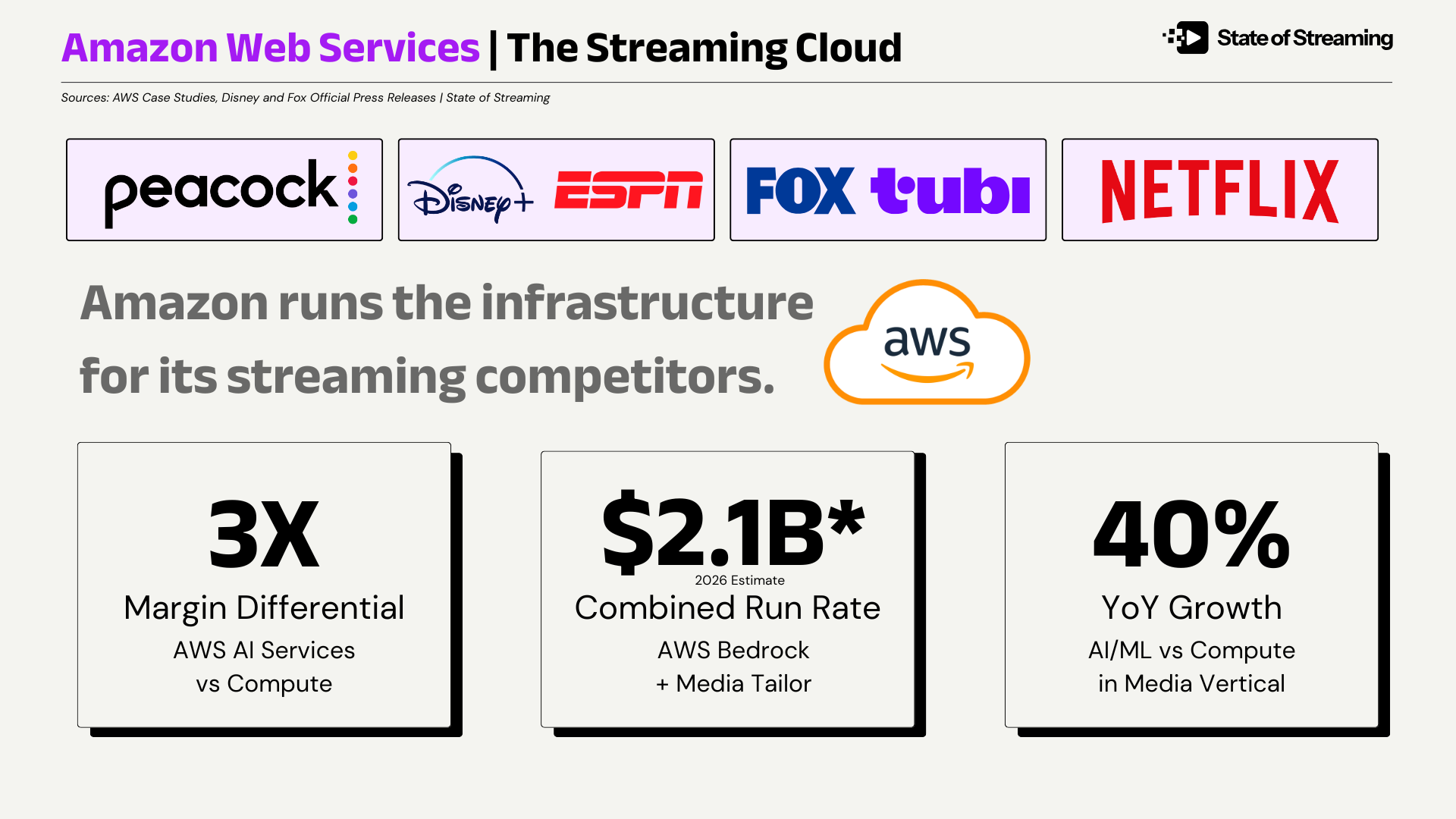
Amazon built the household identifier from purchase behavior — 88 million Prime households across 101.6 million U.S. broadband homes. Roku built its entire business on owning the household at the OS layer. Netflix chose a different path: starting in Q2 2026, brands buying Netflix inventory through Amazon DSP can layer in Amazon Audiences — segments built from shopping, browsing, and streaming behavior — against Netflix viewers. Netflix acting as the premium content wrapper around Amazon's commerce infrastructure. The graph underneath it belongs to Amazon (and the cloud it runs on too).
Disney reorganized to do something none of them can replicate.
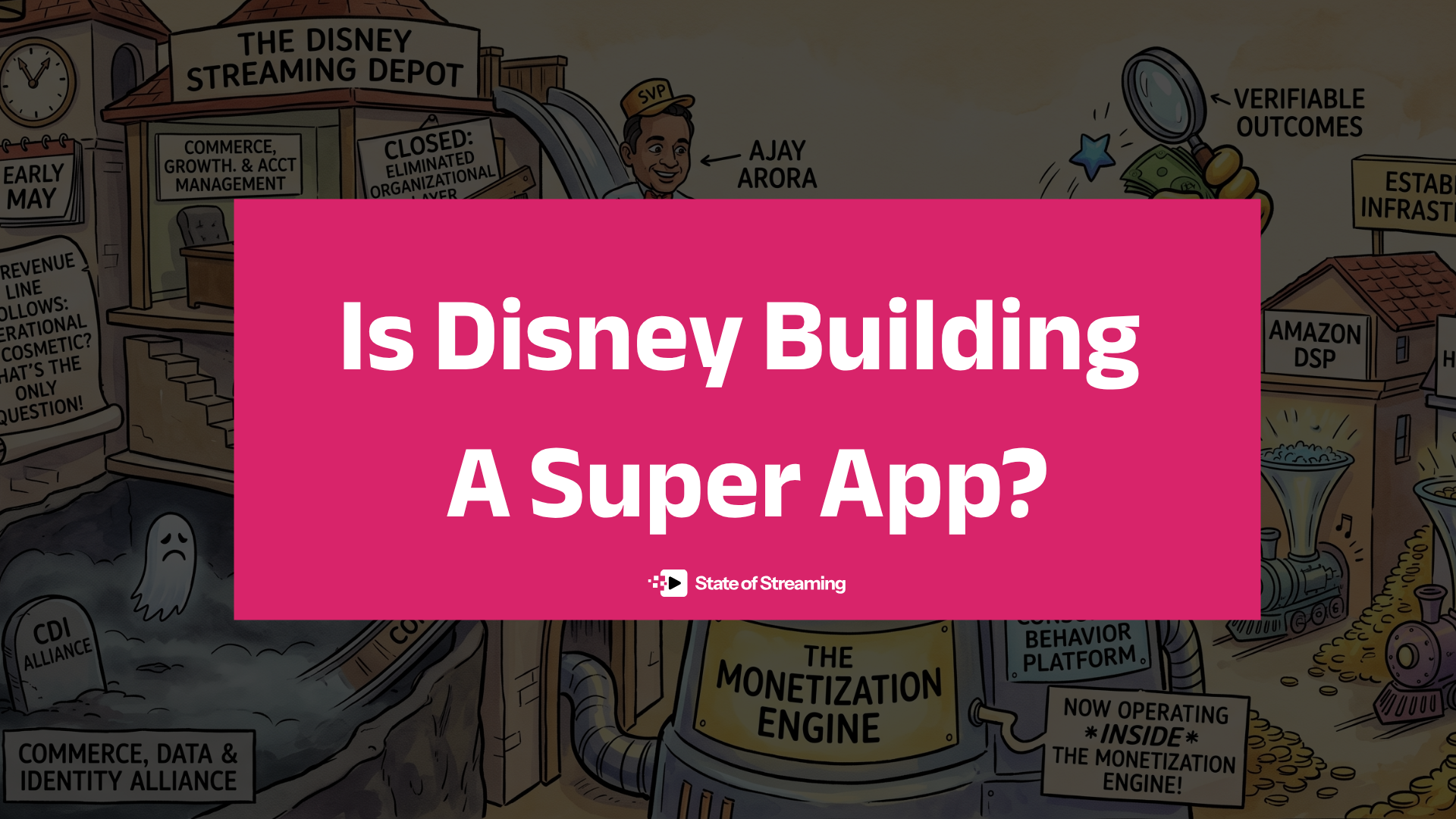
In April 2026, Disney eliminated the organizational layer that kept data, identity, and commerce operating as a separate function from monetization. Atlas — Disney's consumer behavior platform — now sits inside the ad platform engine, reporting directly to Tony Donohoe, who runs Disney's advertising infrastructure. Data Product and Engineering moved with it. The org chart change received almost no trade coverage. It is the most important structural move Disney has made in advertising in a decade.
Read about the Disney Super App Next
But the org chart is not the whole story.
Facial recognition now verifies identity at nearly every entrance across Disneyland and California Adventure. Fifty million annual park visitors — each one verified, attended, and appendable to a Disney+ subscription profile and an ad-supported viewing history. Amazon's graph knows what you bought and watched. Roku's graph knows what's on your TV. Disney's graph knows where you physically were, what you paid for when you got there, what you watched before you went, and what you watched when you got home.
The Fubo merger and ad server migration is the live TV layer of the same Disney stack. Nearly 6 million subscribing households who pay specifically to watch sports, now priced through Disney's demand infrastructure alongside ESPN and Hulu in the same buy for the first time. Through the ad server migration, Fubo held ad revenue flat at $101.6 million through a complete infrastructure rebuild, a proof point of the staying power for Fubo.
Amazon. Roku. Netflix. None of them have a theme park.
Disney is building a consumer data moat in media that connects physical attendance, digital engagement, and ad-supported viewing in a single persistent profile. The cable bundle created a black box around sports audiences. This makes them the most quantifiably valuable audience in advertising.
Move #2: The Infrastructure Acquisition
August 2025: ESPN acquires NFL Network, RedZone, and the NFL's fantasy business.
To understand why, you first have to understand why the NFL was selling.
NFL Network was a money-losing vanity project. The league built its own media operation because it didn't trust distributors to tell its story — but running a cable network is not a core competency for a sports league. NFL Network never cracked 90 million homes at peak distribution. RedZone was beloved but niche. The fantasy business needed a tech infrastructure the NFL couldn't build at scale.
The league was in the media business because it felt it had to be, not because it wanted to be.
ESPN offered a way out. Disney took the assets — not as content, but as fan infrastructure. NFL Network's schedule data, RedZone's obsessive subscriber base, fantasy's direct daily relationship with the league's most engaged fans. These are the NFL's direct-to-fan distribution layer, built over decades. Disney absorbed the content supplier's house organ into the distributor's stack.
Read about ESPN's NFL Network Deal next
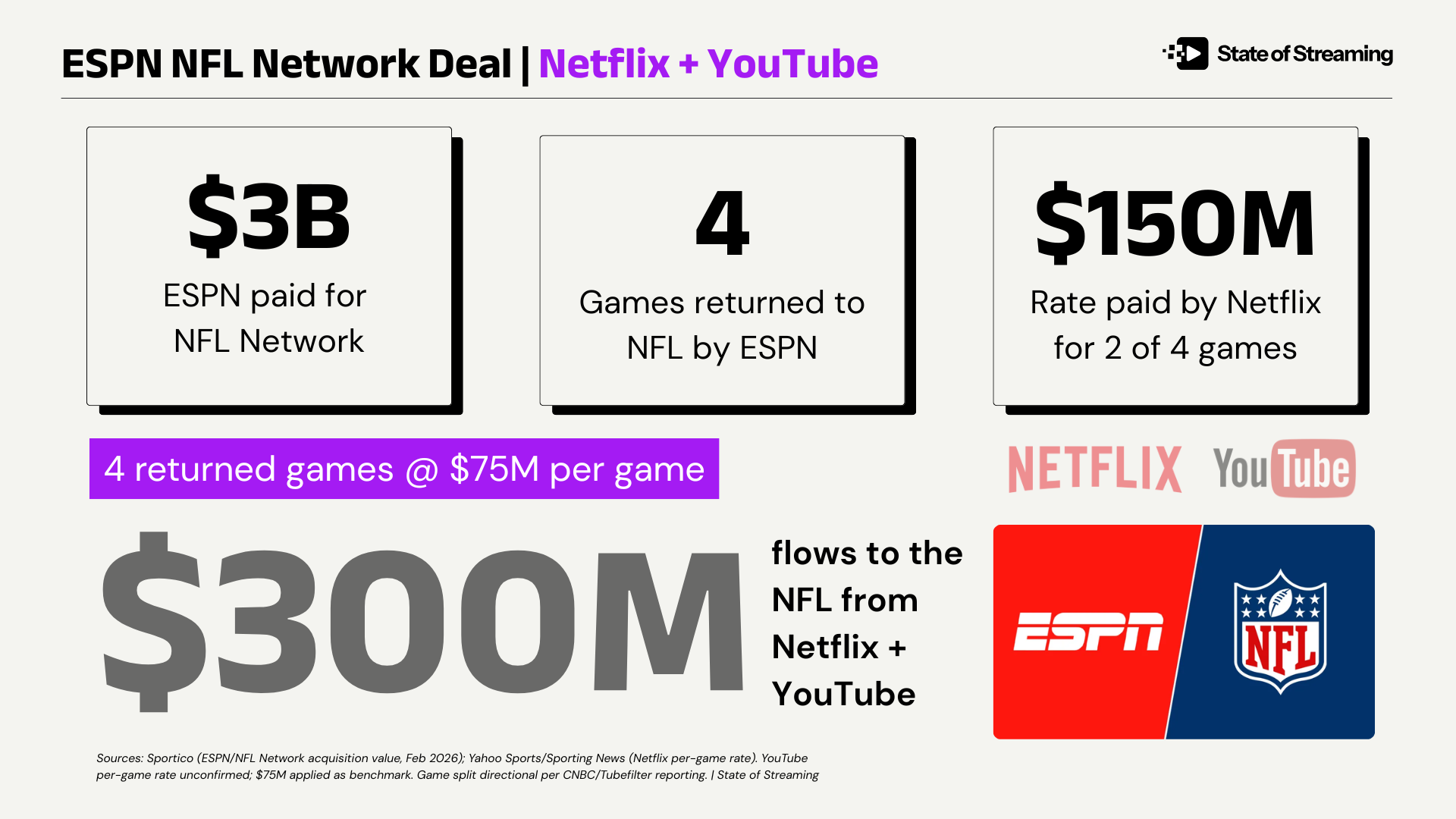
The NFL got out of the media business 🤝 ESPN got the NFL's audience infrastructure.
That transaction created the conditions for the move that followed.
Move #3: The Rights Inversion
The NFL's 10% equity stake in ESPN has permanently changed the incentive model of sports rights.
Under the traditional rights model, the NFL negotiates against ESPN at every renewal. The league's incentive is to maximize the rights fee. ESPN's incentive is to minimize it. Every deal cycle is adversarial by design, and the league holds the leverage because the content is irreplaceable.
The equity stake changes the arithmetic. Now, the NFL profits when ESPN profits. If ESPN DTC subscriber grows, the NFL's 10% stake is worth more. That means the league is now financially motivated to keep its best inventory on ESPN, to support the DTC product's growth, and to avoid the kind of rights fee escalation that erodes the platform's margin — because eroding ESPN's margin now erodes the NFL's own asset value. ESPN confirmed it would pursue further equity arrangements with other leagues using this deal as the template.
Move #4: The Pricing Signal
The ESPN DTC app is priced at $29.99 per month. At that price point, you are pricing for the sports fan who self-identifies as high-value to an advertiser — and whose viewing data across Disney+, Hulu, ESPN, and now Fubo enriches every impression you sell against them.
The product is the identity.
Reading the Tea Leaves
Disney went from nearly spinning off ESPN in 2022 to acquiring the NFL's own media company in 2025.
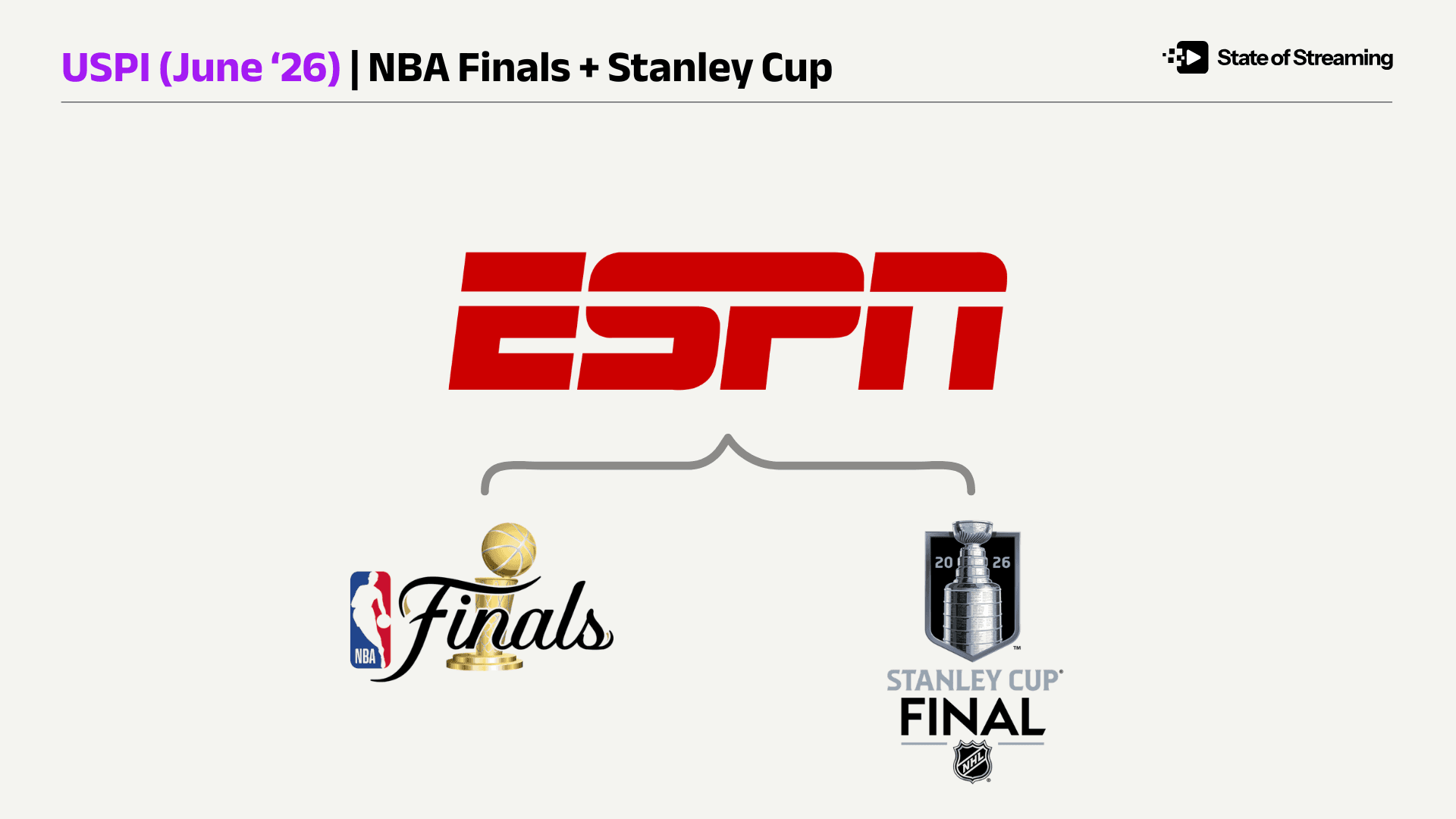
Happening Now: The NBA Finals is averaging 19.6 million viewers through four games, up 116% — the most-watched since 1998. Game 3 alone drew 23.8 million, the largest TV audience since Super Bowl LX. The Stanley Cup Final is running concurrently on the same network, averaging 5 million viewers, up 101%.
ESPN's Q2 FY2026 operating income declined 5% to $652 million on revenue that grew 6% to $4.61 billion. Q3 — the quarter these numbers actually land in — is guided down another 14%.
The asset Disney is constructing doesn't appear neatly in the P&L today. Rather, it shows up in three to five years when ESPN DTC hits scale and the addressable CPMs make the rights costs look rational.
The Litmus Test Is Already Scheduled
Disney opened Super Bowl LX inventory at $10 million per spot — the same ceiling NBC reached only after competitive demand pushed it there over multiple cycles. Disney started there, then added a condition: spend another $10 million across the broader Disney portfolio to get the right to buy Super Bowl inventory. As we reported in April, where NBC created a floor that triggered demand, Disney named a ceiling and expects demand to follow.
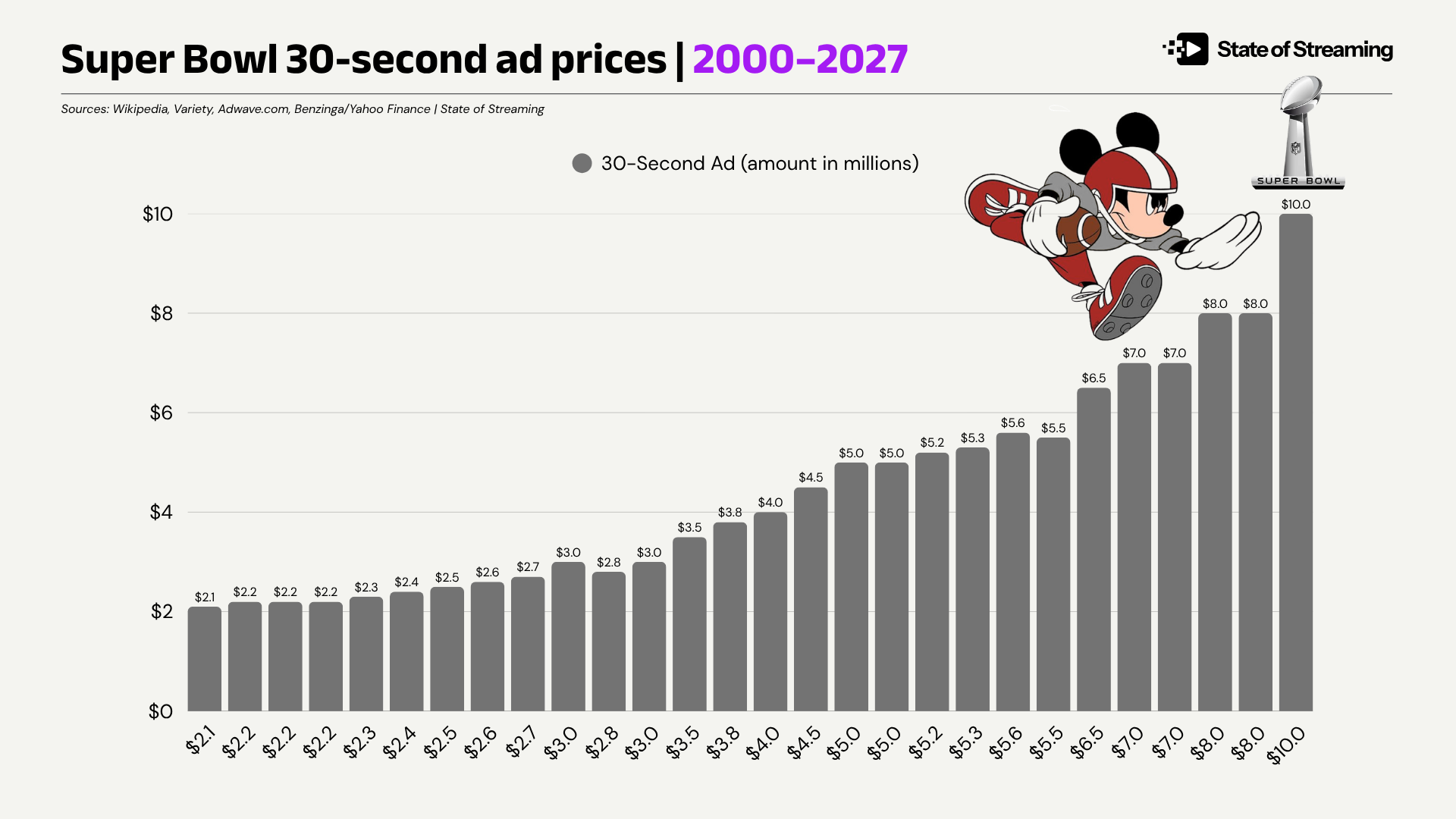
The Super Bowl airs February 14, 2027 on ABC and ESPN simultaneously. It is the first time Disney has held the game. It is also the first real-world test for everything the infrastructure is supposed to deliver — the Atlas layer, the Fubo stack, the NFL's financial alignment with the platform's success. All of it converges on one inventory window.
What To Look For
If Super Bowl inventory goes unsold or the condition gets quietly dropped, every adjacent premium property gets repriced alongside it — and the build signal narrative takes a significant hit. If Disney clears $10 million at scale with the portfolio spend condition intact, the infrastructure thesis is validated in the market's own language.
The spinoff conversation of 2022 looked at whether ESPN was worth keeping. The Super Bowl pricing question for next February asks whether the replacement model can work. Where will you be on Valentine's Day next year?
I know where I'll be.
Hear from Mark Shapiro, President and COO of TKO Holdings
On the Future of ESPN, Netflix & Sports Streaming
Get the SOS. Brief
The sharpest streaming intelligence, delivered to your inbox.