Amazon and The Trade Desk Spent Q1 Calling Out Programmatic Waste. Magnite and PubMatic Just Responded With Competing Fixes.
The buy side agreed in Q1 that the programmatic supply chain is broken. Amazon called duplicated bid requests "replicants." The Trade Desk called it "duplication, obfuscation, and sometimes lies".

On April 27, Magnite and PubMatic filed competing answers. Naturally, they are structurally opposite
Magnite: Complexity Is the Moat
Premium connected television inventory — live sports especially — is operationally dense. Magnite's bet is that complexity is durable, and that SpringServe sits at the center of how that complexity gets managed profitably.
The scale behind that bet is not incidental. SpringServe connects buyers to 99% of U.S. streaming supply — a dollar-weighted figure verified by Jounce Media — with publisher partners including Disney Advertising, Paramount, Roku, Warner Bros. Discovery, and Netflix. Sports represented nearly 30% of all ad-supported television viewing among adults 25 to 54 in the fourth quarter of 2025. Magnite is building toward the 2026 FIFA World Cup as the clearest stress test of that infrastructure: Live Scheduler and Live Stream Acceleration across 104 matches, multiple platforms, and audiences projected to reach 1.4 billion viewers.
The new artificial intelligence layer adds anomaly detection, adaptive pricing, and real-time demand path visibility. The Buyer Agent extends that logic to the buy side: planning, creative, and direct-to-publisher execution inside a single conversation. The architecture is open. Third-party agents connect in. The thesis is better infrastructure, not fewer intermediaries.
PubMatic: Complexity Is the Symptom
AgenticOS removes the intermediary layer entirely. Agencies connect directly to publisher supply through autonomous agents. No demand-side platform required.
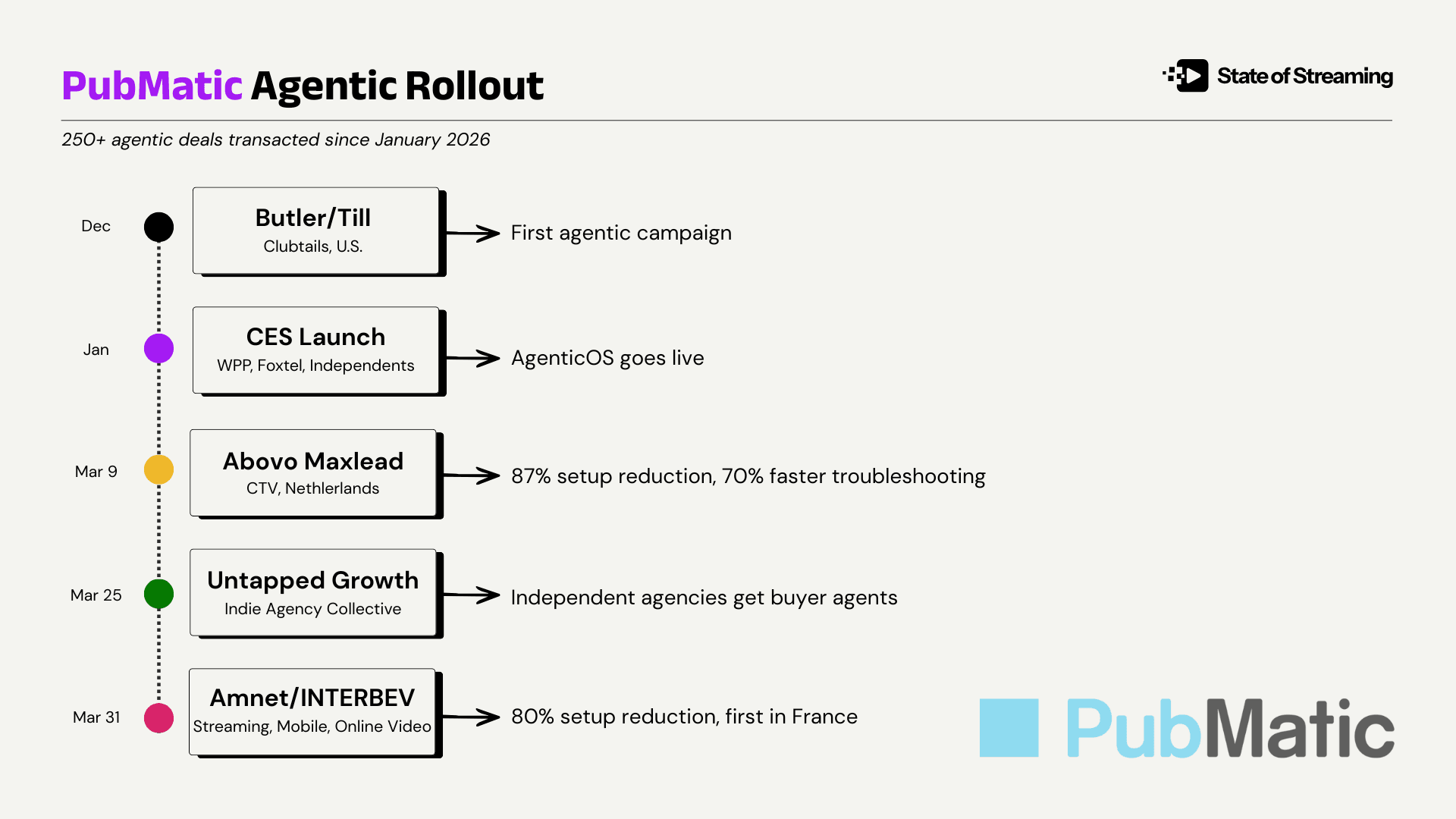
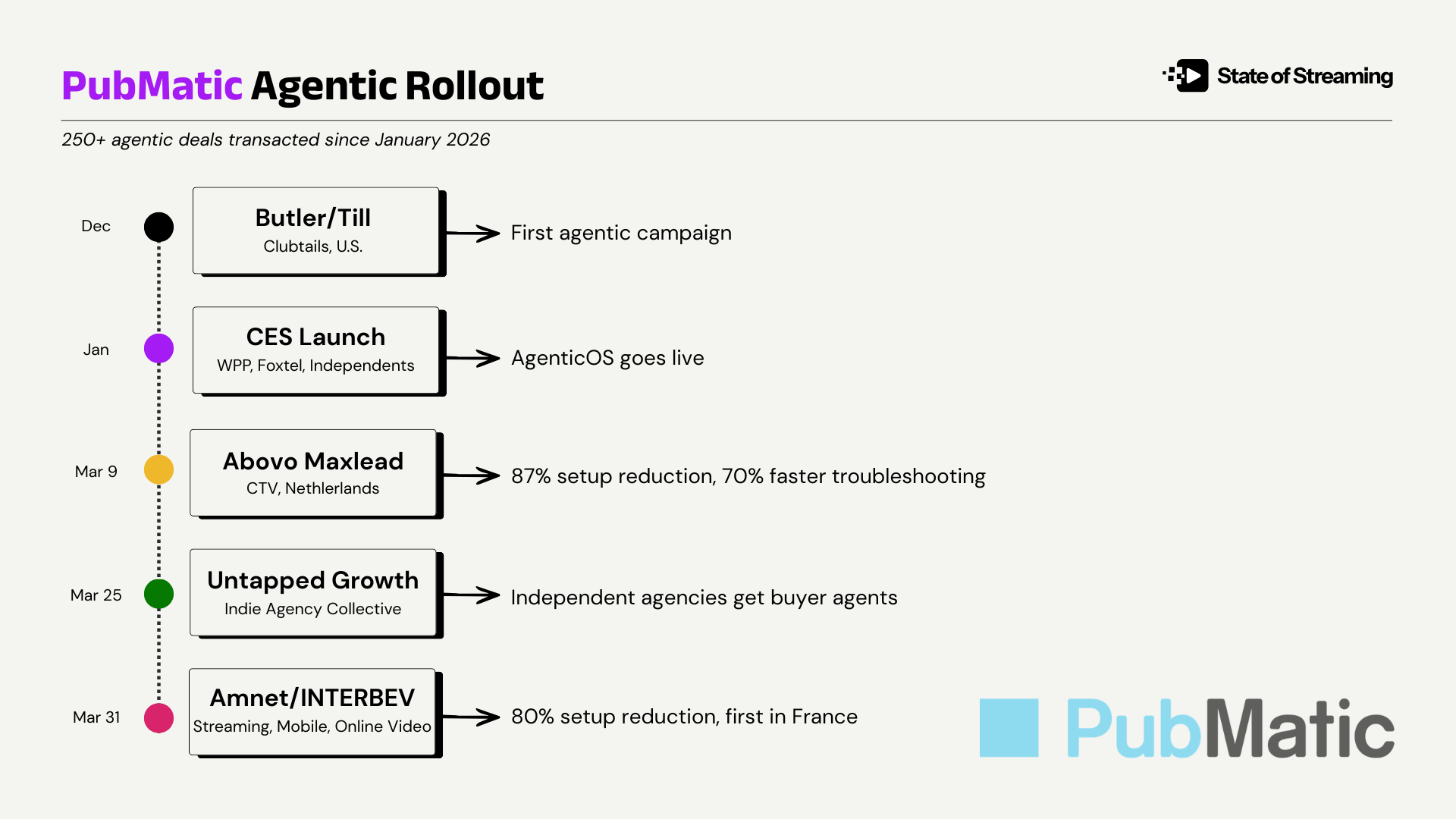
Butler/Till cut buy-side fees by more than 5x on a connected television campaign, pulled 40% more impressions than planned, and landed a 30% lower effective cost per thousand impressions. A separate national campaign optimized to 107% of impression targets across 800-plus publishers. Brkthru — 1,000-plus brands, 235 agencies — signed as strategic partner the same morning. Every advertiser that activated a campaign returned for more. Thirty live campaigns across five countries at publication.
What Buyers Are Choosing Between
The demand-side platforms' own language — working media, fee transparency, direct supply paths — describes the problem both sell-side platforms aim to solve. Where they differ is the mechanism for solving it. Where Magnite optimizes the hops that remain; PubMatic removes them.
Neither is wrong. Live sports environments — 104 World Cup matches, 35 sporting codes across Sky New Zealand, the full Scripps Sports Network slate — create real operational density that a general-purpose agent does not handle cleanly by default. The question is whether that density commands durable margin as agentic workflows compress the cost of everything around it.
Magnite's April 27 post uses Ad Context Protocol alignment and open framework interoperability — PubMatic's vocabulary since the Consumer Electronics Show in January. Six months ago Magnite was not publishing agentic buyer content. Now it is. The debate inside programmatic advertising is no longer whether agentic buying works, but which sell-side architecture survives the transition.
Read The IAB Phone Book for AI Agents Next
Get the SOS. Brief
The sharpest streaming intelligence, delivered to your inbox.