5 Themes From Roku CEO Anthony Wood at Morgan Stanley 2026

Roku founder and CEO, Anthony Wood was interviewed at last week's Morgan Stanley Technology, Media & Telecom Conference and laid out a business that's finally profitable, growing platform revenue at 18% year-over-year, and projecting a billion dollars in free cash flow by 2028.
Here are the 5 key themes that stood out to me.
The Ultimate Ad Machine
Wood opened with advertising, and he stayed there longer than anywhere else. That should tell you everything about where Roku's center of gravity has shifted.
The company is no longer happy being the screen you look at before you pick Netflix. Roku is building itself into the most performance-oriented TV advertising platform in the market, and it's doing it through a strategy that sounds simple but is actually quite hard to execute. Roku's goal is to integrate with every major demand-side platform, drive measurable outcomes, and make it frictionless for buyers to spend money.
It's obvious he's been spending a lot of time with Jeff Bezos who famously said "We don't make money when we sell things. We make money when we help customers make purchase decisions.”
Which makes sense because the Amazon DSP integration Wood referenced is the proof point. Roku has been deepening these partnerships for two years now, and the strategy is deliberate. Rather than trying to compete with the DSPs for advertiser relationships, Roku is making itself the supply they can't ignore. Approximately 8 in 10 internet-connected households have some form of a Roku connection, either via Roku TV or Roku Channel. When you control that kind of reach, you don't need to win the buy-side war. You just need to make sure every buy-side platform can access your inventory cleanly.
But the real tell was how much time Wood spent on Roku Ads Manager, the self-serve platform targeting small and medium-sized businesses. He called it a $600 billion addressable market, which sounds like the kind of number CEOs throw around to impress analysts. Except Wood backed it up with something concrete: these are net-new advertisers who have never been able to afford television. It wasn't because they didn't want to be there, but because the production costs, minimum spends, and complexity of traditional TV buying locked them out. Roku Ads Manager collapses all of that into a single workflow. Upload or generate a creative, set your targeting parameters, define your measurement goals, launch. The platform even has APIs now for direct integration.
Performance advertisers who built their playbooks on social media platforms are starting to test CTV through tools like this. That migration, from social performance budgets to connected TV performance budgets, is a tectonic shift that the industry has been talking about for years but hasn't had the infrastructure to support until now. Roku is betting it can be that infrastructure.
AI as the Foundation
Every public company CEO has an AI talking point. Wood's was different because he wasn't pitching AI as something Roku is experimenting with. He was describing it as something Roku literally cannot operate without.
The clearest example is Roku Ads Manager itself. Wood said it plainly: the product could not exist without AI. The one-click video ad creation that makes CTV accessible to a local restaurant or a regional car dealership runs on generative AI. The targeting, the measurement, the optimization loops that make a $500 campaign viable on a television screen, all of it is AI-driven.
But Wood went further. On the content side, he framed AI-driven reductions in production costs as a direct benefit to Roku's business model. The logic is clean, Roku is a platform that drives engagement and monetizes it. If AI makes content cheaper to produce, there's more content. More content drives more engagement. More engagement drives more ad impressions and subscription sign-ups. Roku captures value on both sides without bearing the production risk.
He applied the same framework to recommendations and personalization. AI is making the home screen smarter, surfacing content that keeps viewers engaged longer, and steering them toward monetizable actions, whether that's watching ad-supported content on The Roku Channel or signing up for a premium subscription through Roku's wholesale program.
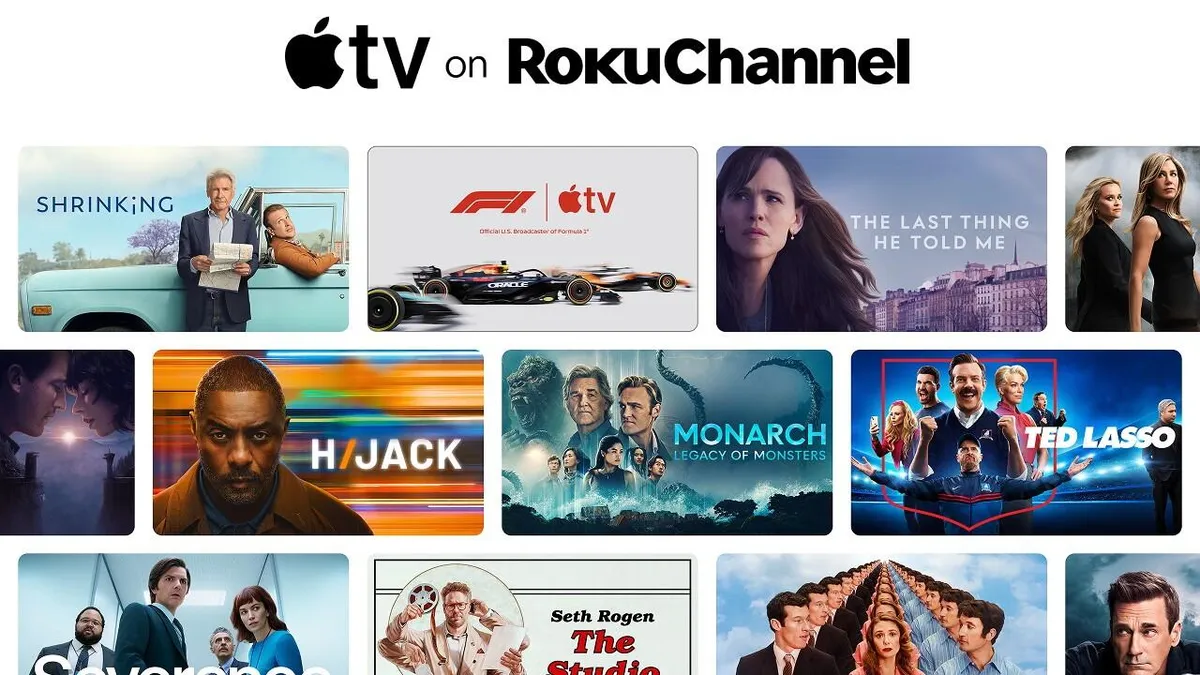
The subtlety here is worth noting. Wood never once framed AI as a disruption risk to Roku. He framed it as a structural tailwind across every business line. For a company that sits between content creators and consumers without owning the content itself, that's probably the right read. AI disrupts creators. It accelerates platforms.
Subscription Aggregation FTW
Wood broke Roku's subscription business into three buckets: direct-to-consumer app-based subscriptions (where Roku takes a revenue share), premium subscriptions (a wholesale model where services distribute through Roku's infrastructure), and Roku's own streaming services including The Roku Channel and the newly launched Howdy.
The premium subscription bucket got the most energy. Wood reported Roku's biggest net-add quarter ever for premium subscriptions, and then he explained why the growth is structural rather than cyclical.
His argument is probably something that needs to be said more often: for almost every streaming service below the top tier, maintaining a standalone app is economic suicide. The cost of customer acquisition, technology development, engagement maintenance, and churn management makes independence unsustainable. Premium subscription aggregation through a platform like Roku offers these services reach, reduced overhead, and a built-in discovery mechanism. Wood predicted that outside of a very small number of top-tier apps, the wholesale subscription model will become the default distribution path.
This is a bold claim, but look at where the industry is headed. Warner Bros. Discovery is exploring bundling and distribution partnerships. Smaller services are struggling to justify the cost of standalone customer relationships. The economics Wood described aren't speculative, it's math. And Roku has the install base and home screen real estate to control its position as the aggregation layer.
Howdy, the $3-per-month ad-free streaming service Roku recently launched, adds another dimension. Wood said he's personally involved and expects it to scale internationally and off-platform. At that price point, Howdy isn't competing with Netflix or Disney+. It's competing with the free tier of everything, offering a curated, low-cost alternative that benefits from AI-reduced content costs. If AI makes decent content cheap and Howdy makes cheap content accessible, the flywheel ultimately feeds itself.
Premium Real Estate
Wood called the home screen "probably our most important asset," and then described a multi-year effort to redesign it. The tests, he said, are showing improvements across user sentiment, monetization, and engagement. A new home screen is planned for rollout this year.
This matters more than it might sound. The home screen is the last checkpoint before attention fragments across dozens of apps. Whoever controls that screen controls discovery, and discovery controls monetization. Roku's home screen determines whether a viewer lands on ad-supported content or subscription content, whether they see a theatrical promotion or a sports sponsorship, whether they sign up for a new service or stick with what they know.
Wood outlined how the home screen's revenue profile has evolved. It started as media and entertainment endemic advertising, essentially streaming services paying to promote their apps next to the app grid. Now it includes brand advertising (car companies, consumer products), theatrical promotions (studios paying to drive opening weekends), and live event sponsorships. The content row, a relatively recent addition, is driving subscription sign-ups directly from the home screen experience.
The sports zone deserves separate attention. Wood described it as a solution to one of streaming's most persistent problems, actually finding what you want to watch. Viewers don't know which service carries which game, what time it starts, or whether they need a separate subscription. Roku's sports experience aggregates all of that into a single interface, and then monetizes the discovery through both subscription referrals and sponsorships. Wood noted that sports-driven subscription sign-ups were a meaningful contributor last quarter.
The next-generation home screen, when it rolls out, will likely expand all of these monetization surfaces. More entry points, better personalization, more sophisticated content routing. Every improvement to that screen is a direct improvement to Roku's revenue per household.
Scale Is the Moat
Wood was candid about the competitive pressure Roku faces in hardware. Walmart shifting its house-brand TV inventory to its own operating system (Vizio OS, post-acquisition) is forcing Roku to broaden its distribution strategy. But Wood framed this as a tactical challenge, not an existential one, and pointed to $100 million in annual distribution incentives that Roku deploys flexibly across retail and OEM partnerships.
Recent moves include launching Roku-branded TVs at Target, expanding into Best Buy, and continuing to grow international presence in Canada and Mexico. Wood acknowledged that device sales might fluctuate quarter to quarter but expressed confidence that the distribution expansion would show results in the second half of 2026.
The deeper point, though, is that Roku's device business exists to feed the platform business. Every Roku TV sold or Roku stick activated adds a household to the advertising and subscription ecosystem. The company doesn't need to win every shelf. It needs to maintain enough scale that advertisers can't build a campaign strategy without including Roku, and content partners can't launch a subscription product without distributing through Roku.
The Uncomfortable Math
Here's what Wood didn't say at Morgan Stanley, but what every streaming executive watching should be calculating: Roku is building an advertising and subscription infrastructure that doesn't require Roku to take creative risk, own content libraries, or win cultural moments. It just needs people to keep turning on their TVs.
That's an elegant position when the industry is healthy. But it's an even more powerful position when the industry is stressed. Every dollar a streaming service can't afford to spend on standalone distribution is a dollar that flows toward aggregation platforms. Every advertiser priced out of traditional TV buying is a potential Roku Ads Manager customer. Every AI-generated reduction in content costs is engagement that Roku monetizes without bearing.
The uncomfortable truth for everyone competing with Roku, and for the content companies that depend on Roku's platform, is that Wood isn't building a technology company. He's building a toll road and it goes through Roku City.
Get the SOS. Brief
The sharpest streaming intelligence, delivered to your inbox.