What StreamAMG and Kiswe Get Right and What the Hybrid Sports Rights Market Still Needs
Leagues, global streamers and tech platforms have spent the better part of two years jockeying over negotiating position. But a survey of 52 senior executives published this month by Looper Insights points to a more consequential shift: the defining competitive advantage in the next cycle won't be who you are at the table. It will be how well you can architect a deal once you get there.
Nearly 40% of respondents said hybrid models — combining linear, streaming and direct-to-consumer distribution — will deliver the greatest value for rights holders going forward. Deal design, not deal size, is becoming the variable that separates winning strategies from expensive ones.
From exclusivity to architecture
The traditional rights model was structurally simple: one league, one broadcaster, one territory. Hybrid structures break that legibility. A single property can now carry a linear partner in one market, a streaming partner in another, a D2C subscription product for out-of-market fans and a transactional window for marquee events simultaneously.
The AEW Revolution pay-per-view illustrated this earlier this year. Kiswe powered three distinct experiences off a single backend:
Transactional PPV product
Commercial venue licensing app
International subscription platform
One rights holder, one event, three monetization models.
The infrastructure gap
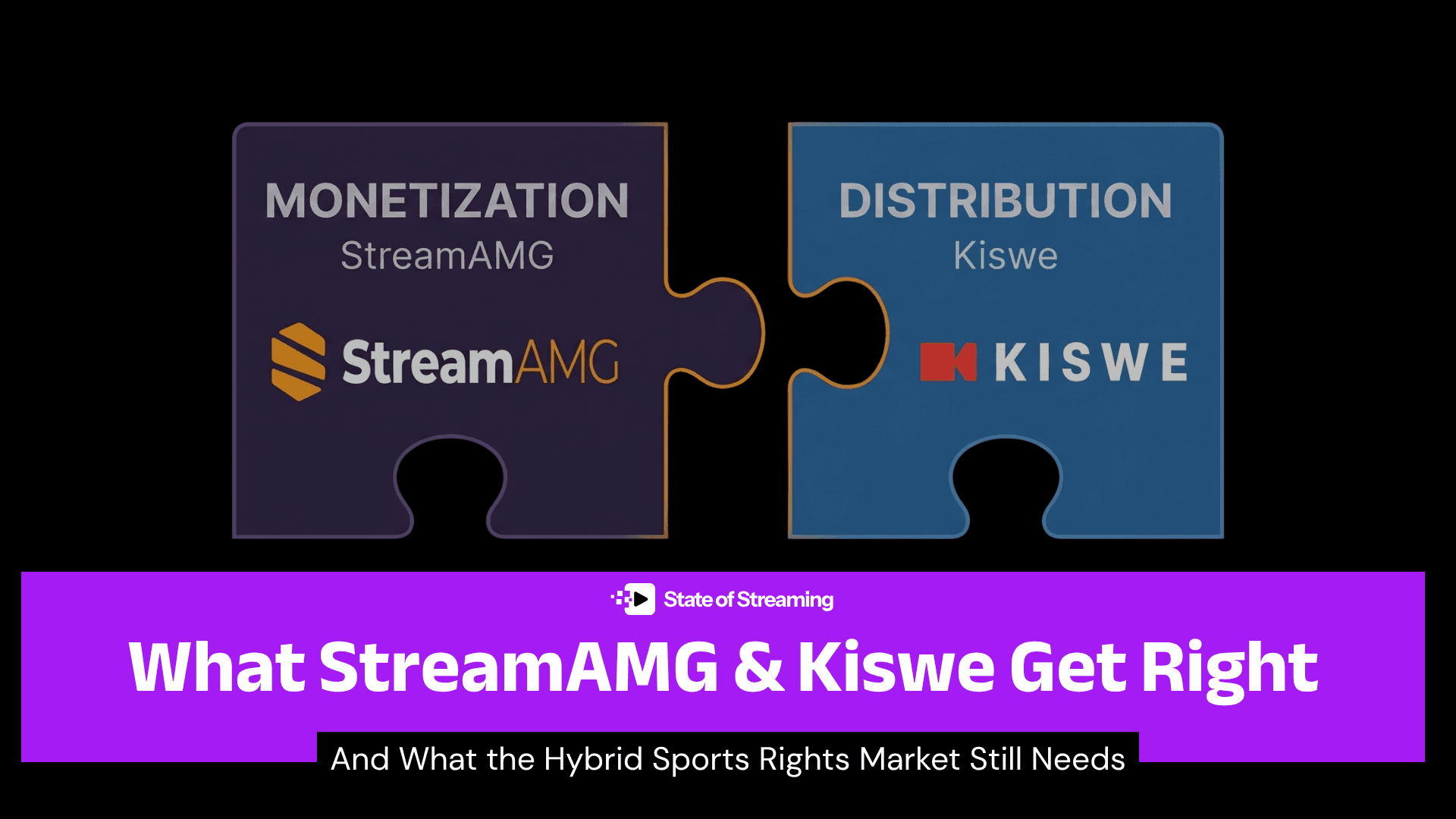
The platforms currently serving this market represent two halves of what hybrid architecture actually requires. StreamAMG has built its model around monetization, helping rights holders convert reach into recurring revenue and retain subscribers over time.
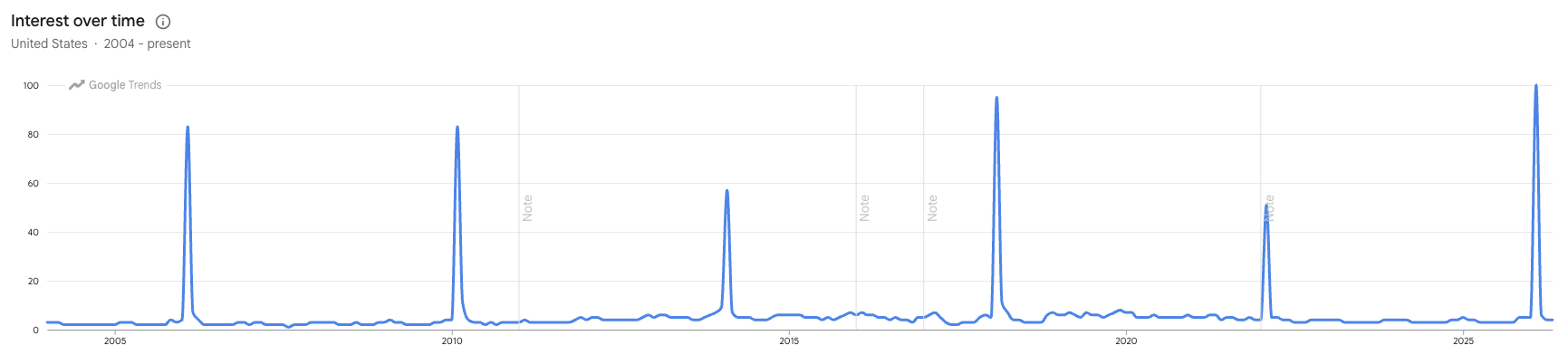
The World Curling Federation's trajectory illustrates both the problem and the opportunity. The federation built its audience on YouTube, losing direct fan relationships in the process. It then moved to Recast, only to watch the platform enter administration in 2023. Rebuilding on StreamAMG's owned OTT platform, the federation scaled from 12,000 to 30,000 users across 58 markets in 15 months. As shown in the graph below, that growth was driven entirely by its own event calendar, not Olympic broadcast rights, which sit separately. That arc from third-party dependency to owned infrastructure is precisely what the broader market is being pushed toward.
Kiswe built its model around distribution flexibility, powering multiple delivery formats simultaneously off a single backend.
Both capabilities are real. Neither company has combined them into a unified hybrid architecture offering, and that is precisely the gap the market is moving toward.
That gap extends into audience measurement and campaign planning. If a buyer wants to reach fans of a given property, they need to know which rights window those fans are actually watching, and that calculus shifts by territory, by event type and by fan segment.
What buyers should watch
The rights boom isn't peaking, it's bifurcating. Premium properties continue to command escalating fees. Mid-tier rights are softening. Looper found that 87% of sports fans find it at least somewhat frustrating to figure out where to watch their sport, a consumer signal that fragmentation is already testing audience loyalty, not just industry patience.
For buyers, the implication is sharper segmentation logic and more precise pricing discipline than most current planning frameworks assume.
The infrastructure supporting hybrid deal structures is still being built. Buyers who understand what those structures mean for reach and measurement will be better positioned than those waiting for the market to simplify.
Get the SOS. Brief
The sharpest streaming intelligence, delivered to your inbox.