Skybound's Blueprint for Adapted IP: The Eight-Day Gap Streamers Should Study
On March 18, Amazon Prime Video premiered the fourth season of Invincible. On April 22, the season finale aired. Eight days later, Skybound released Invincible VS, a fighting game built around the same characters. It crossed one million players in less than two weeks.
That eight-day gap is the story.
For years, streaming platforms have tried to manufacture must-watch moments through marketing spend, franchise extensions and cinematic universes that keep adding installments to the same property. The results have been mixed. Research from Ampere Analysis shows orders for franchise-based TV series declining sharply since 2021, while orders for adaptations have remained fairly steady. Game adaptation commissions specifically have grown 19% annually since 2019, with a development pipeline of 84 titles heading into 2026. The model of stretching one universe across more films and more shows is losing momentum, while adaptations are picking up the slack.
That sounds like good news for anyone betting on adapted IP. But the same Ampere data shows 15% of game adaptations commissioned since 2019 have been canceled or delayed in development. Most companies trying this don't pull it off.
Skybound did, and the reason is structural.
Skybound CEO David Alpert wrote on LinkedIn last month that the company built its own in-house game studio, Quarter Up, specifically because it didn't want to hand Invincible off to a third-party publisher and risk losing what makes the IP work.
"There's no such thing as ancillary markets," Alpert wrote. "Every medium is primary."
The results show up across formats. Season 4 of Invincible holds a 100% critics score on Rotten Tomatoes with an 87% audience score. Invincible VS hit a million players in under two weeks. The comic, which ran from 2003 to 2018, is there to catch anyone who wants more. Critics, gamers, and longtime readers all responded to the same property at the same time. That kind of cross-stakeholder consensus is what coordinated transmedia is supposed to produce, and it rarely does.
The structural reason it worked here matters. A third-party game publisher operates on its own release calendar, with its own marketing windows and its own deadlines from Sony and Microsoft. None of that lines up neatly with a Prime Video finale date. The eight-day gap between Invincible's finale and Invincible VS's launch wasn't a marketing decision. It was a logistics one, and it was only possible because one company controlled both ends of it.
The buyer implication matters here too.
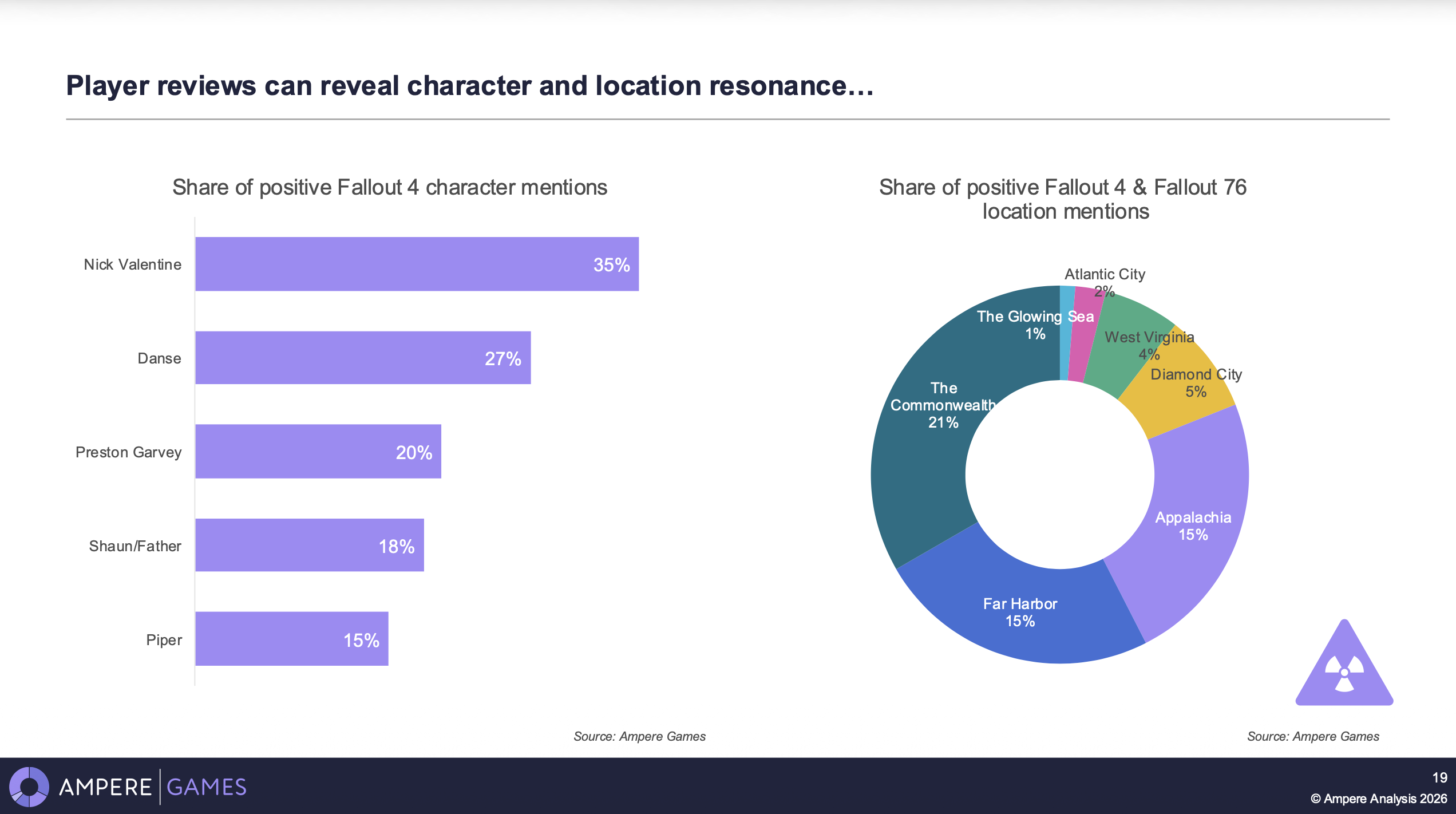
Game IPs come with data that traditional adapted properties don't. Ampere's analysis of player reviews of the video game franchise Fallout showed Nick Valentine drawing 35% of positive character mentions, with in-game locations like The Commonwealth and Far Harbor drawing the most positive mentions. That is the kind of first-party audience signal a buyer planning a campaign around the show could actually use. A coordinated release across formats compounds that value, because the audience showing up for the game is the same audience that just finished the season.
This isn't to say that every studio should go build a game company. In fact, most can't and most shouldn't try. The point is narrower: the streaming industry has been treating adapted IP as a content decision when it is increasingly a logistics one. Who owns the release calendar, who controls the timeline, and who can release multiple formats inside the same six-week window. That is the part of the strategy streamers should study.
Skybound figured this out and the 84 game adaptations in development for 2026 will reveal who else has.
Get the SOS. Brief
The sharpest streaming intelligence, delivered to your inbox.