Why Fox Is Running the Largest Streaming Acquisition Test in Sports Media History.
Yesterday we analyzed Disney's 30-month rebuild of ESPN to justify owning the most expensive sports rights in media. Fox is running a different bet entirely with the World Cup.
Fox doesn't have a theme park. Fox doesn't have a unified subscriber graph. Fox doesn't have an Atlas data layer connecting physical attendance to ad-supported viewing. What Fox does have are 104 World Cup matches, the most-used free streaming service in America, and a direct-to-consumer streaming app — Fox One — that charges subscribers directly, bypassing cable operators entirely, and needs a reason for sports fans to download it and stay.
The World Cup is that reason.

The Architecture
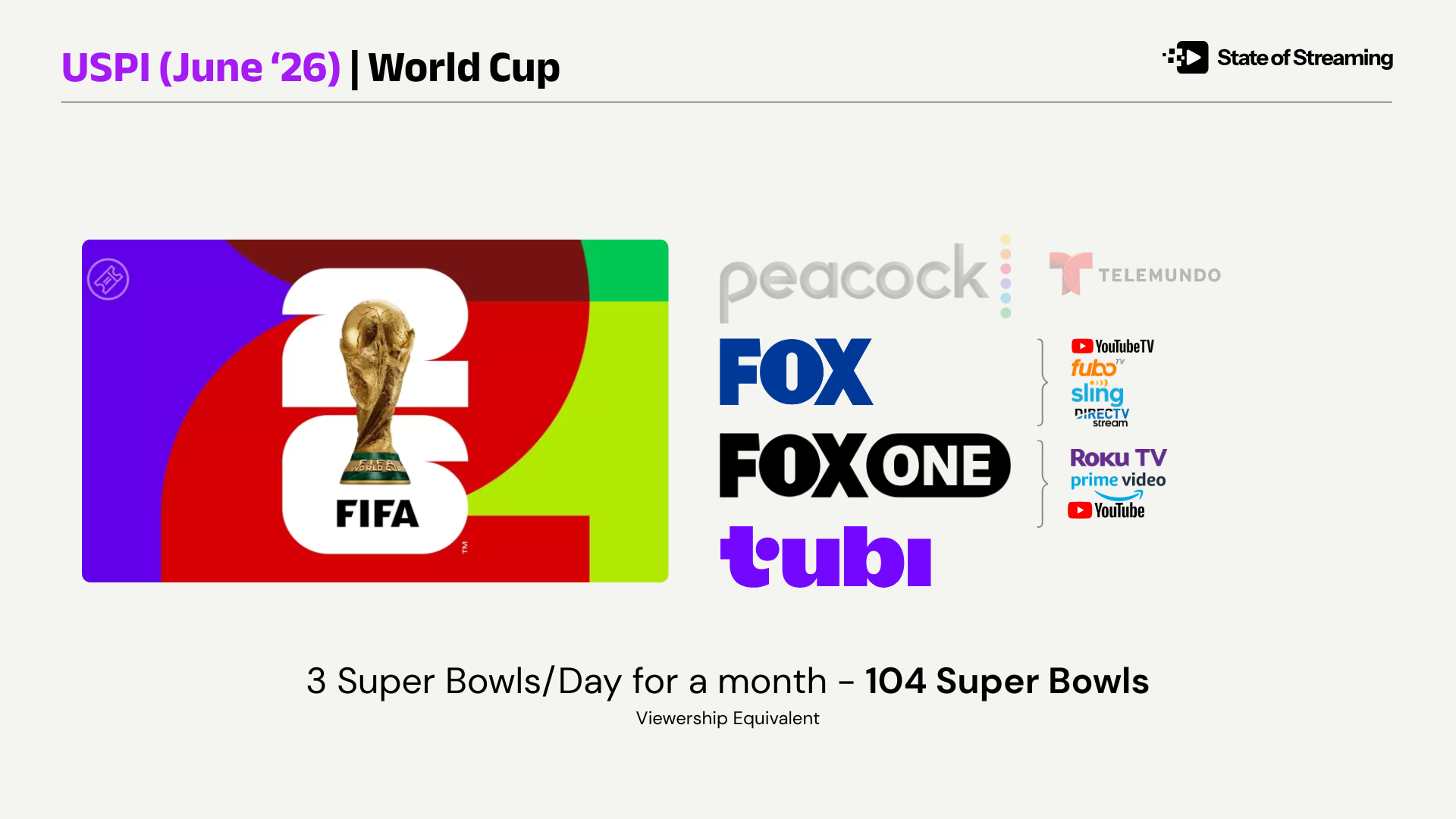
Fox One launched in August 2025. By its own team's description, the World Cup is the real launch — "our second launch, the one we've been working toward all along," as Fox One Digital Marketing Manager Reid Broudy put it on LinkedIn last week. Fox One is now the official streaming app of the 2026 FIFA World Cup, carrying all 104 matches live from June 11 through July 19.
The app is available directly on smart TV's, as well as via app marketplaces on Prime Video, YouTube, Roku TV, and the Roku Channel — but Fox's English-language World Cup coverage is also accessible through live TV bundles including YouTube TV, Fubo, and Sling. Spanish-language viewers have a separate path entirely: Telemundo holds the Spanish-language broadcast rights, with Peacock carrying that feed for streaming audiences. The same 104 matches, four different ways to watch, depending on who you are and what you're already paying for.
The Tubi Timeline
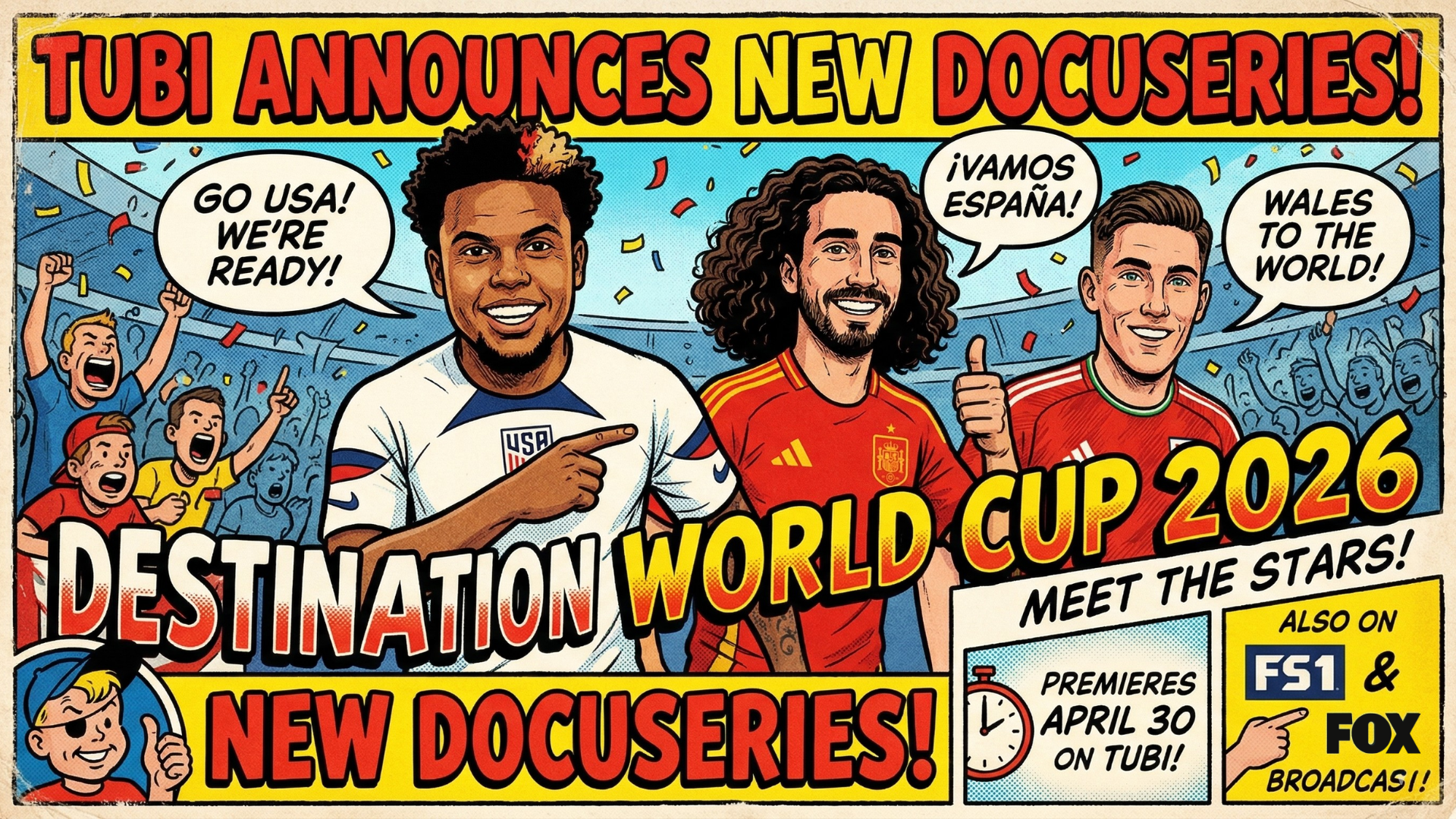
April 30: Tubi premieres Destination World Cup 2026, a six-part docuseries following Weston McKennie (United States), Marc Cucurella (Spain), and Harry Wilson (Wales). Episodes run subsequently on FS1. The finale airs on FOX broadcast at peak World Cup attention.
May 10: Tubi launches a dedicated FIFA World Cup FOX Hub combining Fox Sports programming, FIFA content, and Tubi originals.
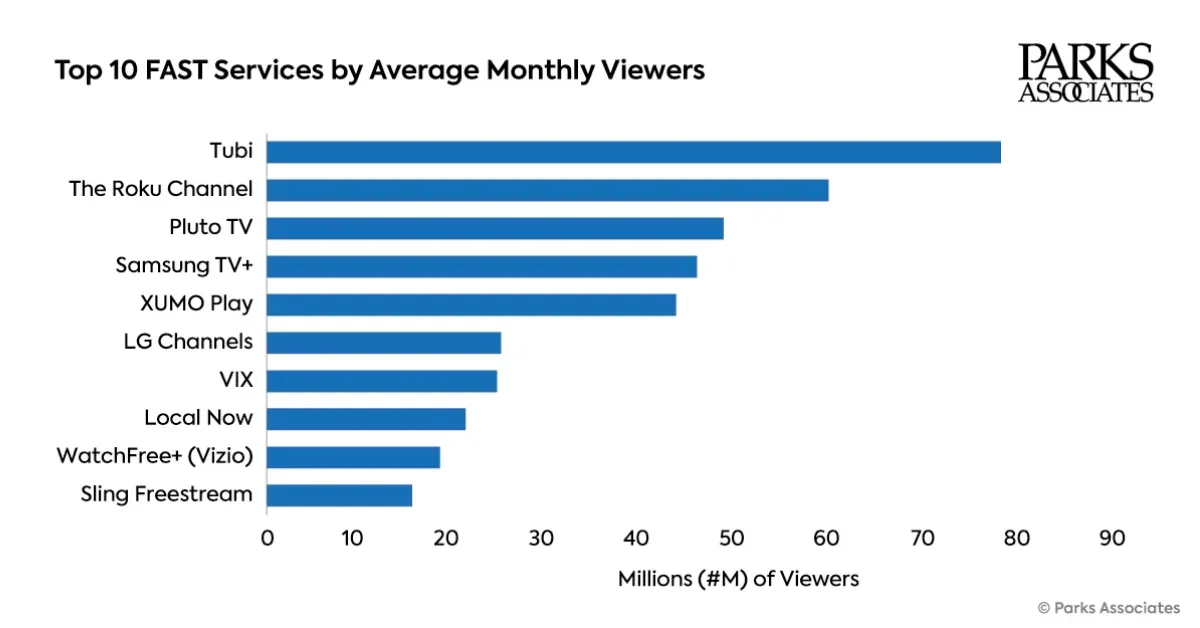
June 11–12: Tubi simulcast two matches live in 4K, for free, to approximately 80 million monthly viewers — the largest free streaming audience in the US, according to Parks Associates.
The Numbers Are In
On Friday, the U.S. Men's National Team (USMNT) played Paraguay. The result: 15.986 million viewers across Fox, Fox One, and Tubi — up 106% from the comparable 2022 match — plus 8.9 million on Telemundo, and Peacock streaming the Telemundo transmission. Combined: 24.9 million viewers, the most-watched English and Spanish-language World Cup telecast in USMNT history. The English-language stream alone averaged 1.13 million viewers — the most-streamed English-language USMNT match ever.
The Ad Economics
The scale of the commercial opportunity is worth stating.
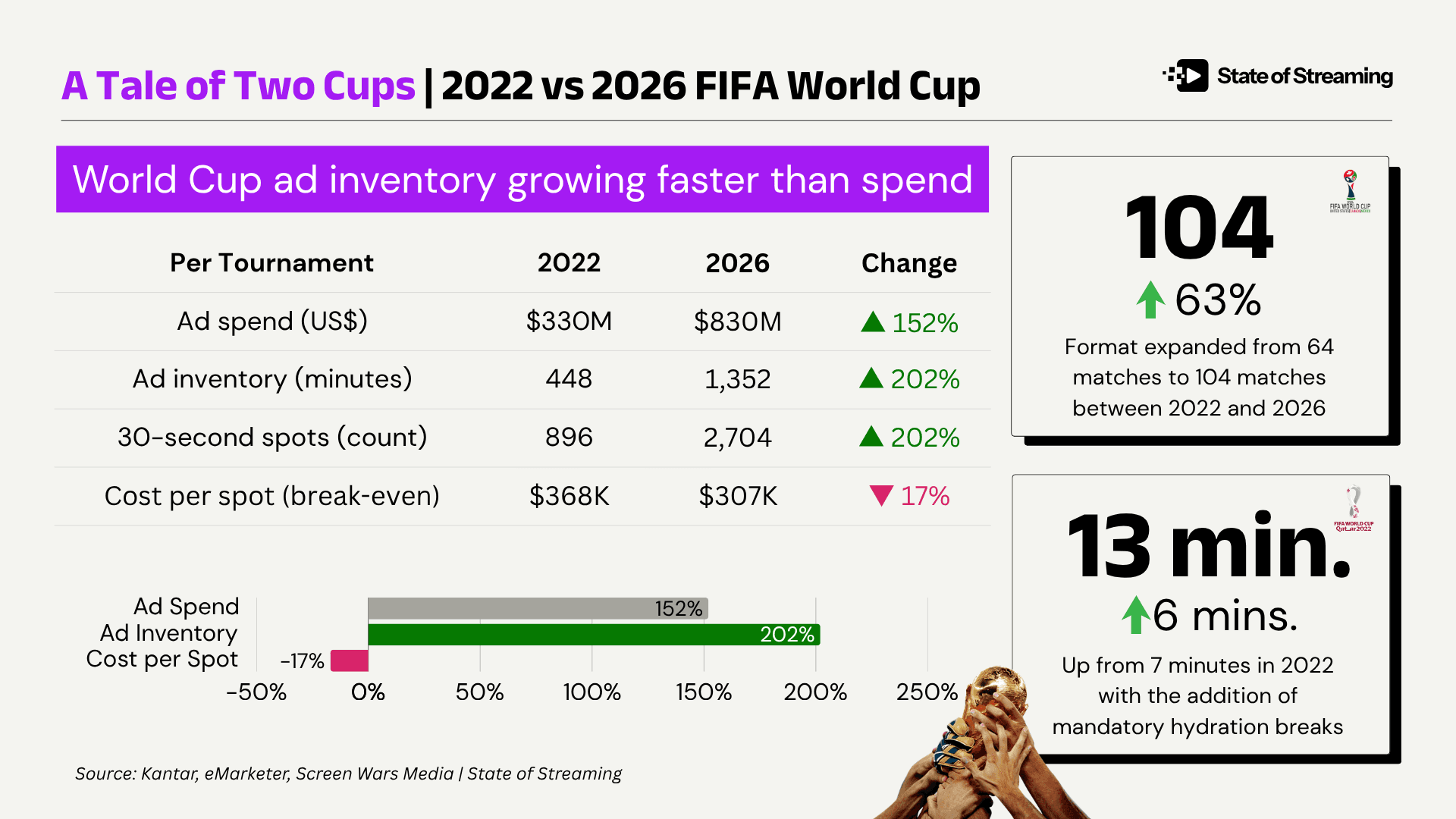
U.S. World Cup ad spend is projected at $830 million for 2026 — up 152% from $330 million in 2022. But that number deserves context. FIFA added 40 matches (64 to 104, up 63%) and introduced two mandatory three-minute hydration breaks per game, expanding available ad inventory from 448 minutes in 2022 to 1,352 minutes in 2026 — a 202% increase.
And that means ad inventory grew faster than ad spend. Which means the break-even cost per spot actually fell 17%, from $368K to $307K, and Fox and Telemundo would still hit their $830M target. More supply than demand growth is not a crisis — it means the rights holder needs execution, not just audience.
There's also a structural advantage hiding in plain sight. The United States accounts for just 4% of global World Cup television reach — but generates 16% of FIFA's total media rights revenue. Fox and Telemundo secured the U.S. rights across the 2018 and 2022 tournaments — then held onto them through 2026 without a bidding war. The reason was because when FIFA moved the 2022 World Cup to November and December to avoid Qatar's summer heat, it landed directly on top of Fox's NFL and college football schedule. Rather than face breach-of-contract litigation, FIFA quietly extended both deals through 2026 without reopening to competitive bids. Fox and Telemundo got the expanded 104-match North American tournament — the most valuable World Cup in history — at rights fees negotiated before anyone knew it would be played on US soil. Fox paid an estimated $485 million for English-language rights across the cycle, per Kagan estimates. Telemundo paid a premium for Spanish-language exclusivity, estimated at $600 million.
The Tubi layer adds a dimension 2022 didn't have. Fox's free, ad-supported streaming platform brought in $1.1 billion in revenue for fiscal year 2025, which wrapped up mid-2025. By comparison, Netflix's ad tier generated just over $1.5 billion in ad revenue for the full year of 2025. Tubi Moments, Fox's AI contextual targeting product, matches ads by scene tone, sentiment, and visual cues — detecting natural pauses inside the stream rather than stopping the game to create them.
Tubi Moments represents the future the industry is building toward: AI-native, in-stream, context-matched, no interruption. The hydration break full-screen pods represent the model soccer was specifically designed to escape — manufactured stoppages imported from American sports to sell ad inventory. As Scott Young, Chief Product Officer of Transmit framed it in March:
"The World Cup should not become a case study in how advertising changes the game. It should be the example of how advertising evolves to support it."
Opening Day
Last Thursday, the tournament started.
Fox cut to full-screen commercials during both FIFA-mandated hydration breaks in Thursday's opener between Mexico and South Africa. On the second break, the two-minute ad block ran long — and Fox returned to the match after play had already resumed, a reported violation of FIFA's rule requiring broadcasters to return at least 30 seconds before play restarts.
Fox also didn't show Shakira's opening ceremony performance. Telemundo did.
Meanwhile, a screenshot from the Fox broadcast went viral: a graphic on screen reading "DOWN TO 9 PLAYERS BECAUSE 2 HAVE BEEN REMOVED FROM THE GAME. THEY HAVE BOTH BEEN SHOWN RED CARDS, WHICH MEANS THEY CAN NO LONGER PLAY IN THIS MATCH." Plain-language soccer explanations, written for viewers who have never watched the sport.

Read that however you want. The cynical read: Fox fumbled the most-watched opener in tournament history. The strategic read: Fox is explicitly programming for the audience that doesn't know the sport yet — which is exactly what a DTC acquisition funnel requires. New fans, not existing ones. If you're trying to convert 80 million Tubi viewers into Fox One subscribers, most of them have never watched a full soccer match. The on-screen explainers aren't embarrassing. They are the experience itself.
Telemundo's clean execution — no commercial cuts, full ceremony coverage — tells a different story about who each broadcaster is programming for. More on that Thursday.
The Expiration Date
Fox One's World Cup thesis has a hard end date: July 19.
Fox's English-language FIFA rights don't extend beyond this cycle. Netflix holds exclusive North American rights for the 2027 Women's World Cup and has expanded into Canada through 2031, building narrative content infrastructure as a permanent capability across multiple cycles.
As we reported in March: Fox parlayed circumstance into a significant campaign. Netflix is building a franchise.
The Tubi docuseries, the Hub, the simulcasts, the funnel — all of it was built for this window. Fox One's DTC thesis may live or die on one question: how many World Cup subscribers are still there on July 20?
Read yesterday's feature analysis on Disney's Evolution of ESPN here
Get the SOS. Brief
The sharpest streaming intelligence, delivered to your inbox.