June USPI: Three Macro Themes Shaping the Unified Streaming Power Index (USPI)
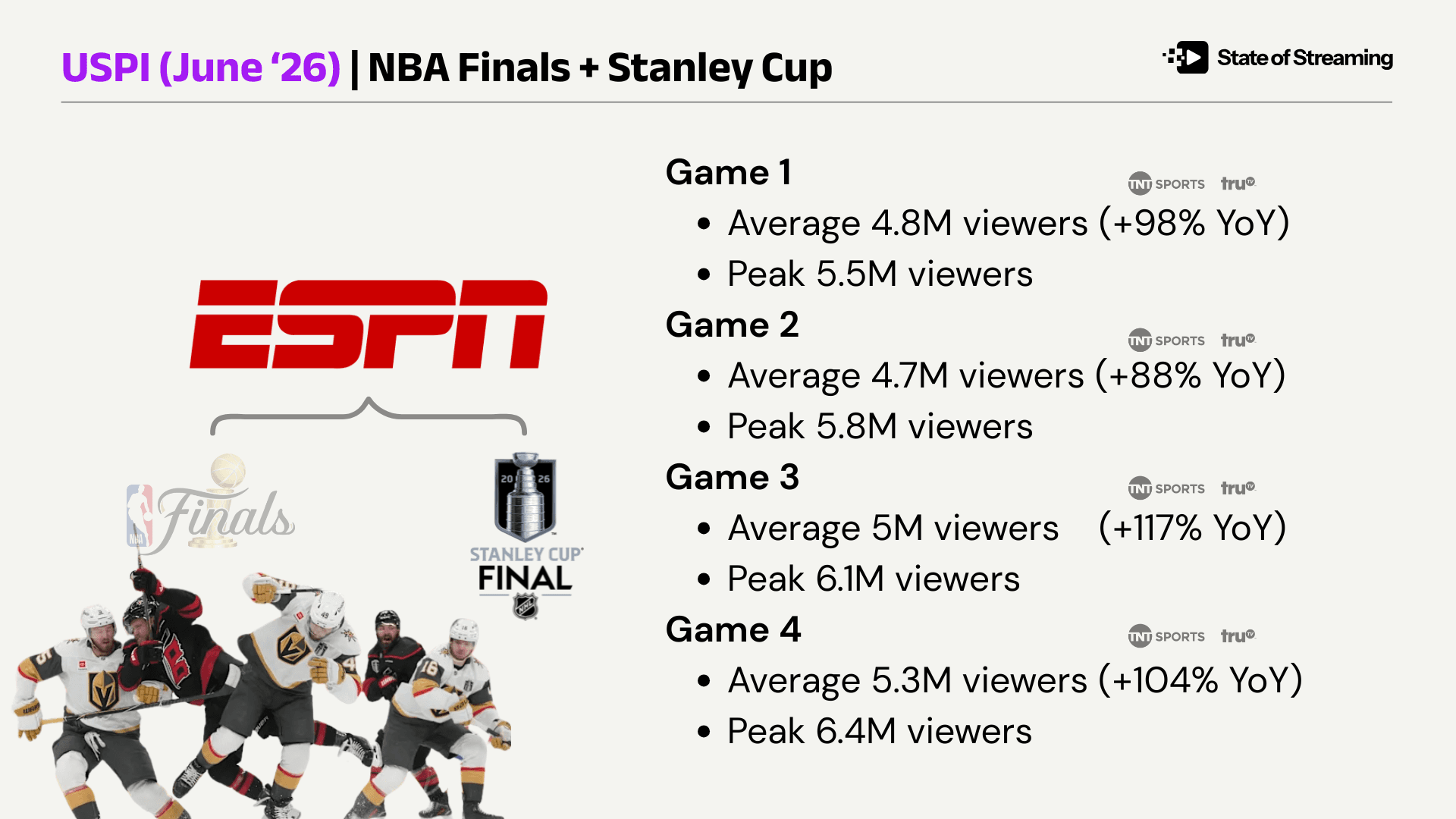
The June 2026 Unified Streaming Power Index (USPI) arrives during the densest live-sports broadcast window in history. With the NBA Finals, Stanley Cup Final, and the FIFA World Cup colliding across the ecosystem, consumer demand is at an all-time high.
However, the real story for media buyers isn't which specific app or platform holds the top spot. Instead, this month's index reveals three structural shifts that are rewriting the rules of how streaming audiences connect with their television, how they find content, and how advertisers attribute performance.
Theme 1: The Portals Are Swallowing the Catalogs
For years, "the streaming wars" were treated as a battle of content libraries — whoever owned the best movies or the buzziest scripted dramas won the subscriber. June 2026 proves that era is over. Today, the portal is the product, and the home screen is the transaction layer.
As premium content fragments across dozens of apps, consumers face profound choice fatigue. In response, operating system (OS) environments and hardware manufacturers — like Roku (#1), Samsung (#10), LG (#11), and Vizio (#12) — have become the primary discovery engines. They own the "front door" real estate where viewing decisions are made.
The Advertiser Implication: Relying solely on in-app video inventory means missing the critical first 60 seconds of the consumer journey. Native home-screen display ads, curated sports hubs, and CTV-level recommendations are are essential top-of-funnel buy-ins required to guide audiences before they disappear into fragmented, sometimes ad-free premium environments.
Theme 2: The Core Vulnerability of the "Wrapper" Model
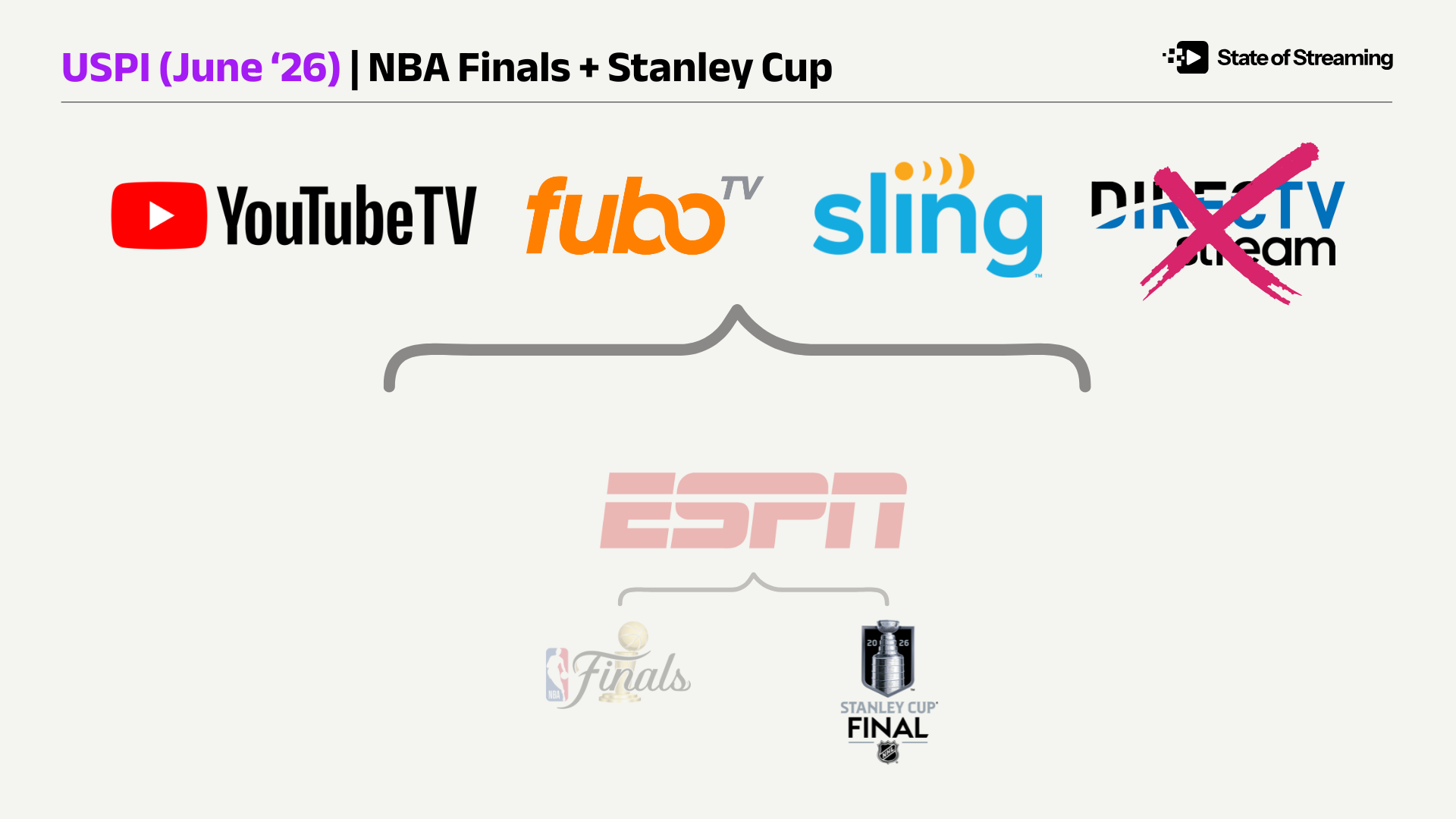
Live sports remains the ultimate glue of television, accounting for the vast majority of top-rated telecasts. However, the index highlights a severe economic disparity between the companies that own sports rights and the live-TV "wrappers" (Virtual Multichannel Video Programming Distributors like YouTube TV, Fubo, and DirecTV Stream) that merely distribute them.
According to Inscape data cited in eMarketer's US Sports Streaming 2025 report, consumers spend roughly twice as much sports viewing time on wrappers as they do on pure streaming apps. Yet, these distributors suffer from a steep discount because the underlying network keeps most of the ad load. The wrapper is left to monetize only thin local and dynamically available ad inventory (or adjacent activations on-platform).
Watch our interview covering this research with Ross Benes, Senior Analyst at EMARKETER
This middleman position carries immense operational risk.
DirecTV Stream’s (#20) catastrophic, mid-series carriage blackouts during Game 1 of the Stanley Cup Final proved that when distribution infrastructure fractures, viewers instantly abandon the wrapper and flee directly to primary destination apps like ESPN (#5).
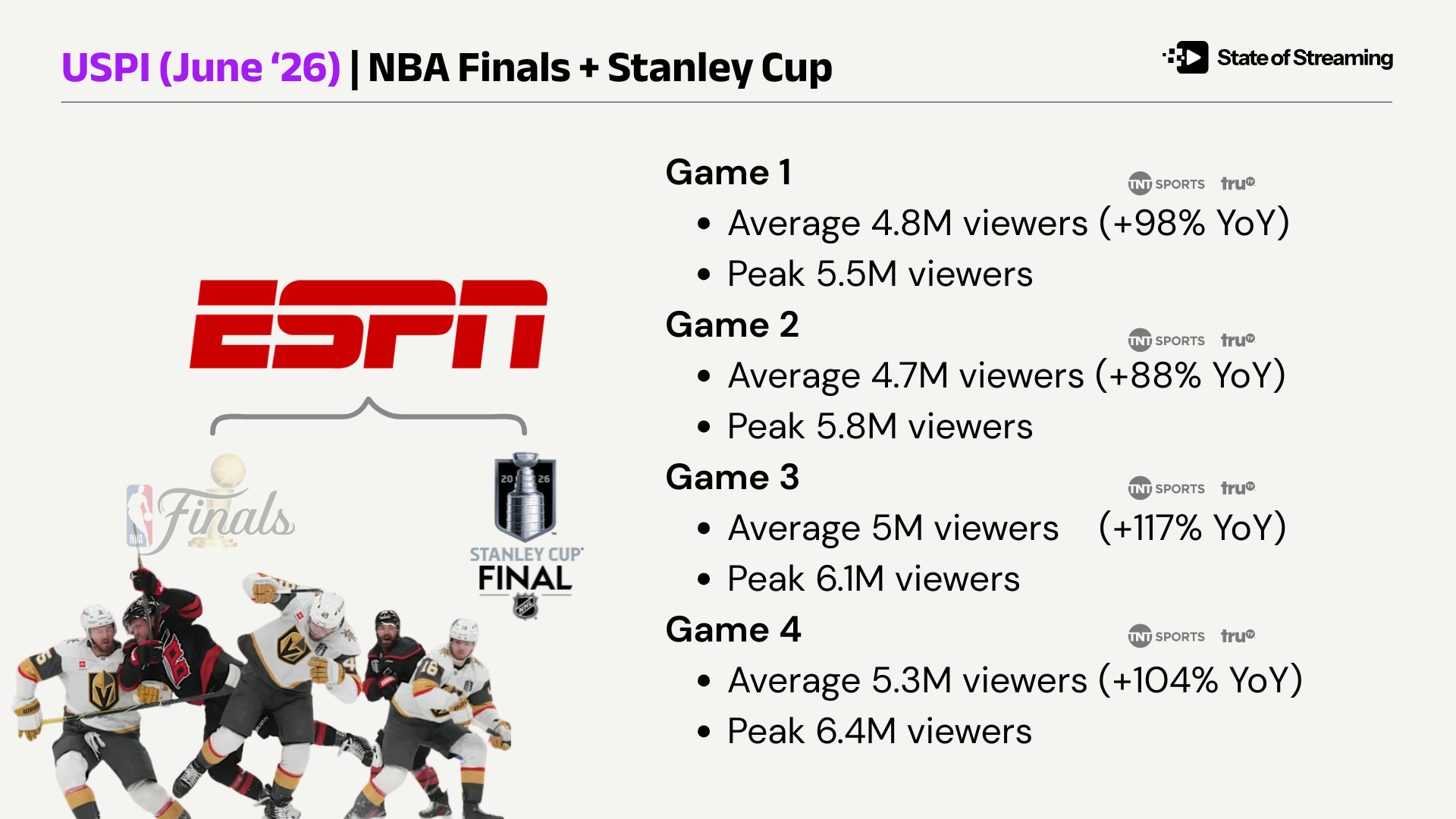
The Advertiser Implication: Mass reach numbers on a wrapper spreadsheet can be deeply deceptive. Buyers should prioritize direct partnerships with native rights-holders—such as ESPN (#5), Peacock (#3), and Fox One (#18)—who command full inventory control, pristine signal reliability, and the ability to flex contextual alignment during premium broadcast windows.
Theme 3: The Convergence of CTV Real Estate and Retail Data
The Connected TV (CTV) is no longer just a digital version of traditional linear television; it is quickly shifting into a performance marketing vehicle with a predictable and increasingly quantifiable user journey. The June index highlights an aggressive trend where hardware distribution is becoming an arms race to capture first-party retail data.
This convergence is playing out across two major lanes:
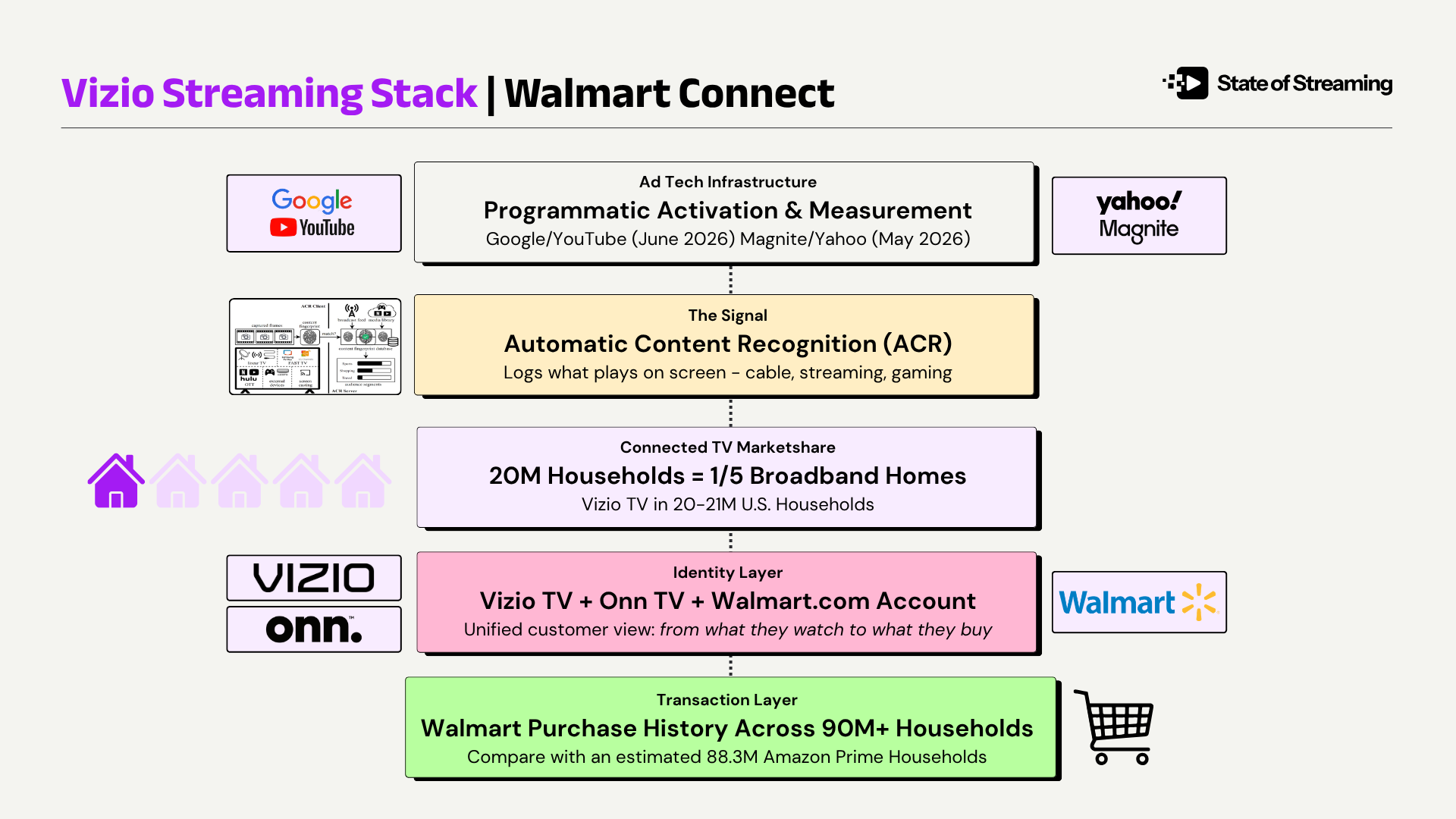
The Walmart-Vizio Synergy: With Walmart’s ownership of Vizio (#12), home-screen media placements and WatchFree+ inventory are directly integrated with Walmart Connect’s massive first-party shopper data.
The Amazon Ecosystem: Amazon (#2) remains the only player deeply embedded across all three index pillars (Home Screen, Live Sports via Nascar, the NBA, Thursday Night Football, and addressability), allowing them to close the loop from an ad exposure directly to a retail purchase (on and off platform).
June 2026 USPI Performance Matrix
To help visualize how these themes dictate market positioning, the scorecard below maps out how each player balances the crucial trade-offs between distribution control, inventory access, and pricing power.
August USPI

| Rank | Company | Home Screen rank | Live Sports Rank | CPM |
|---|---|---|---|---|
| 1 | 1 | — | $ | |
| 2 |  | 4 | — | $$ |
| 3 | — | 5 | $$$ | |
| 4 | — | — | $$$$ | |
| 5 | — | 1 | $$$$ | |
| 6 | — | — | $$$$ | |
| 7 |  | — | — | $$$$ |
| 8 | — | — | $$$$ | |
| 9 | — | — | $ | |
| 10 | 2 | — | $ | |
| 11 | 3 | — | $ | |
| 12 | 5 | — | $ | |
| 13 | — | — | $ | |
| 14 | — | — | $ | |
| 15 | — | 3 | $$$$$ | |
| 16 | — | 4 | $$$$ | |
| 17 | — | — | $$$ | |
| 18 |  | — | 2 | $$$$ |
| 19 | — | — | $$$ | |
| 20 | — | — | $$ |
To see how leading executives evaluate this shifting balance of power, access the full Looper Insights Research Hub on Sports Streaming Architecture.
Get the SOS. Brief
The sharpest streaming intelligence, delivered to your inbox.