How Vizio Fits Into the Walmart Connect Stack and Why Google, YouTube, Yahoo, and Magnite Matter
You bought a TV at Walmart. You took it home, plugged it in, and started watching. You didn't think about Walmart again.
But Walmart never stopped thinking about you.
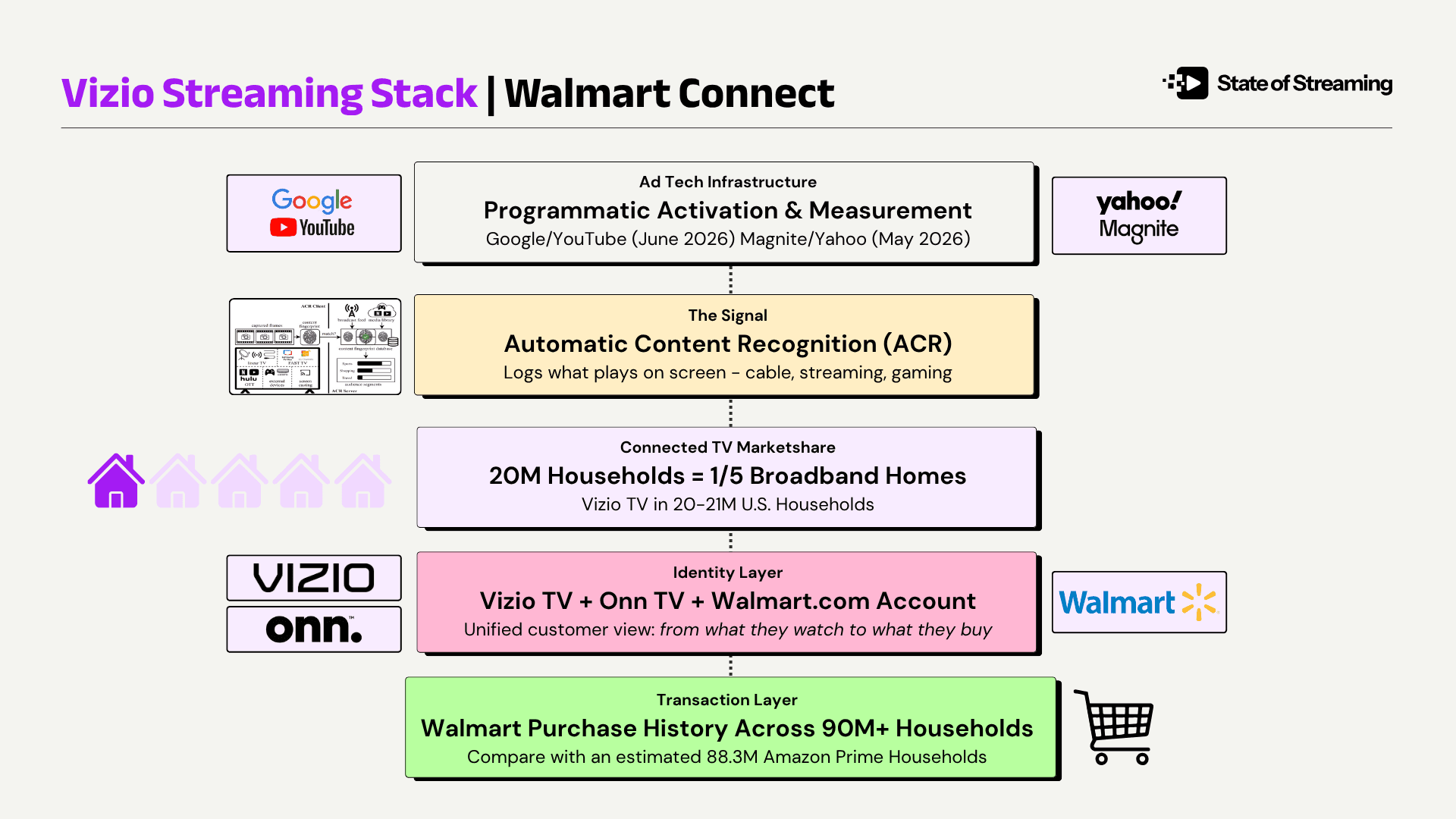
This week, Walmart Connect announced a deal with Google that lets advertisers target Walmart shoppers on YouTube and confirm whether those ads drove a purchase — using Walmart's own transaction records as proof. Not a panel. Not a model. Actual receipts from 90 million U.S. households.
Here is how Walmart built that capability — and what it means for every streaming advertiser.
The TV as a Data Engine
Every Vizio television ships with automatic content recognition, or ACR — technology that logs what plays on screen regardless of input. Cable, streaming, gaming. The operating system sees all of it. Per Vizio's own privacy policy: viewing data includes
"Audio and video programming, ads, gaming content, devices connected to the VIZIO OS product, and third-party apps, in real-time."
Even consumers who decline ACR during setup still generate behavioral data by default. The policy is explicit:
"Limited disclosure to Walmart of VIZIO OS Data may continue whether this setting is ON or OFF."
The data collection doesn't require your permission. It requires your TV being plugged in.
The Ideal Customer Profile
Newer Vizio TVs require a Walmart account to access smart TV features. When consumers sign in and consent, the policy states: "All data provided from VIZIO to Walmart will be combined with your Walmart account data." That account carries full purchase history. The TV knows what you watch. Walmart knows what you buy. The login connects both into a single named, consented consumer file that no streaming platform can replicate.
The home screen is a toll booth.
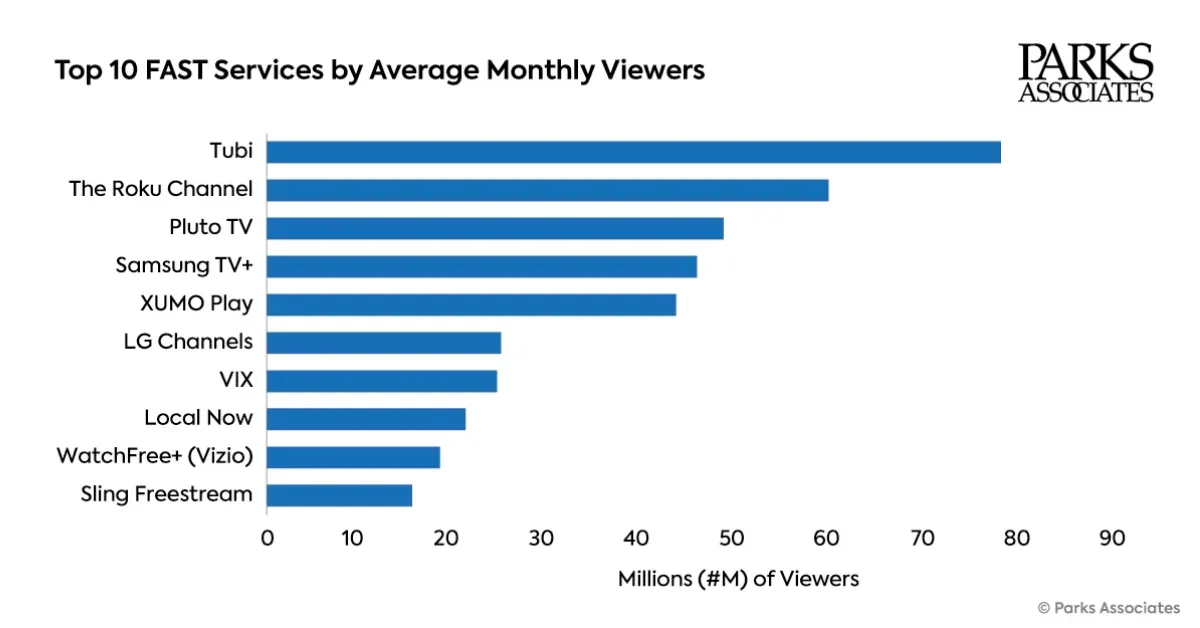
Vizio's operating system is the first thing a consumer sees before Netflix loads, before YouTube opens, before any app gets an impression. Every app on that screen pays rent in data and inventory. Vizio's streaming service WatchFree+ ranks ninth in FAST viewership according to Parks Associates. The content was never the point. As hardware, Vizio reaches 21.3 million ad-supported households (according to Samsung Ads) — ahead of Roku, Disney+, Paramount+, and Max. Walmart paid $2.3 billion for the toll booth, not the programming.
It is worth noting that the Parks Associates estimate puts Vizio WatchFree+ at 20 million and the ARF Dashboard released by Samsung Ads puts Vizio WatchFree+ at 21.3 million U.S. Households. The directional implication remains.
Google and Yahoo Shop at Walmart
After dropping its Trade Desk exclusivity last year, Walmart Connect struck deals with Magnite/Yahoo in May and Google/YouTube in June. When Walmart needed distribution, it gave The Trade Desk exclusive access. Dropping it means Walmart no longer needs a partner to open doors because platforms are coming to it.
The Magnite/Yahoo and Google/YouTube deals are licensing agreements. Walmart grants access to data it already owns, through pipes it controls, at a price it sets. Google brings YouTube inventory. Yahoo brings DSP infrastructure. Walmart brings the only thing no one else can build: retail distribution, an owned & operated CTV brand in 20+ million homes, and 90+ million households of verified first-party purchase data combined.
Every DSP without a Walmart deal is now selling an inferior measurement product. Every streamer — Netflix, Disney+, Peacock, Max — can offer reach where Walmart can offer full-funnel proof on par with Amazon (88+ million Prime eligible households).
Walmart now decides who sees its data, on what terms, and at what price. That is proper leverage.
Most streaming advertising is based on who you think is watching. Walmart is betting on being able to prove who bought something afterward.
Get the SOS. Brief
The sharpest streaming intelligence, delivered to your inbox.